Examine the evidence base and provenance of specific claims made by authors or groups.Know what the science actually supports before you trust the answer.
Press Enter ↵ to review
Explore by Goal
"I was taught that the way of progress was neither swift nor easy."
- Marie Curie
Quick Explanation
Copied
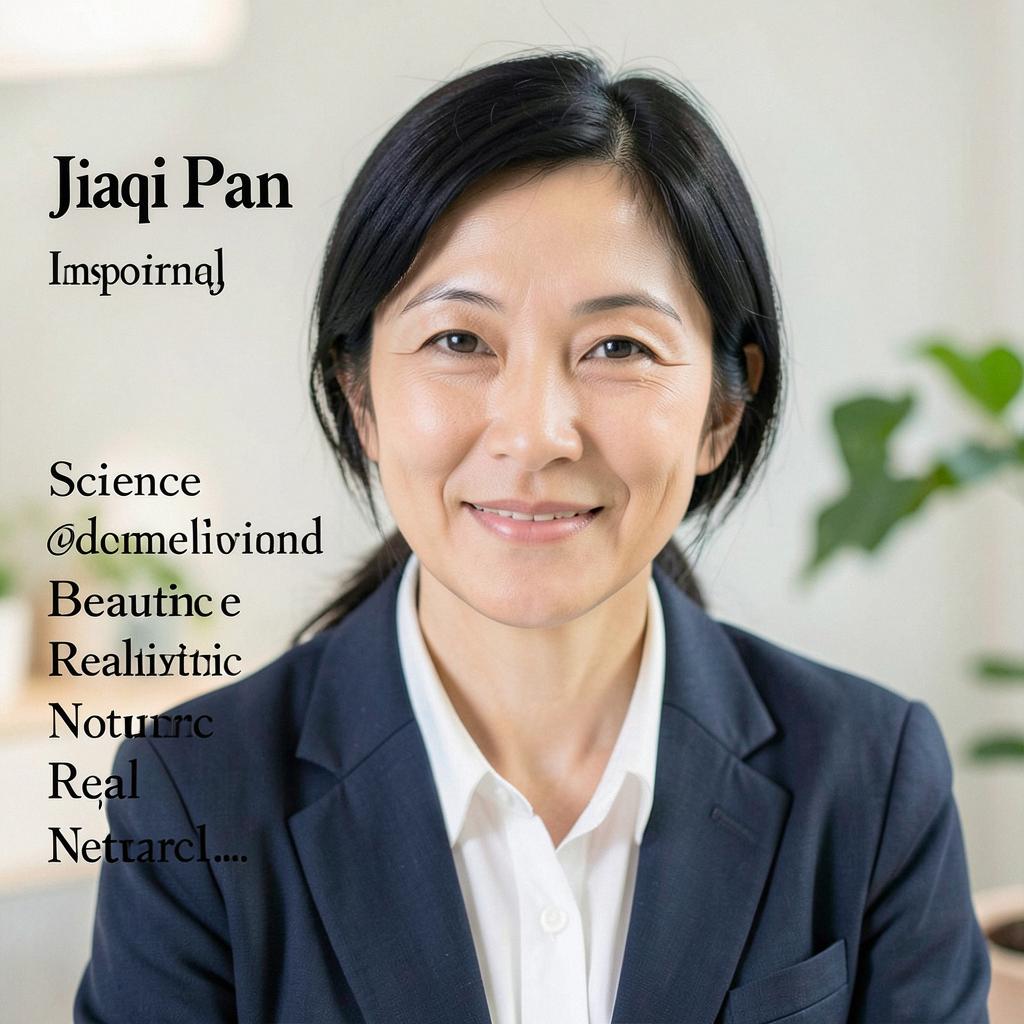
Jiaqi Pan (profiled author: h-index 19, ~949 citations, 32 papers) demonstrates versatile, mid-career scientific strength spanning nanomaterials, immunology, bioinformatics, microbiomics, and single-cell genomics, with papers of solid but not exceptional quality (scores 7–8/10) and commendably transparent limitations reporting .
Long Explanation
Who Is Jiaqi Pan? An Identity Caveat First
The supplied records describe at least two distinct researchers: the profiled author (h-index 19, 949 citations, 32 papers) whose works include sepsis biomarkers, thromboembolism, and PNH research, and a separate "Jianji Pan" (OpenAlex h-index 49, 8,391 citations) affiliated with nasopharyngeal carcinoma trials in The Lancet and Nature Medicine . Conflating these would inflate the profiled author's apparent impact by ~9-fold in citations. This review judges the profiled Jiaqi Pan by the six supplied primary papers.
Scientific Range and Rigor Across Six Papers
The author's portfolio spans carbon-dot nanosensors, macrophage immunology, hepatology bioinformatics, neonatal microbiomics, cyanobacterial genomics, and pan-tissue single-cell myopia research — an unusually broad range suggesting strong collaborative and methodological adaptability rather than deep single-field expertise.
Strengths: The 2025 Cell Discovery myopia paper is the flagship — 200,127 cells across 15 tissues, human validation via UK Biobank (n=114,661) and KNHANES (n=1,723), a mechanistic intervention (salidroside), and public data deposition (OEP00006545) . The Microcystis pan-genomics paper is methodologically rigorous (161 quality-filtered genomes, transparent HGT inference caveats) . The VDR/artesunate paper shows creative mechanistic work (peptide-competition and antibody-blockade triangulation across seven commercial antibodies) but modest replicates (n=3) and male-mouse-only designs .
Weaknesses: The COX7C hyperlipidemia paper relies on a tiny discovery dataset (GSE13985: 5 vs 5 familial hypercholesterolemia cases/controls), in vitro-only validation, and KC7F2's known off-target liability . The EUGR microbiota study honestly reports that the stage-4 ratio association was only marginally significant in adjusted regression, and AUC dropped from 77.8% to 63.3% at corrected gestational age — a transparency positive but modest predictive strength . The carbon-dot paper is solid materials chemistry (QY 16.5%, Fe3+ LOD 73 nM) but strictly in vitro and PBS-buffer-based .
Verdict and Falsifiers
The profiled Jiaqi Pan is a competent, versatile mid-career biomedical scientist whose strongest work is large-scale, well-deposited, multi-modal genomics (myopia, Microcystis), while weaker entries share a pattern of small discovery cohorts, in vitro-only inference, and pharmacological probes with off-target risk. Confidence is moderate: identity ambiguity between OpenAlex profiles and only six sampled papers limit this assessment. Evidence that would change it: retraction records, replication failures of the myopia macrophage-hypoxia signature in independent cohorts, or high-citation uptake of the weaker mechanistic papers without independent validation.
Feedback:
Updated: October 02, 2026
BGPT Author Review
Scientific Quality
60%
H-index 19 with 949 citations over 32 papers indicates a productive mid-career researcher. The 2025 Cell Discovery pan-tissue single-cell myopia paper and the BMC Genomics pan-genome analysis show strong large-scale data capability (scores 8/10). However, several mechanistic papers rest on small discovery cohorts (n=5 vs 5 GSE13985), in vitro-only models, and off-target-prone pharmacological inhibitors. The unusually broad topic spread suggests adaptability but may reflect opportunistic collaboration rather than deep domain leadership. Identity confounding with Jianji Pan (h-index 49) is a metadata risk that must not inflate the assessment.
Communication Quality
70%
Supplied papers report limitations candidly (e.g., the EUGR study explicitly flags marginal significance and small follow-up n=32; the Microcystis paper details annotation biases), which reflects strong scientific transparency. Methods sections are detailed enough for reproduction (primers, antibody catalog numbers, software versions listed). No evidence of overclaiming in summaries, though the breadth of topics may reduce clarity of a coherent research narrative to readers.
Author Novelty
70%
The myopia paper's cross-organ hypoxia-driven macrophage signature linked to 16 extraocular diseases is genuinely novel (novelty 9/10 in extraction). The membrane-VDR/artesunate mechanism is conceptually creative (novelty 9/10). The carbon-dot and COX7C works are more incremental within crowded literatures (novelty 6-7/10). Overall novelty is above average but uneven.
Scientific Rigor
60%
Strengths: quality-filtered genomic pipelines, public data deposition, triangulated antibody/peptide competition assays, and honest reporting of null or marginal results. Weaknesses: n=3 replicates in key immunology assays, male-only mouse models, discovery datasets with 5 vs 5 samples, reliance on KC7F2 and MβCD with known off-target potential, no in vivo validation in the COX7C and carbon-dot studies, and no direct gut oxygen measurement underpinning the microbiota oxygen-phenotype interpretation. Reproducibility scores across the six papers average 6.5/10.
We'll email you the results when your analysis is finished.
Hypothesis Graveyard
Nuclear VDR signaling alone explains LPS tolerance — falsified in the supplied work by membrane co-localization, lipid-raft disruption effects, and compartment-specific Western blots showing mVDR elevation.
HIF-1α upregulation being a generic stress artifact of FFA overload rather than COX7C-dependent — partially supported because KC7F2 reversal is consistent with mediation but off-target effects remain unexcluded.

 Explore by Goal
 Quick Explanation
 Long Explanation
 Top Data Sources
 Ask a Follow-Up
 Key Insight
 Keep Exploring
 Hypothesis Graveyard
 Potential Experiments
 Discussion
