Check whether claims match experiments, exact reported results, and stated limitations.Know what the science actually supports before you trust the answer.
Press Enter ↵ to review paper
Explore by Goal
"Two possibilities exist: either we are alone in the Universe or we are not. Both are equally terrifying."
- Arthur C. Clarke
Quick Explanation
Copied
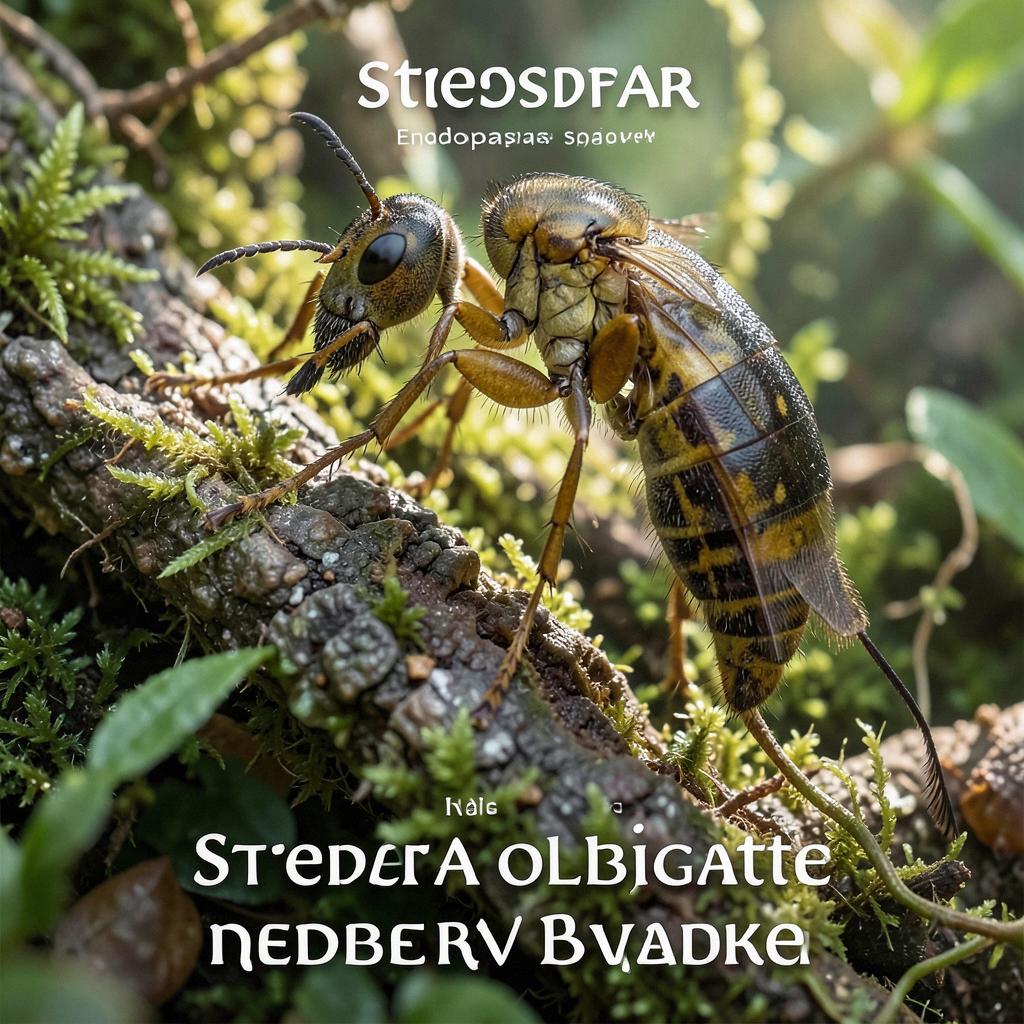
The first high-quality genome of a non-Hymenoptera-parasitizing strepsipteran (Elenchus koebelei, 63.7 Mb, N50 1.60 Mb, 82.3% BUSCO) shows broad genome structure and ~600 shared missing insect BUSCOs conserved across three strepsipteran species, supporting an order-wide genomic 'blueprint' for obligate endoparasitism largely independent of host identity
Long Explanation
Evidence for a conserved parasitic blueprint
The paper reports the first PacBio HiFi genome for a strepsipteran parasitizing Hemiptera: Elenchus koebelei, assembled at 63.7 Mb in 96 contigs (N50 1.60 Mb, L50 = 10, 32.69% GC, 0 ambiguous bases) with 8,167 gene annotations and 34.2% repeats . Comparing it with Xenos peckii (social wasp host) and Stylops aterrimus (solitary bee host) , the authors find 619 insect BUSCOs missing across all three strepsipteran assemblies versus only 19 in the beetle outgroup Tribolium castaneum, with 157 uniquely absent in Elenchus (Figure 8E). Missing-gene sets are enriched for intraciliary transport/ciliary GO terms (GO:0042073: Elenchus 18/781, adj. p = 3.8E-04; Stylops 19/705, adj. p = 4.25E-06; not significant in Xenos), paralleling cilia-linked gene loss in parasitic nematomorphs. The 17.73 kb mitogenome shows conserved gene order across six strepsipteran mitogenomes (91.46% of shared genes in collinear blocks).
Gene counts fall within ~8,100–9,000 and repeat content 34–36% across species with different host sociality, supporting the conclusion that host-specific adaptations, if present, are not encoded in gross genome structure .
Critical assessment and blind spots
Several ambiguities temper the "blueprint" interpretation: (1) GenomeScope estimated a 50.5 Mb haploid genome, ~13 Mb smaller than the 63.7 Mb assembly, so repeat-driven assembly inflation remains possible (the authors flag this). (2) The ciliary GO commonality is asymmetrically supported — Xenos showed no significant enrichment — so the "common blueprint" rests partly on non-uniform enrichment signals. (3) KEGG enrichment for Elenchus-specific losses passed no FDR correction; the crepuscular-neuromodulation link is explicitly speculative. (4) Only one species per family was compared, so order-wide inference is provisional; mitogenomic ATP6/ATP8/rrnS non-recovery may reflect annotation failure rather than true gene absence. (5) BUSCO "missing" counts conflate true loss with divergence-driven detection failure in these rapidly-evolving, AT-biased genomes — BLAST validation against raw reads mitigates but does not eliminate this. Physiological context of extreme miniaturization and flight adaptation in these parasites is well documented elsewhere . The most decisive falsification test: recovery of many of the ~600 missing BUSCOs in new, phylogenetically diverse strepsipteran assemblies.
Confidence: The assembly is solid descriptive work; the "common blueprint" conclusion is a reasonable but hypothesis-generating inference from n = 3 species with partially non-convergent enrichment statistics.
Feedback:
Updated: October 14, 2026
BGPT Paper Review
Study Novelty
80%
First high-quality genome of a non-Hymenoptera-parasitizing strepsipteran and first three-way comparative genome analysis of the order; the 'common blueprint' hypothesis is new, though the underlying gene-loss phenomenon was partly anticipated by prior Xenos work.
Scientific Quality
70%
Rigorous pipeline (HiFi, BlobTools filtering, dual BUSCO versions, cross-sample BUSCO validation, mitogenome synteny), but inference rests on only three species, GenomeScope-vs-assembly size discrepancy is unresolved, and ciliary enrichment is not consistent across all three species.
Study Generality
60%
Speaks to broad questions of parasite genome evolution and convergent gene loss, but limited taxon sampling restricts how far the blueprint conclusion generalizes within Strepsiptera or to other parasite lineages.
Study Usefulness
70%
Provides a foundational genomic resource for an understudied order, with deposited assemblies, annotations, and BUSCO sets enabling future comparative and functional work.
Study Reproducibility
80%
Detailed methods, versioned tools, NCBI BioProjects (PRJNA1427140), SRA accessions, and Dryad deposition of GFF/BUSCO sets; one site and two individuals sampled.
Explanatory Depth
60%
Descriptive plus functional-enrichment depth; gene-loss interpretation is correlational, with no expression, post-translational, or functional validation despite the authors' own suggestions.
We'll email you the results when your analysis is finished.
Hypothesis Graveyard
Host-specific genome tuning: falsified at gross-structure level since genome size, GC, gene count, and repeats show no host-sociality trend, though tuning could still reside in copy number or expression.
Missing genes as pure annotation artifacts: largely rejected because missing Elenchus BUSCOs were required to be absent across all three of its independent assemblies and BLAST-validated against raw reads.

 Explore by Goal
 Quick Explanation
 Long Explanation
 Top Data Sources
 Ask a Follow-Up
 Key Insight
 Keep Exploring
 Hypothesis Graveyard
 Potential Experiments
 Discussion
