Follow findings back to the experiments, exact results, and limitations behind them.Know what the science actually supports before you trust the answer.
Press Enter ↵ to search claims
Explore by Goal
"Biology sees right and wrong as the same color in different light."
- Delia Owens
Quick Analysis Plan
Copied
Bacillus subtilis is a Gram-positive, spore-forming soil bacterium whose biology centers on regulated endospore differentiation, a highly modified peptidoglycan cell wall, flexible metabolism, and industrially exploitable traits such as biosurfactant overproduction and herbicide biodegradation.
Long Analysis Plan
Biology of Bacillus subtilis — evidence-grounded synthesis
Developmental biology: B. subtilis is the canonical model for bacterial cell differentiation. Sporulation is governed by hierarchical sigma-factor activity with tight spatial and temporal control of gene expression between the forespore and mother cell compartments . Spores are stress-resistant but metabolically vulnerable structures: thermosonication proteomics of ATCC6633 spores showed 167 differentially expressed proteins (80 up, 87 down), with inhibition of glycolysis, TCA cycle, and oxidative phosphorylation blocking outgrowth even after germination (proteome data: PRIDE PXD014615).
Cell envelope: Comprehensive muropeptide mapping of strain 168 vegetative walls identified 39 muropeptides (~97% of peptidoglycan) with pervasive m-DAP amidation (~99%), 17.3% glucosamine de-N-acetylation (lysozyme resistance), 2.7% glycine-containing species, and teichoic-acid-linked phosphate-containing muropeptides; cross-linking rises from 29.1% (exponential) to 33.2% (stationary), and PBP5 (dacA) acts as a DD-carboxypeptidase central to maturation (~82% pentapeptide side chains in its absence) .
Metabolic plasticity: The genome encodes redundant routes that buffer genetic lesions: SPABBATS, a Boolean-satisfiability pathway-discovery method, predicted and experimentally validated four alternative glutamate-utilization pathways in suppressor mutants lacking the standard RocG/GudB glutamate dehydrogenases . CoA biosynthesis is similarly flexible: cysteinopantetheine was discovered as a novel salvage precursor imported by the TcyJKLMN transporter . Metabolism is also globally rewired by stress: subinhibitory chloramphenicol triggers colony mobilization coordinated through the CodY network .
Biotechnology and environment: Deleting codY (a global nutrient-responsive regulator) raised surfactin production ~5.8-fold (221 → 2289 mg/L at 10 h), while lpdV deletion shifted the product profile toward the C14 isoform with a 1.4-fold increase . Environmentally, strain Y3 degrades 99.5% of 100 mg/L pendimethalin within 2.5 days via an NADH-preferred nitroreductase (0.38 µmol/min/mg with NADH vs 0.30 with NADPH vs 0.03 without), Fe²⁺/Mg²⁺/Ca²⁺-enhanced and heavy-metal-inhibited .
Analysis plan + caveats
Plan: (1) Fetch genomes (168, NCIB 3610, ATCC 6633, Y3) via BioPython/Entrez; annotate with Bakta/Prokka. (2) Build a stoichiometric metabolic model (e.g., iYO844-derived COBRApy analysis) to reproduce the SPABBATS glutamate scenarios and test codY/lpdV flux rerouting toward branched-chain fatty acids. (3) Map sigma-factor network and CodY regulon from RNA-seq datasets (GSE261934) with DESeq2/skeptic-style shrinkage; validate against KEGG enrichment used in the TS proteomics study. (4) Simulate peptidoglycan cross-linking statistics vs measured muropeptide fractions as a cell-wall model sanity check. (5) Snakemake/nf-core workflow to make every step reproducible.
Caveats: All mechanistic claims derive from single strains (168, ATCC6633, BBG series, Y3) under laboratory conditions; iTRAQ proteomics suffers ratio compression; the pendimethalin pathway lacks field validation and downstream steps; SPABBATS predictions were validated only in a narrow mutant background. Media composition demonstrably alters even cell-wall chemistry, so cross-condition generalization is the main known unknown . Conclusions would change if multi-strain, multi-condition studies showed strain-specific regulation or if single-cell data contradicted population-averaged proteomics.
Building a reproducible Snakemake workflow that annotates B. subtilis genomes (168, Y3, engineered strains), maps sigma-factor and CodY regulons from public RNA-seq/proteomics data, and runs COBRApy flux analysis of glutamate-utilization and branched-fatty-acid pathways.
Get emailed when your analysis is done!
We'll email you the results when your analysis is finished.
Hypothesis Graveyard
'Surfactin yield is limited mainly by surfactin synthetase expression' — the 5.8-fold gain from deleting codY (a regulator of lipid precursors, not the synthetase) shows precursor/branched-fatty-acid flux, not enzyme abundance, is rate-limiting.
'Spore death by thermosonication is purely a membrane-disruption effect' — proteomics shows outgrowth failure persists after germination via ATP-depleting metabolic inhibition, so killing is metabolic as much as structural.

 Explore by Goal
 Quick Analysis Plan
 Long Analysis Plan
 Top Data Sources
 Ask a Follow-Up
 Key Insight
 Keep Exploring
 Analysis
  Hypothesis Graveyard
 Potential Experiments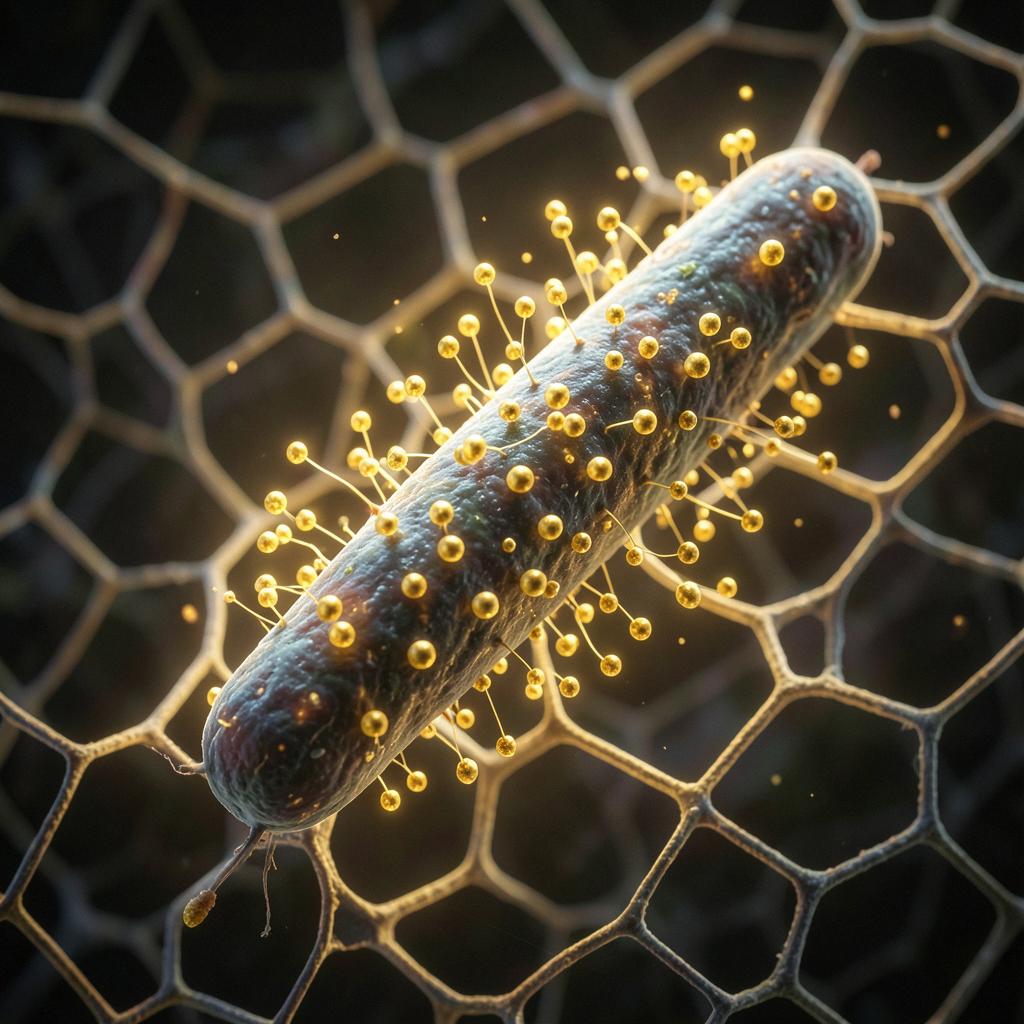
 Discussion