Check each claim against its experiments, reported results, scope, and stated limitations.Know what the science actually supports before you trust the answer.
Press Enter ↵ to start review
Explore by Goal
"The greatest challenge to any thinker is stating the problem in a way that will allow a solution."
- Bertrand Russell
Quick Explanation
Copied
Focardi et al. (2025, Nature Communications) tracked microbiomes of 15 phytoplankton isolates for 400 days, defining specialists, generalists, and transients with distinct genomic traits (chemotaxis, B12 synthesis, DHPS/DMSP catabolism), and validated generalist/specialist co-occurrence with hosts in 5.5-year oceanographic time-series — a robust, novel framework, though limited by culture conditions, small generalist counts (n=18 ASVs), and correlation-only environmental validation.
Long Explanation
Core Design and Evidence
Focardi et al. single-cell isolated 15 phytoplankton strains (12 diatoms, 3 green algae) from Port Hacking, Australia, and tracked their microbiomes over 400 days using 16S rRNA amplicon sequencing and metagenomics . Communities diverged from source seawater within 7 days (PERMANOVA p<0.05), richness dropped 39% between days 20–40, and unique host-specific communities stabilized after 200 days. Each strain harbored a unique microbiome, even within genera.
Of 5909 ASVs, 55% were transients, 947 specialists, and only 18 generalists (0.7%). Specialists rose from 7.6% to 76.8% relative abundance; transients fell from 44% to 4.2% over 400 days.
Genomic Trait Differentiation
From 33 high-quality genomes (9 generalists, 14 specialists, 10 transients; >90% completion, <5% redundancy), associates were functionally distinct from transients (PERMANOVA F=2.93, p-adj<0.05). B12 biosynthesis was encoded in 90% of generalists and 85% of specialists vs 30% of transients; chemotaxis in 58%/45%/30%; DHPS catabolism (hpsN) in 64% of specialists vs 10% of transients. Generalists uniquely showed 89% flagellar motility (vs 37% specialists) and 55% siderophore genes (vs 7%), consistent with host-hopping and iron-scavenging strategies.
Environmental validation used 5.5 years (2015–2020) of metagenomes from three National Reference Stations. At Maria Island, all tested generalist/specialist MAGs correlated significantly with their hosts' abundance (Spearman, p<0.05), while control seawater MAGs did not — supporting ecological relevance, though only correlation-level evidence for two phytoplankton species with usable eukaryotic MAGs.
Critical Assessment
Strengths: rare long-duration (400-day) design on freshly isolated, non-axenic hosts; quality-filtered genomes; transparent thresholds (98.4% ASVs in 1–2 hosts justified specialist cut-off); independent time-series validation; authors appropriately flag bottle effects and correlation-vs-causation.
Limitations and blind spots: (1) f/2 medium is nutrient-replete, which may favor copiotrophs and overstate specialist attachment strategies; (2) only 18 generalist ASVs underpin generalist genomic claims, with category defined on abundance presence, not demonstrated host exchange; (3) environmental co-occurrence tested for only 2 of 15 hosts and 3 stations; (4) 16S-based category assignment cannot resolve strain-level functional variation; (5) 1.6% of ASVs shared across ≥3 hosts makes the generalist class a long tail whose genomic inferences rest on n=9 genomes; (6) inter-bacterial interactions structuring microbiomes were not excluded. The authors acknowledged bottle effects and culture-artifact concerns but did not fully quantify them.
Falsification paths: demonstrating that generalist/specialist genomic traits fail to predict host association in independent time-series, or that microbiome stabilization under semi-natural mesocosm conditions differs from culture, would undermine the framework.
Feedback:
Updated: September 16, 2026
BGPT Paper Review
Study Novelty
80%
First longitudinal (400-day) microbiome tracking of freshly isolated non-axenic phytoplankton defining generalist/specialist/transient ecological strategies with genome-resolved traits; builds on prior phycosphere work rather than opening an entirely new field.
Scientific Quality
80%
Rigorous statistics (PERMANOVA, FDR-corrected Fisher tests), quality-filtered MAGs, and environmental validation; weakened by small generalist sample (n=18 ASVs, 9 genomes), culture artifacts (f/2, bottle effects), and correlation-only field evidence.
Study Generality
70%
Framework (specialist/generalist/transient strategies) generalizes conceptually across phytoplankton-bacteria systems, but empirically grounded in one coastal site, 12 diatoms and 3 green algae.
Study Usefulness
80%
Provides trait-based markers (motility, siderophores, DHPS/DMSP catabolism, B12 genes) for predicting phytoplankton microbiome assembly, useful for algal biotechnology, bloom modeling, and culture design.
Study Reproducibility
80%
Detailed methods, deposited data (PRJNA1078379, PRJNA1068266, PRJNA1089792), standard pipelines (DADA2, metaSPAdes, CheckM, antiSMASH); source data files provided.
Explanatory Depth
70%
Links genome content to ecological strategy mechanistically (chemotaxis, attachment, metabolite catabolism), but functional inferences remain predictive (gene presence), not experimentally validated via knockouts or metabolite exchange assays.
We'll email you the results when your analysis is finished.
Hypothesis Graveyard
Microbiome stabilization is purely a bottle-effect artifact: rejected because different hosts cultivated under identical conditions diverged into unique, host-specific communities, inconsistent with a uniform laboratory filter.
Generalist/specialist structure reflects phylogenetic clustering alone: rejected since functional traits distinguished categories after controlling for phylogeny, and both categories spanned shared families (Rhodobacteraceae, Vibrionaceae, Alteromonadaceae).

 Explore by Goal
 Quick Explanation
 Long Explanation
 Top Data Sources
 Ask a Follow-Up
 Key Insight
 Keep Exploring
 Hypothesis Graveyard
 Potential Experiments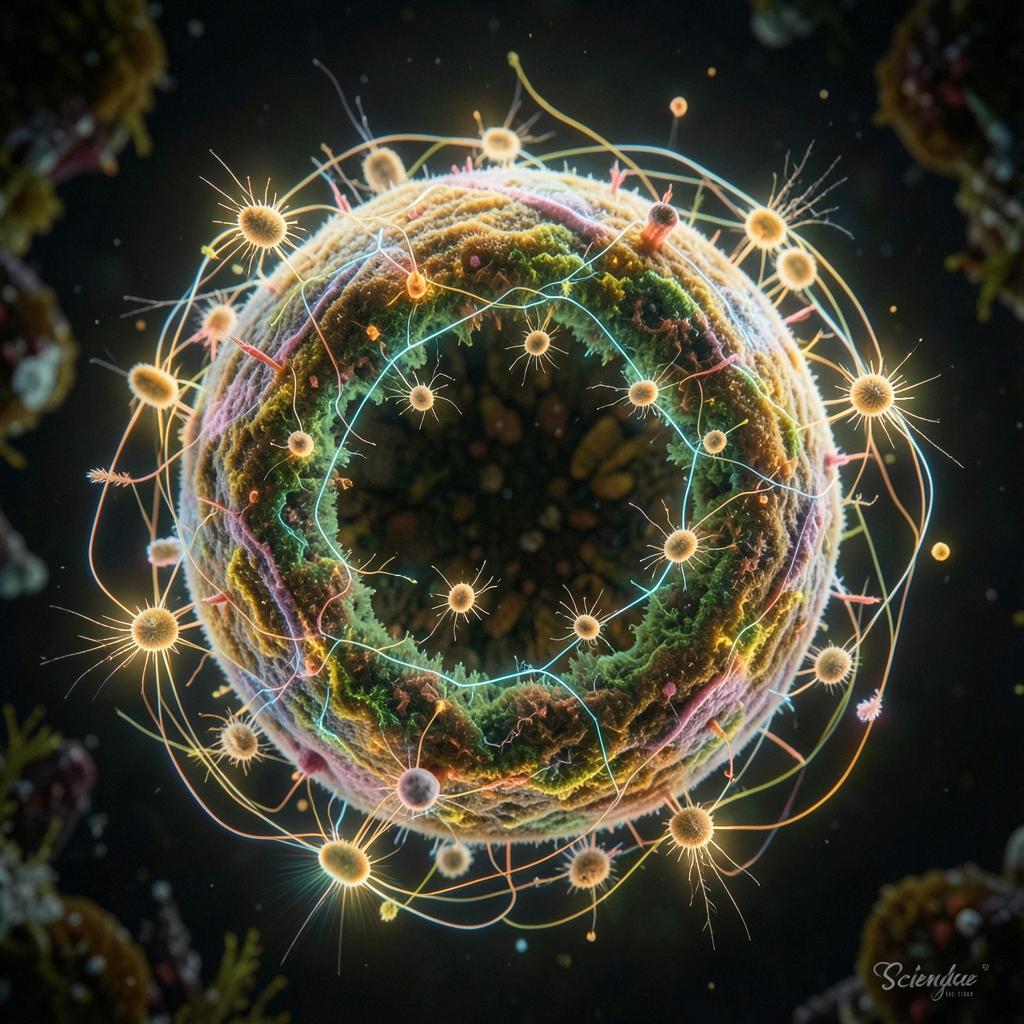
 Discussion