Why BGPT?
logo

Paper Review β€” Verify any paper quickly

Instantly see raw data, methods and extracted figures to validate results.


Press Enter ↡ to solve


    Fuel Your Discoveries


     Quick Explanation


    Core claim (mechanistic): pachytene piRNA clusters generate antisense piRNAs from pseudogene fragments, and piRNAs from a given cluster converge on a single major mRNA with near-perfect complementarity, producing an β€œRNAi-like” clusterβ†’gene regulon that is physiologically required for spermatogenesis in mouse and is conserved in logic across mammals.


     Long Explanation


    Paper Review (visual-first): β€œPachytene piRNAs define a conserved program of meiotic gene regulation”

    TL;DR, but in testable parts

    • Targeting architecture: mRNA-targeting pachytene piRNAs are found when matching mature mRNAs using ≀1 mismatch across positions 2–21, and the authors estimate ~1.6% of piRNAs match mRNAs under this rule, corresponding to ~160,000 molecules/cell.
    • Clusterβ†’gene convergence: >12% of mRNA-targeting piRNAs converge on a single mRNA (Spin1 in mouse; Ago2 as another dominant example), motivating a cluster-centered target prediction.
    • Mechanistic source: the piRNAs that target these mRNAs originate from antisense pseudogene fragments embedded within specific piRNA clusters.
    • Physiology via CRISPR: deleting piC-as(Ago2) eliminates Ago2-targeting piRNAs and derepresses Ago2, yet produces no obvious spermatogenic defects; deleting piC-as(Spin1) (or the Spin1 pseudogene fragment) causes multifocal spermatogenic defects with apoptosis, identifying Spin1 as a dominant functional target.
    • Conservation logic: in humans, ~2.7% of pachytene piRNAs target mRNAs under a similar rule; GOLGA2 is the top target and a primate-syntenic piRNA cluster contains a conserved GOLGA2 pseudogene fragment.
    Figure 1. Key reported β€œwhat fraction of piRNAs” numbers
    Values are taken directly from the preprint’s reported fractions/dominance statements.
    Figure 2. Cluster→gene regulon logic (mouse example)
    The scheme summarizes: (i) antisense pseudogene fragments inside specific piRNA clusters, (ii) convergence of targeting piRNAs on the cognate mRNA across extended CDS/3'UTR regions, and (iii) deletion outcomes for piC-as(Spin1) vs piC-as(Ago2) as reported.

    What the authors did that is scientifically decisive

    1) Switch from β€œsingle piRNA target search” to β€œtarget-centered piRNA pool engagement”
    The preprint reports a pool-level targeting rule: ~1.6% of piRNAs match mature mRNAs with ≀1 mismatch across positions 2–21, creating an estimated large number of molecules capable of direct regulation.
    Why this matters: it reduces sensitivity to noisy individual targeting predictions when piRNA sequences are diverse. However, this approach also embeds an explicit computational threshold and positional window that must be robust to alternative alignment/stringency choices (a critical point for falsifiability, discussed below).
    2) The β€œone-to-one regulon” hypothesis is tested by cluster deletion
    Deleting piC-as(Ago2) is reported to abolish the Ago2-targeting piRNAs and derepress the Ago2 mRNA, yet animals remain fertile with normal spermatogenesis staging—suggesting that not every cluster→gene pairing is equally required for spermatogenesis under baseline conditions.
    In contrast, deleting piC-as(Spin1) (or deleting the resident Spin1 pseudogene fragment) is reported to cause multifocal defects in spermatogenesis and increased apoptosis, with phenotypic features including metaphase misalignment and Ξ³H2AX-positive chromatin damage.
    3) Cross-species support (mouse→human via targeting logic and synteny)
    The preprint claims that human pachytene piRNAs show a similar targeting fraction (~2.7%) and that GOLGA2 dominates the mRNA-targeting pool (~15% of targeting piRNAs), with a primate-syntenic piRNA cluster carrying a GOLGA2 pseudogene fragment conserved between human and macaque at >80% sequence identity.

    Skeptical critique: what could be wrong, incomplete, or confounded?

    A) The matching rule could over- or under-call targets
    The entire regulon architecture depends on the defined match window (positions 2–21) and mismatch threshold (≀1). If alternative pairing constraints (e.g., different positional weighting or allowed mismatches) substantially change which mRNAs rank as β€œtop targets,” the clusterβ†’gene conclusion could weaken. The preprint acknowledges that piRNA targeting rules are debated and that in vivo slicing behavior can deviate from simplified rules.
    B) CRISPR off-targets and latent compensations
    Cluster deletions could in principle have off-target or local genomic effects that change transcription/processing broadly. The preprint argues specificity by reporting that in piC-as(Ago2) KO, Ago2 is the only significantly upregulated protein-coding gene. Yet, β€œonly significantly upregulated” still allows subtle off-target effects or phenotypic compensation in some individuals/agesβ€”especially for the penetrance/variability observed for the Spin1 cluster phenotype.
    C) β€œRNAi-like” mechanistic inference
    The preprint frames the mechanism as RNAi-like slicer-dependent regulation consistent with Ago/MIWI RNase activity, but it does not (in the provided text) show direct cleavage products or direct slicer footprinting for the specific targets in vivo. General support that MIWI function involves slicing is consistent with MIWI being required and having slicer activity in the pathway literature.

    Data accessibility & reproducibility signals

    The preprint states that RNA and piRNA sequencing data are available via ENA accession PRJEB102223 (ERP183623). It also states code availability via supplementary code and a planned release on GitHub and Zenodo.
    Figure 3. Reported apoptosis/tubule defect proportions (Spin1 cluster deletion)
    Values are the paper’s reported approximate proportions (TUNEL-positive tubules).

    Mechanistic context (how this fits broader piRNA biology)

    Pachytene piRNAs and PIWI proteins are established to be crucial for genome integrity and male fertility in mammals and other animals, and PIWI-dependent silencing is often discussed as slicing/clearance depending on target classes. The novelty of this preprint is less about proving β€œpiRNAs can silence” (that is widely supported) and more about specifying primary targets and cluster-defined regulon structure for meiosis, with a pseudogene-fragment source for target-matching piRNAs.

    What would most strongly disprove the paper’s central model?

    1. Alternative pairing/stringency collapse: if re-analysis with different mismatch windows/positional constraints shows that the β€œtop targets” cease to be cluster-convergent or the one-to-one regulon structure disappears. This is the main weakness because the model is computationally seeded.
    2. Cleavage falsification: if direct in vivo evidence for target slicing for the predicted target regions (for the dominant cluster→gene pairs) is absent or inconsistent with the derepression and phenotypes. (Slicing rules may differ in vivo vs in vitro.)
    3. CRISPR specificity falsification: if rescuing derepression/phenotypes requires changing more than the piRNA-cluster resident pseudogene fragments (e.g., due to unintended nearby regulatory elements), undermining causality to piRNA loss.
    Use the agent to reproduce the target-convergence logic and evaluate robustness under alternative mismatch thresholds and positional windows using the ENA dataset(s) referenced by the paper.


    Feedback:   

    Updated: March 26, 2026

    BGPT Paper Review


    Study Novelty

    90%

    The work provides unusually direct target-to-cluster mapping for pachytene piRNAsβ€”via pseudogene-fragment sources inside discrete piRNA clustersβ€”and validates causality using CRISPR deletions with distinct derepression and spermatogenic phenotypes (Spin1 vs Ago2), plus a cross-mammal conserved logic anchored by primate-syntenic PGF evidence.


    Scientific Quality

    80%

    High-quality conceptual advance with strong experimental causality (cluster deletions affecting target mRNA and spermatogenic phenotypes), plus cross-species comparative genomics. Key quality risks remain: the central computational targeting criterion could be sensitive to rule changes; the provided excerpt does not show direct in vivo cleavage product validation for targets; and phenotypes show variable penetrance/age effects that can reflect additional biological modifiers.


    Study Generality

    70%

    The β€œone-to-one clusterβ†’gene regulon” architecture is likely general for some pachytene piRNA clusters, but this preprint’s functional validation is strongest for a small number of clusterβ†’gene pairs (Spin1 and Ago2 in mouse; GOLGA2 by inference). Conservation is supported by targeting logic and synteny, but comprehensive functional testing of many cluster targets in multiple mammals is not shown in the excerpt.


    Study Usefulness

    90%

    Provides a mechanistic framework and a target-prediction strategy that is actionable for future experiments: identify dominant cluster→gene pairs by convergence, validate with cluster deletions, and then test target mRNA derepression and spermatogenic phenotypes. Also generates hypotheses for primate-specific regulon conservation.


    Study Reproducibility

    80%

    The preprint provides dataset accession information (ENA PRJEB102223/ERP183623) and a code availability plan (supplementary code, GitHub, Zenodo). Remaining reproducibility uncertainty is mainly about whether all computational parameters and intermediate processing steps are fully released and how sensitive results are to alignment/mismatch-stringency choices.


    Explanatory Depth

    90%

    It connects sequence complementarity, piRNA cluster genomic composition (pseudogene fragments), and phenotypic outcomes via direct deletions, offering a coherent mechanism for target selection and regulatory specificity in meiosis.


    🎁 Authors: Collect 500 Free Science Tokens (β‰ˆ $50.0 USD)

    Claim My Author Tokens

    Use for 125 days of free BGPT access (4 tokens = 1 day) or trade/sell (β‰ˆ $50.0 USD)

     Top Data Sources ExportMCP


     Analysis Wizard


    It will re-run target-centered piRNA↔mRNA matching using the ENA RNA/piRNA-seq data (PRJEB102223/ERP183623), then quantify clusterβ†’gene convergence and derepression robustness across mismatch/stringency settings.


     Hypothesis Graveyard


    The model being purely correlative (piRNA complementarity predicts derepression but does not reflect slicing/functional regulation) is less likely because cluster deletions change the abundance of specific target mRNAs and produce phenotype shifts for Spin1.


    A β€œseed-only miRNA-like” explanation is unlikely given the paper’s emphasis on near-perfect complementarity across extended regions and the clusterβ†’pseudogene fragment source driving precise antisense matches.

     Science Art


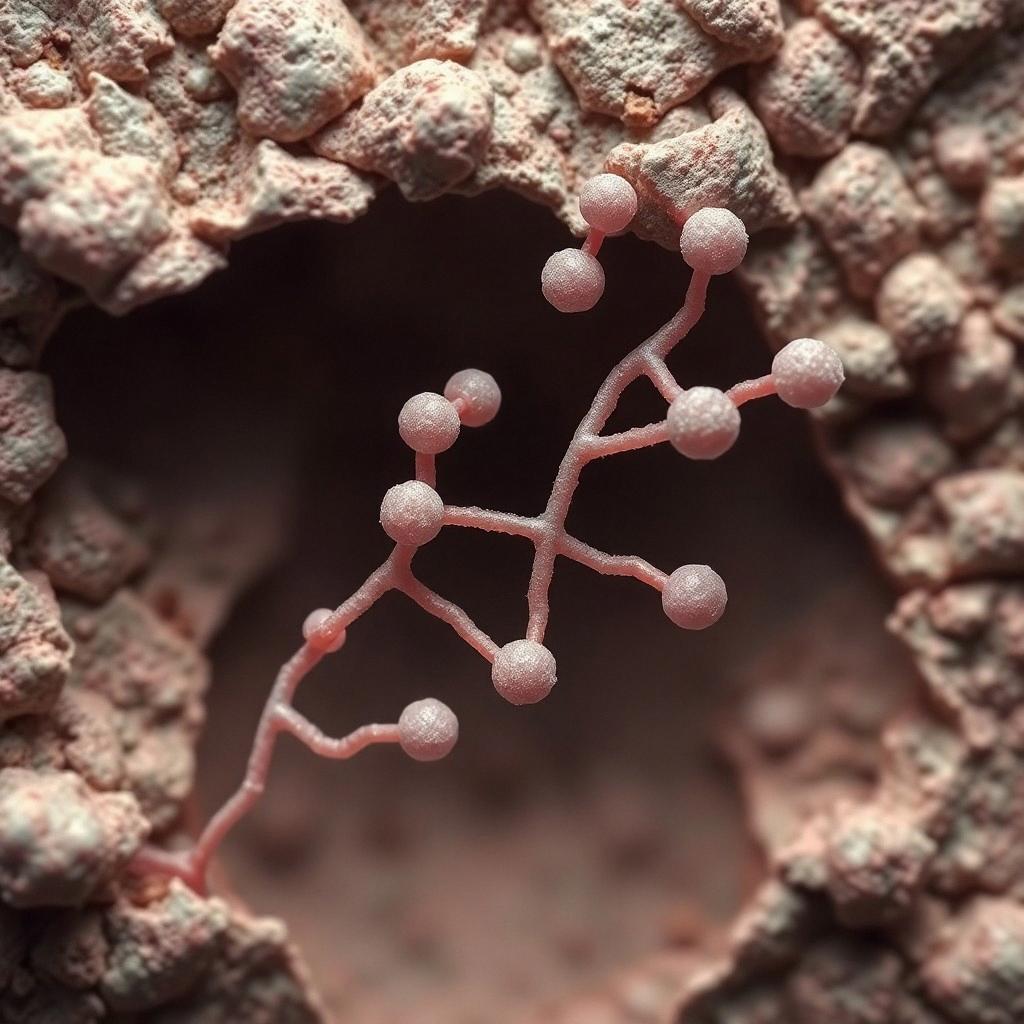
    Paper Review: Pachytene piRNAs define a conserved program of meiotic gene regulation Science Art

     Science Movie


    Make a narrated HD Science movie for this answer ($32 per minute)


     Discussion


    Get Ahead With Science Insights

    Custom summaries of the latest cutting edge Science research. Every Friday. No Ads.


    My BGPT