Examine the evidence base and provenance of specific claims made by authors or groups.Know what the science actually supports before you trust the answer.
Press Enter ↵ to review
Explore by Goal
"The beauty of a living thing is not the atoms that go into it, but the way those atoms are put together."
- Carl Sagan
Quick Explanation
Copied
Quan Chen (corresponding author, Nankai University) shows strong, mechanistically deep mitophagy research: the 2018 Cell Reports FUNDC1 paper and 2020 Antioxidants & Redox Signaling review establish him as a leading figure in mitochondrial quality control . Major blindspots: name ambiguity across a heterogeneous paper set and unverified citation metrics (OpenAlex rate-limited).
Long Explanation
Flagship Contribution: FUNDC1 Mitophagy and Muscle-Adipose Crosstalk
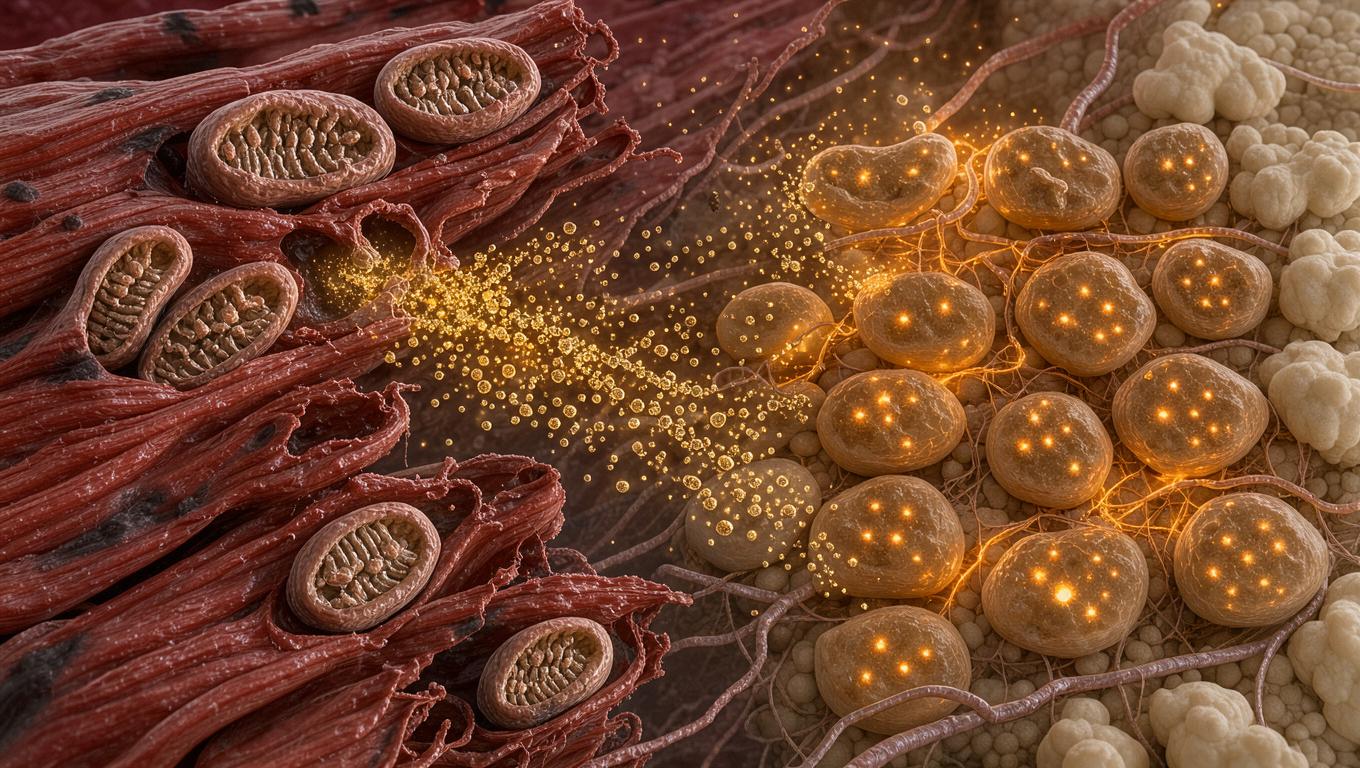
The strongest signal in this author portfolio is the 2018 Cell Reports study, which demonstrates that skeletal-muscle-specific FUNDC1 deficiency paradoxically protects against high-fat-diet obesity via a ROS→ATF4→FGF21 endocrine axis driving adipose beiging . Methodological rigor is high: two independent Cre lines address off-target recombination, FGF21-DKO and antibody-blocking experiments establish necessity (not just correlation), and n≈6–14 per group with GEO data deposition support reproducibility. Reported effect sizes are large and internally consistent:
The accompanying 2020 review (235 references, corresponding author) synthesizes PINK1/Parkin, FUNDC1, BNIP3/NIX, and PHB2 pathways with AMPK/mTOR and NAD+/SIRT1 regulation, confirming sustained field leadership .
Adjacent and Peripheral Work
Directly connected to the mitophagy theme is a 2025 lncRNA/autophagy atherosclerosis study (CARMN–CSNK1A1–AKT/ATG7 axis) with in vivo ApoE-/- validation (n=6/group) and mechanistic rescue experiments . A high-quality 2026 computational paper (MAP framework, 694,246-edge knowledge graph) and 2026 SCALE virtual-cell model both score 9/9 on extracted quality and novelty, though they may reflect a different Quan Chen .
Critical Blindspots and Name Ambiguity
Several papers (triazole-benzisoselenazolone chemistry, titanium implants, Tm:Ho:GdVO4 lasers, arylsulfonyl carbanion kinetics) almost certainly belong to different Quan Chens — a serious homonym confound given the common Chinese name . The OpenAlex author query returned a 429 rate-limit error, so h-index/citation counts could not be independently verified — a material gap for quantitative bibliometric assessment. Known limitations in the flagship work include female-biased cohorts, mouse-to-human translation gaps, incomplete exploration of alternative myokines, and partial heart FUNDC1 reduction in the MCK-Cre line . Confidence in the mitophagy-author assessment: high (strong mechanistic chain, data deposition); confidence in attributing peripheral papers: low.
Feedback:
Updated: October 27, 2026
BGPT Author Review
Scientific Quality
80%
The mitophagy Quan Chen demonstrates world-class mechanistic biology: dual Cre-driver conditional knockouts, necessity experiments (FGF21 DKO, antibody blocking), multi-omics with GEO deposition, and a highly cited 235-reference review anchoring the field. The Cell Reports paper's paradoxical finding (mitophagy deficiency protecting against obesity) required unusually careful causal chain-building. However, the portfolio mixes in weaker clinical work (score 5) and many likely-homonym papers, diluting attributable strength; citation metrics could not be verified due to OpenAlex rate-limiting. Deducting for inability to confirm track record breadth and some mid-tier outputs.
Communication Quality
70%
The flagship paper communicates a complex muscle-adipose endocrine axis with clear mechanistic figures and transparent limitation acknowledgment; the review is well-organized across pathways and tissues. Weaknesses: dense multi-panel figures typical of Cell Reports style, and the 2020 review lists an author set that includes an apparently erroneous 'Mary Liebert' (the journal publisher) — a metadata sloppiness red flag. Peripheral papers show variable clarity.
Author Novelty
80%
The 2018 finding that impairing mitophagy protects against dietary obesity via FGF21-mediated inter-organ signaling was genuinely counterintuitive and opened a mitohormesis subfield; the FUNDC1 receptor pathway itself was co-pioneered by this group. The 2026 computational work (MAP/SCALE) is cutting-edge but attribution is uncertain. The 2025 CARMN lncRNA study is solid but incremental within lncRNA-autophagy literature.
Scientific Rigor
80%
Strong rigor signals: two independent Cre lines to control for off-target recombination, FGF21 double-knockout and neutralizing-antibody necessity tests, autophagy flux assays with colchicine, raw data deposited in GEO (GSE99803), blinded histology in the HBV clinical study, and declared non-competing interests with funding transparency. Weaknesses: sex bias in mouse cohorts, retrospective single-center clinical design, and no direct structural confirmation in the scFv disulfide study (modeling-only). The erroneous author name in the 2020 review metadata suggests some citation hygiene lapses.
We'll email you the results when your analysis is finished.
Hypothesis Graveyard
'Mitophagy deficiency always impairs metabolism' — falsified by the Cell Reports paradox: chronic HFD stress converts mitochondrial dysfunction into an adaptive endocrine rescue via FGF21.
'A unique jaw-specific MLC1 isoform exists' — the cross-species study (19 species) showed MLC1E/A universally accompanies masticatory myosin, falsifying MLC1M.

 Explore by Goal
 Quick Explanation
 Long Explanation
 Top Data Sources
 Ask a Follow-Up
 Key Insight
 Keep Exploring
 Hypothesis Graveyard
 Potential Experiments
 Discussion
