Why BGPT?
logo

Test Your Hypothesis

Check your idea against supporting claims, contradicting results, and falsification criteria.Know what the science actually supports before you trust the answer.

Press Enter ↡ to test hypothesis


     BGPT Odds of True


    66%

    80% Confidence


    The hypothesis combines a genome claim (TX01 lacks lux genes) with an ecological interpretation (carotenoid/DMSP pathways indicate photoprotection or metabolic symbiosis). No supplied record covers TX01 or Anomalops katoptron, so verification is absent; the estimate reflects prior plausibility β€” lux bioluminescence is rare outside gammaproteobacteria while Roseobacter-group genomes commonly carry carotenoid and DMSP genes β€” plus analog support from mel2 and Litorimonas, with wide uncertainty.

     Hypothesis Novelty


    62%

    Light-organ microbiology has centered on luminous symbionts; recasting a specific non-luminous Roseobacter isolate as a photoprotective/metabolic associate is a fresh reframing, but it builds on well-established Roseobacter traits rather than a new mechanism.

     Long Analysis Plan


    What the supplied evidence can and cannot establish

    None of the eight supplied records mention Limimaricola soesokkakensis TX01 or Anomalops katoptron; TX01's lux content and pathway inventory cannot be verified here, and the hypothesis remains untested at the genome level. Two sourced analogues strengthen its plausibility. The lux-homologous mel2 locus of Mycobacterium marinum shows no observed light production yet fully rescues oxidative-stress survival when complemented (5 mM H2O2, 2 h: mutant 4-10% vs wild-type 76-84%), so luciferase-like enzymology can serve ROS defense instead of photon emission . In the Roseobacter-group phycosphere isolate Litorimonas RW-G-Af-16, carotenoid (crtZ, zeaxanthin) and DMSP-demethylation (dmdABC, acuH) genes co-occur in a host-associated symbiont ; symbiotic DMSP catabolism likewise feeds energy, carbon, and methionine metabolism in marine holobionts . Decisive missing evidence: direct TX01 genome annotation via HMM/BLAST screens for luxCDABE/luxR plus crt and dmd/ddd inventories.

    Bars: midpoints of reported survival ranges (n=3, 2 h exposure); error bars span the reported ranges. A lux-homologous locus protects against ROS without emitting light.


    Feedback:    

    Updated: September 07, 2026

     Top Data Sources ExportMCP


     Analysis Wizard


    Screening a bacterial genome assembly for luxCDABE, luxR, carotenoid crt, and DMSP dmd/ddd gene homologs using HMM profiles, reporting presence, absence, and copy number to distinguish bioluminescence from photoprotective sulfur metabolism.


     Hypothesis Graveyard


    TX01 is a degenerate luminous symbiont that lost lux secondarily β€” unlikely without genome-reduction signatures of obligate mutualists; a metabolically rich Roseobacter profile instead fits an environmental associate.


    Carotenoid/DMSP genes imply light production β€” falsified because carotenoids quench excited states rather than generate photons, and no known carotenoid-DMSP pathway emits bioluminescence.

     Science Art


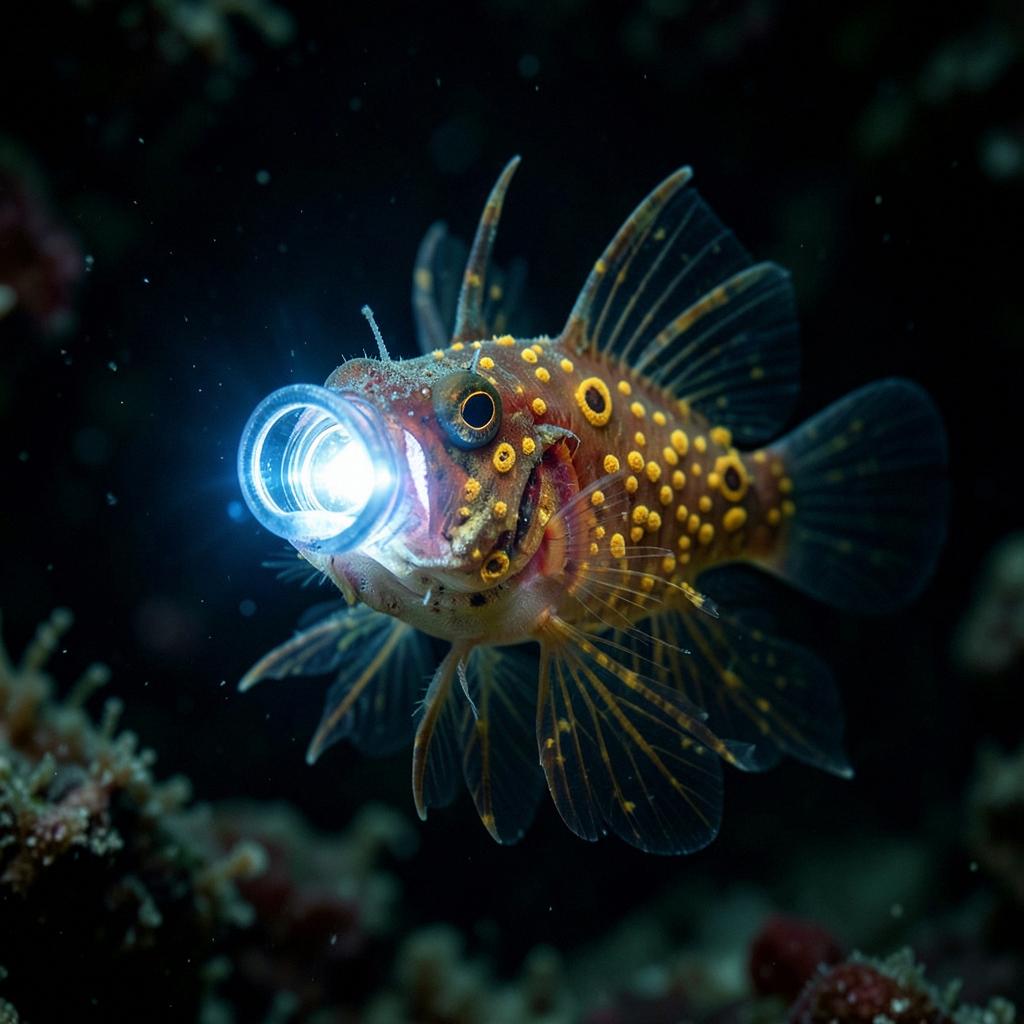
    Does Limimaricola soesokkakensis TX01 from the Anomalops katoptron light organ lack lux bioluminescence genes, and do its Roseobacter-like carotenoid and DMSP pathways suggest a photoprotective or metabolic symbiotic role rather than light production? Science Art

     Science Movie


    Make a narrated HD Science movie for this answer ($32 per minute)


     Discussion


    Stay current without chasing every paper.

    Know what changed, what holds up, and what remains uncertain. Every Friday. No ads.


    My BGPT