See how your reported results read as versioned evidence records — linked to experiments and limitations.Know what the science actually supports before you trust the answer.
Press Enter ↵ to review claims
Explore by Goal
"Science is the systematic classification of experience."
- George Henry Lewes
Quick Explanation
Copied
Yafei Mao — scientific strength snapshot
The provided publication evidence points to strong computational genomics + regulatory-genome-architecture capability, especially in the human-specific NPEPPS–TBC1D3 joint segmental duplication (SD) model and readthrough-driven expression tuning.
Long Explanation
BGPT Author Review — Yafei Mao
Evidence basis is limited to the information you provided (not a full bibliographic sweep). Where claims depend on the supplied manuscript excerpt, they are strictly tied to that paper’s details.
1) Evidence inventory (what we can responsibly evaluate)
Author-level citation metrics (from your dataset): h-index = 2; total citations = 33; paper count = 4; citations appear modest-to-early-career (time since publication not provided).
Manuscript evidence with the most detail provided: “Joint Segmental Duplication Co-option Drives Human-specific Transcriptional Readthrough and Expression Fine-tuning of NPEPPS - TBC1D3” (DOI: 10.64898/2026.01.14.699191).
Other listed papers are named but no DOIs/excerpt content were supplied here, so rigorous critique of those specific works is constrained.
2) Visual: Core biological claims distilled into a mechanism map
Evidence grounding:
The map reflects the supplied excerpt’s mechanistic sequence: joint SD → human-specific configuration → predominant readthrough transcripts → upstream CpG island association → 5' UTR extension → inferred translation efficiency modulation → neural-lineage expression tuning, with cross-species differences.
Important limitation: The excerpt provides multiple snapshot ranges across different ages/conditions (e.g., at 39M and 37M). The plot above uses only the explicitly stated “range endpoints” visible in the excerpt (“NPEPPS copies range 1–10… TBC1D3 copies range 2–20”); it does not capture all nuance.
4) Evidence strength: what the author’s work appears to do well
4.1 Multi-modal genomic + transcriptomic workflow
The excerpt lists a broad pipeline covering structural variant/copy-number assessment, long-read transcript alignment, expression quantification, fusion/readthrough detection, methylation analysis, transcript validation, and ribosome profiling, supported by multiple visualization/analysis toolchains.
Skeptical interpretation:
A broad toolkit can improve coverage, but breadth does not guarantee causal inference. Here, the excerpt itself flags challenges in mapping and that some translation effects are inferred.
4.2 Mechanism targets a concrete genomic configuration
The central mechanistic claim is specific: a joint SD co-option between NPEPPS and TBC1D3 produces readthrough transcripts whose 5' UTR extension changes translation efficiency and thereby tunes TBC1D3 expression in neural lineages, with CpG-island methylation serving as a regulatory correlate.
5.1 Copy-number / mapping ambiguity in duplicated regions
The excerpt explicitly notes ambiguous read mapping due to extremely similar paralogous copies across the NPEPPS and TBC1D3 loci, which can confound copy-number estimates and affect selection metrics such as Tajima’s D interpretations.
5.2 Translation effects are partly inferred from ribosome profiling and constructs
The excerpt states that translation efficiency effects are inferred from ribosome profiling and in vitro constructs rather than directly measured across all relevant human tissues, limiting generality.
5.3 Cross-species annotation differences could bias readthrough comparisons
The excerpt flags that cross-species annotation differences (e.g., NPEPPS-CCL4 readthrough in chimpanzee/bonobo) could bias interpretation of readthrough events in non-human primates.
5.4 Generalization beyond the studied loci remains open
Although the excerpt claims that the observed joint SD–associated transcriptional readthrough (JSDTR) may represent a general route to regulatory innovation, the strength of “generality” depends on whether comparable mechanisms are shown across multiple independently validated loci; from your excerpt, that breadth is not demonstrated—so this is plausible but uncertain.
6) Summary of scientific profile (based on provided evidence only)
Strength signals: the work emphasizes genome architecture and human-specific regulatory outputs, combines long-read and short-read evidence, and attempts functional linkage to translation via readthrough-produced 5' UTR changes.
Primary scientific risk: duplicated-region measurement uncertainty (mapping/copy-number) plus incomplete in vivo causality and partial inference for translation efficiency.
7) Falsifiability check (what would change the conclusion)
The excerpt proposes a falsification route: disrupt the 39M joint SD structure (e.g., delete/disable NPEPPS-39M or its upstream CpG island) and test whether readthrough transcripts and TBC1D3 expression persist.
Confidence (on the excerpted claims):
Moderate confidence that the described association and regulatory model is plausible given the multi-modal evidence in the excerpt; lower confidence in full causal generality across contexts because mapping ambiguity and reliance on inferred translation mechanisms and cell-based validation are explicitly noted.
8) Table: What is explicitly claimed vs what is explicitly uncertain (from excerpt)
Category
Excerpted statement
Scientific status (as reflected in excerpt)
Human specificity
Human-specific NPEPPS–TBC1D3 joint SD structure is reported as fixed in humans.
Claim (supported within excerpt; cross-species comparisons subject to mapping/annotation caveats).
Readthrough as predominant source
Readthrough transcripts are reported as the predominant source of TBC1D3 expression in neural-lineage cells.
Claim (but generality across all tissues not established in excerpt).
CpG methylation correlate
A hypomethylated CpG island upstream of NPEPPS-39M marks the expressed paralog.
Claim (correlational; causal scope not fully proved in excerpt).
Translation mechanism
Readthrough extending the 5' UTR lowers translation efficiency of TBC1D3; translation efficiency is described as inferred from ribosome profiling and in vitro constructs.
Mechanistic claim with explicit uncertainty (inference limits).
Measurement uncertainty
Ambiguous read mapping in duplicated paralogous regions can confound copy-number estimates and Tajima’s D interpretations.
Functional validation is limited to overexpression/cell-based assays, which may not fully recapitulate endogenous regulation.
Explicit limitation on causality/generalization.
Citation anchor: All table entries are derived from the provided excerpt of 10.64898/2026.01.14.699191.
What would disprove this author’s central model?
If the 39M joint SD (or upstream CpG-driven regulatory state) is disrupted and readthrough transcripts and TBC1D3 expression do not change as predicted, or if alternative loci fully compensate to restore expression, the central causal claim would be weakened.
Feedback:
Updated: April 09, 2026
BGPT Author Review
Scientific Quality
70%
Based on the single detailed manuscript excerpt you provided, the scientific profile looks strong in integrative computational genomics and mechanistic gene-regulation reasoning (genome architecture → transcriptional readthrough → expression/translation modulation). The main weakness is that several causal steps are partly inferred and the excerpt flags important measurement and generalization limitations (duplicated-region mapping ambiguity; translation efficiency inferred; functional validation constrained largely to cell/organoid-like contexts). Citation metrics provided (h-index 2; citations 33; 4 papers) suggest early-career impact rather than established field-leading dominance.
Communication Quality
60%
From the excerpt alone, communication seems methodologically dense but not necessarily narrative-clear about causality strength. The work appears to enumerate many tools and assays; without full paper text/figures, it’s hard to judge clarity of figures, argument structure, and how uncertainties are communicated.
Author Novelty
70%
The central concept—joint segmental duplication co-option producing readthrough transcripts that tune gene expression (including 5' UTR-mediated translation effects)—is a meaningful and potentially novel mechanistic framing. However, novelty across the broader genomics literature depends on comparative examples and breadth, which is not fully verifiable from the provided excerpt.
Scientific Rigor
70%
Rigor appears relatively high due to multi-modal evidence and explicit limitations listed in the excerpt (mapping ambiguity in duplicated regions; cross-species annotation sensitivity; limited in vivo causality; translation inference). Still, rigorous causal proof in endogenous contexts appears incomplete in the excerpt, and some conclusions rely on inferred translation efficiency.
We'll email you the results when your analysis is finished.
Hypothesis Graveyard
The hypothesis that readthrough-to-translation modulation is primary may fail if endogenous endogenous tissue measurements show TBC1D3 protein levels track directly with canonical promoter activity rather than inferred translation efficiency shifts from 5' UTR extension.
The human-specificity claim could be undermined if improved mapping/annotation reassigns readthrough origins in non-human primates or reveals a cryptic orthologous regulatory architecture that was missed due to paralog ambiguity.

 Explore by Goal
 Quick Explanation
 Long Explanation
 Top Data Sources
 Ask a Follow-Up
 Key Insight
 Hypothesis Graveyard
 Potential Experiments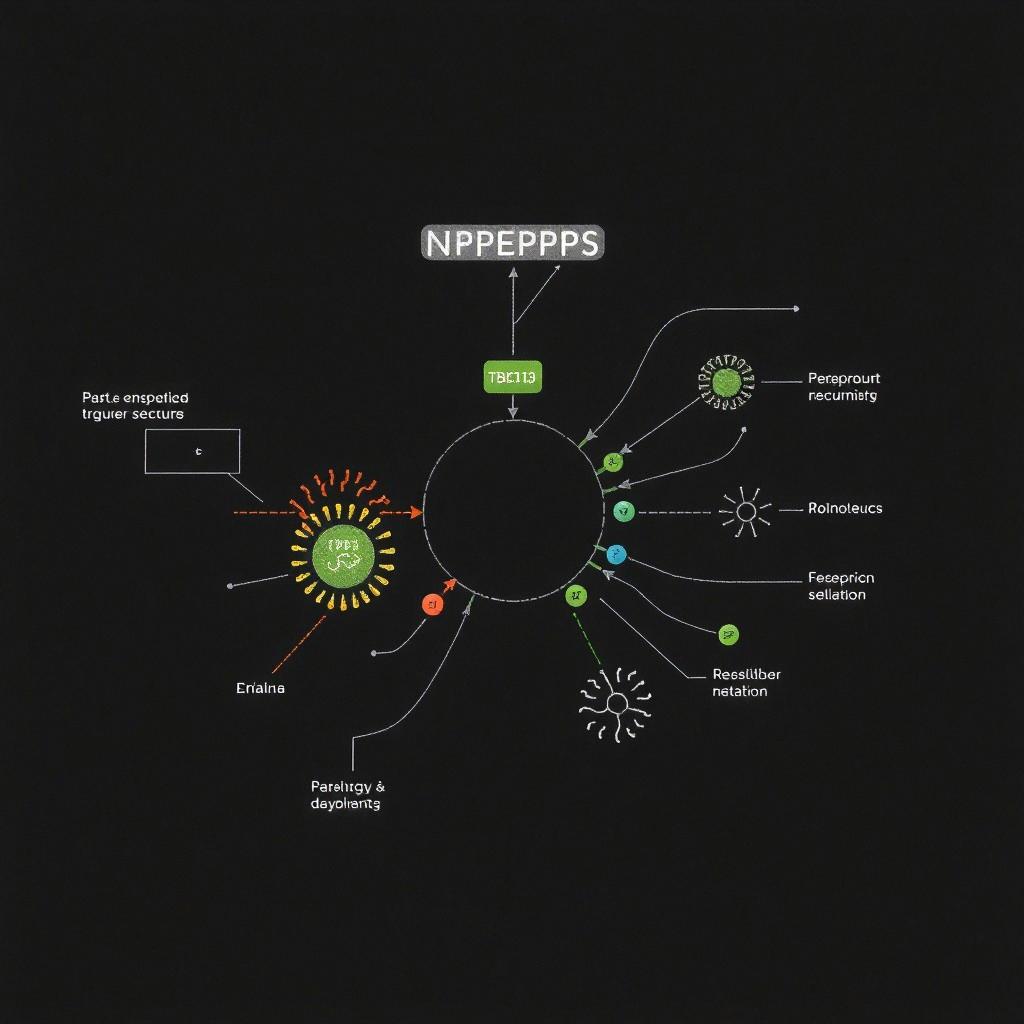
 Discussion