Why BGPT?
logo

Review papers with raw data transparency

Quickly verify claims by accessing the underlying experimental data and figures.


Press Enter ↵ to solve


    Fuel Your Discoveries


     Quick Explanation


    Paper in one line (skeptical take)
    The review argues that gut microbiota likely influences blood-pressure regulation and cardiorenal complications via diet–microbe–metabolite pathways, but it repeatedly flags a core unsolved problem: associations (especially in humans) are not yet causation-level resolved.
    Evidence pathways emphasized include microbiota transfer experiments (FMT) in animals, metabolite mechanisms (notably SCFAs and TMAO), and the push for experimental designs that dissociate correlation from causation.
    Key framing: “no direct causation” from microbes per se is established, and mechanism/causal taxa remain unresolved in patients.


     Long Explanation


    Paper Review: Gut microbiota & hypertension (Hypertension, Dec 2020)
    Authors (from provided text): Francine Z. Marques; Rikeish Muralitharan; Hamdi A. Jama; Liang Xie; Alex Peh; Matthew Snelson.
    1) Core claim map (known vs uncertain)
    Direction of evidence
    Microbiota and BP are linked, including via altered microbiota under hypertension phenotypes and by diet/sodium effects.
    Causation status
    Transfer experiments exist, but the review explicitly states that causation is not fully pinned down to microbes acting directly vs metabolites vs host immune interactions.
    Mechanistic plausibility
    Metabolites with receptors (e.g., SCFAs via GPCRs; TMAO) provide plausible mechanistic links, but receptor/phenotype specificity and human translation remain uncertain.
    2) Visual: “Microbe → metabolite → host pathway → phenotype”
    Gut ecosystem state
    Inputs:
    • Dietary fiber / fermentable substrates → microbial fermentation
    • Sodium / high-salt diet → alters taxa (e.g., Lactobacillus shifts) and metabolites
    • Host factors: genetics, early-life colonization, compartment crosstalk
    Microbial outputs
    Metabolites highlighted:
    • SCFAs (acetate, propionate, butyrate) → vasodilation/immune modulation
    • TMAO → associated with cardiovascular risk; role in hypertension less clear
    Host sensing & response
    • SCFAs act via GPCRs (e.g., GPR41/GPR43/GPR109A/OLF78) and epigenetic/metabolic routes
    • TMAO links to oxidative stress/endothelial dysfunction in cardiovascular contexts
    • Gut barrier integrity modulates translocation of microbial products and immune tone
    Phenotypes
    • Essential hypertension
    • Cardiorenal complications: CKD, stroke, MI, heart failure
    3) Causal evidence you can actually trust more (and what still isn’t solved)
    FMT / germ-free transfer logic
    The review highlights that germ-free mice do not develop Ang II–induced hypertension (in cited work) and that FMT from hypertensive donors can reproduce elevated BP in recipients, supporting microbiota-dependence and transmissibility.
    Skeptical constraint: microbiota transfer still doesn’t isolate which microbial molecules (live microbes vs metabolites) are causally sufficient in humans; and animal facilities/cage/diet effects can confound interpretation.
    Mechanism plausibility: SCFAs (receptors + physiology)
    The review argues SCFAs influence BP via receptor pathways (e.g., GPR41 for endothelial effects is cited) and by immunometabolic modulation; however, it stresses complexity and possible redundancy across receptors.
    Mechanism plausibility: TMAO (risk association vs hypertension role)
    TMAO is emphasized as detrimental in cardiovascular contexts; for hypertension specifically, the review describes the role as less evident and calls for more delineation.
    4) Human study limitations: where the field is most likely overconfident
    The review calls out multiple practical limitations of microbiome–BP association studies, including measurement of office BP vs ambulatory profiles, medication mixing, limited dietary/ethnicity control, and sample-size/phenotype tradeoffs.
    Notable issues explicitly emphasized
    • Association fallacy: microbiota differences don’t prove mechanistic causation.
    • Phenotyping problems: office BP/self-report can miss masked/white coat hypertension and limits temporal/circadian analysis.
    • Confounding: dietary info, medication classes, sex, ethnicity, multicenter recruitment vary widely.
    • SCFA measurement mismatch: plasma vs fecal levels can differ and SCFAs are volatile, requiring standardized sampling/handling.
    5) “Therapeutic” section—what it supports vs what it can’t yet conclude
    Prebiotic/diet → microbiota shifts
    The review links fermentable substrates and fiber to changes in microbial communities and SCFA production, and notes epidemiological/interventional evidence for fiber being protective in cardiovascular contexts.
    Probiotics: clinical effects are modest/inconsistent
    The review reports that meta-analyses suggest modest BP reductions, but also emphasizes that trials vary by strain, duration, blinding, and cohort characteristics, and that effect sizes may be small.
    Postbiotics (SCFAs): strong preclinical logic, uncertain human efficacy
    The review argues SCFA receptor pathways and systemic effects motivate postbiotic strategies, but it states translation to hypertensive patients remains unclear.
    6) Most important blind spots (why “microbial peer pressure” is a tempting but risky metaphor)
    The paper’s title/topic here (“microbial peer pressure”) reads like a mechanism of social/ecological interaction among microbes affecting host outcomes. However, the review’s most testable causal content is not framed as inter-microbial “pressure” but rather as community composition and metabolite-mediated host signaling; thus, the metaphor could distract from harder causal experiments.
    • Microbe vs metabolite sufficiency: FMT implies causality but does not isolate which components are sufficient in humans.
    • Taxonomic resolution limits: 16S/shotgun differences and functional redundancy can make “blame taxa” unstable across studies.
    • Host-ecology confounding: gut barrier dysfunction, immune tone, and facility/diet differences can dominate observed associations.
    • Directional ambiguity: hypertension may itself reshape the microbiome (reverse causation risk), and timing of dysbiosis is unclear.
    7) What would most disprove the main direction of the review?
    The review’s own “move from association to causation” guidance implies disproof tests: show that manipulating microbiota/metabolites does not affect BP, or that observed microbiome differences are downstream without causal impact.
    Disproof checklist (mechanistic)
    • When microbial communities are experimentally standardized, BP differences vanish (no residual effect).
    • When microbial metabolites are neutralized/blocked, microbiota transfer no longer elevates BP.
    • When barrier dysfunction and immune activation are held constant, microbiota-induced BP effects diminish.


    Feedback:   

    Updated: April 07, 2026

    BGPT Paper Review


    Study Novelty

    70%

    The paper is a review consolidating established microbiome–hypertension links while emphasizing causality-testing strategies (FMT/germ-free, metabolite receptor focus) and explicitly cataloging human study limitations; novelty is mostly in synthesis + framing rather than new data.


    Scientific Quality

    80%

    Scientific quality is solid for a mechanistic review: it clearly distinguishes association vs causation, cites mechanistic pathways (SCFAs/TMAO, receptors, barrier/immune context), and flags reproducibility/phenotyping problems in humans. As a review, it inherits limits of included studies (species/generalization, confounding, and heterogeneity) and cannot independently resolve causality.


    Study Generality

    70%

    It covers a broad hypertension–cardiorenal complication space, but the mechanistic focus remains centered on gut microbiota metabolites/receptors and specific risk factors (diet/sodium). Generality is moderate: informative across cardiovascular complications, but tightly scoped to microbiome pathways.


    Study Usefulness

    90%

    High utility as a roadmap: it identifies the field’s biggest methodological bottlenecks (BP phenotyping, medication/diet confounding, SCFA measurement variability) and proposes concrete causal-experiment logic (forward/reverse microbiome approaches, triangulation).


    Study Reproducibility

    60%

    Reproducibility depends on the reproducibility of the underlying primary studies. The review points to transparency guidelines for microbiome studies in hypertension, but as a review it does not provide a reproducible dataset or pipeline.


    Explanatory Depth

    70%

    Mechanistic explanations are reasonably deep (metabolites, receptors, barrier/immune context) but remain partly schematic because the paper’s central limitation is that human causal taxa/mechanisms are not fully resolved.


    🎁 Authors: Collect 296 Free Science Tokens (≈ $29.6 USD)

    Claim My Author Tokens

    Use for 74 days of free BGPT access (4 tokens = 1 day) or trade/sell (≈ $29.6 USD)

     Top Data Sources ExportMCP


     Analysis Wizard


    None—this request is a rigorous paper review; no new raw omics dataset was provided to analyze quantitatively.


     Hypothesis Graveyard


    “TMAO is the main cause of hypertension” as a unifying explanation is weakened by the review’s own statement that TMAO’s role in hypertension is less evident than in other cardiovascular risk contexts and by the mechanistic complexity of hypertension.


    “One taxon drives BP in all individuals” is unlikely given repeated emphasis on heterogeneity across cohorts, species/facility effects, and the review’s push for community/metabolite-level causal testing instead of single-taxon blame.

     Science Art


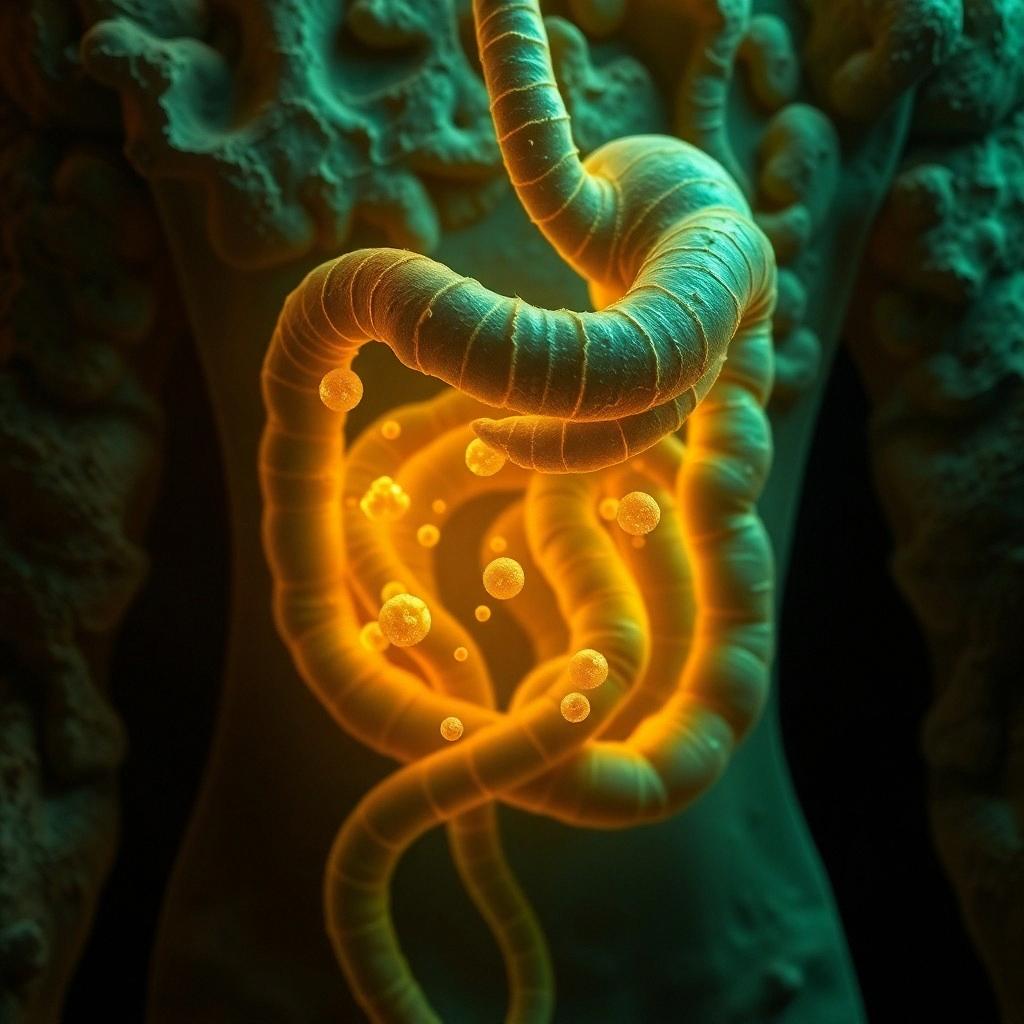
    Paper Review: Microbial Peer Pressure Science Art

     Science Movie


    Make a narrated HD Science movie for this answer ($32 per minute)


     Discussion


    Get Ahead With Science Insights

    Custom summaries of the latest cutting edge Science research. Every Friday. No Ads.


    My BGPT