Why BGPT?
logo

Review papers with raw data transparency

Quickly verify claims by accessing the underlying experimental data and figures.


Press Enter ↡ to solve


    Fuel Your Discoveries


     Quick Explanation


    Paper focus
    This review synthesizes how the IL-10 cytokine family spans viral homologs (herpesviruses + poxviruses) and cellular paralogs (IL-19, IL-20, IL-22/IL-TIF, IL-24/MDA-7, IL-26/AK155), emphasizing (i) shared structural topology (IL-10-like helical architecture), (ii) receptor usage via CRF2-type heterodimeric receptors, and (iii) distinct expression patterns that likely drive divergent biology.


     Long Explanation


    Review critique: β€œThe interleukin-10 family of cytokines”

    Journal/year: Trends in Immunology (Feb 2002) β€’ DOI: 10.1016/S1471-4906(01)02149-4
    This is a literature synthesis review rather than a primary experimental study, so the evidentiary burden depends on how faithfully cited primary work supports each mechanistic claim.

    1) VISUALIZE the IL-10-family β€œidentity landscape” (viral homologs)

    The paper provides sequence identity (%) of viral homologs relative to human IL-10 (Table 1 excerpt shown in the provided text).
    What this visual supports (and what it doesn’t):
    • Supports: the paper argues there’s a conserved IL-10-like protein family across large DNA viruses, with a split between high identity (EBV/HVP/EHV-2/Orf/YLDV) and low identity (HCMV/SCMV).
    • Doesn’t automatically prove: function tracks identity. The review discusses that even low-identity viral homologs can still engage the IL-10 receptor complex, but details depend on experimental system and receptor-binding residues.

    2) VISUALIZE receptor β€œtype-2 heterodimer logic” (concept map)

    The paper emphasizes that diverse IL-10-family ligands can signal via CRF2-type receptor heterodimers (long chain + accessory membrane-spanning chain), with tissue-specific receptor subunit availability as a key determinant of biological outcomes.
    Skeptical note: receptor promiscuity and tissue-specific subunit expression are plausible mechanistic levers, but this review’s framing is still inferential where direct in vivo demonstration for every paralog/receptor pairing is incomplete.

    3) VISUALIZE expression-pattern claims (cellular paralogs, human)

    The paper provides chromosomal localization and β€œidentity to human IL-10” for cellular paralogs (Table 2) and narrates tissue/cell-type expression patterns for several family members.
    Interpretation: the review emphasizes that cellular paralogs are structurally homologous but diverged enough that receptor usage and tissue expression patterns likely determine functional specificity.

    4) Long-form scientific critique (known β†’ inferred β†’ uncertain)

    A. Known / strongly supported by cited structural work (as presented)
    • Shared fold/topology: the review states 3D structures are known for human IL-10 and EBV IL-10 and that both form V-shaped dimers with six-helix bundles per arm.
    • Receptor complex logic: the review describes a two-step binding model with IL-10 first binding IL-10R1 (high affinity) and then IL-10R2 (lower affinity), supported by the IL-10/IL-10R1 complex structure and proposed larger complexes.
    B. Inferred / model-based conclusions
    • Family definition via structural homology: the review uses sequence identity patterns and conservation of hydrophobic helix patterns to argue structural homology across viral and cellular family members.
    • Tissue specificity as a functional switch: it argues diverse biological effects of paralogs are controlled β€œmost probably” by tissue-specific expression of ligand-specific heterodimeric CRF2 receptors.
    C. Uncertain / potentially fragile points
    • Functional generalization across members: the review repeatedly states that biological activities of cellular paralogs are β€œstrictly distinct” from IL-10 (as far as known), but it also acknowledges uncertaintiesβ€”e.g., IL-20’s main producing cell type remains unclear at the time of writing.
    • Signaling-pathway completeness: it notes alternative signaling pathways were not investigated yet beyond STAT-centric signaling. This limits mechanistic completeness and could bias interpretation if non-STAT routes contribute.
    • Viral immunity-evasion inference: for CMV IL-10, the review β€œspeculates” immunosuppression might be relevant for immune evasion during infection. That’s a plausible hypothesis, but speculative and dependent on in vivo kinetics, dosing, localization, and host immune context.
    D. How this review handles bias & reproducibility (as a review)
    • No raw-data reproducibility: the review’s β€œdata availability” is essentially absent because it synthesizes prior work, so reproducibility is primarily about whether the underlying citations are correct and comprehensive.
    • Coverage bias risk: the review itself states that the list of proposed disease associations is β€œunlikely to be complete,” which is an implicit acknowledgment of omission bias.

    5) Structured takeaway table (what the review claims, and the β€œevidence type”)

    Below, I classify claims as structural, receptor-signaling, expression/functional, or speculative, based on how the review phrases them.
    Topic Representative claim (from paper text) Evidence type (as presented)
    Structural fold Human IL-10 and EBV IL-10 form V-shaped dimers with six Ξ±-helices per arm Structural
    Receptor binding IL-10 binds IL-10R1 high affinity then recruits IL-10R2 lower affinity; receptor-binding residues define a conserved hot spot Receptor-signaling
    Receptor-family model CRF2-type heterodimer receptor availability and STAT activation explain diverse IL-10-family outcomes Receptor-signaling (model)
    Expression patterns Paralog-specific expression patterns (e.g., IL-22 from CD4+ T cells; IL-19 from activated monocytes; IL-20 expression unclear) Expression/functional
    Viral functional inference CMV IL-10 may enable local/systemic immunosuppression during infection (explicitly framed as tempting speculation) Speculative


    Feedback:   

    Updated: April 19, 2026

    BGPT Paper Review


    Study Novelty

    90%

    High novelty for its time because it coalesces a unifying IL-10-family framework spanning both viral homologs and multiple cellular paralogs, explicitly tying structural homology to CRF2 receptor usage and STAT-centric signaling logic.


    Scientific Quality

    90%

    Scientifically strong as a mechanistic synthesis anchored in structural/receptor-binding concepts presented in the review, with clear separation of conserved fold vs divergent receptor interactions; however, as a review, it cannot provide new experimental validation and therefore inherits citation completeness/selection risks.


    Study Generality

    80%

    General because it frames a cross-kingdom (host-virus) cytokine-family logic and receptor-family signaling principles, though specific biological outcome mappings depend on which paralogs/receptors are experimentally established.


    Study Usefulness

    90%

    Useful as a structured reference for IL-10-family: members, sequence conservation, receptor complexes, and how expression patterns could generate phenotype diversity; it also provides a vocabulary (CRF2 heterodimers, IL-10R1/IL-10R2, STAT logic) for interpreting new data.


    Study Reproducibility

    70%

    Moderate: methods are described at a conceptual level (sequence/structure comparisons, receptor structural interpretations), but the review format provides no raw datasets or reproducible pipelines beyond citing prior work.


    Explanatory Depth

    90%

    Deep mechanistic depth for its era: it links helix-dimer topology, receptor-binding interface logic, receptor-family heterodimer promiscuity, and STAT-mediated transcriptional pathways to explain why closely related ligands can behave differently.


    🎁 Authors: Collect 500 Free Science Tokens (β‰ˆ $50.0 USD)

    Claim My Author Tokens

    Use for 125 days of free BGPT access (4 tokens = 1 day) or trade/sell (β‰ˆ $50.0 USD)

     Top Data Sources ExportMCP


     Analysis Wizard


    Extract Table 1 and Table 2 identity values from the provided IL-10-family text, then generate comparative plots and a receptor-usage summary matrix linking ligand class to receptor complexity.


     Hypothesis Graveyard


    The idea that viral IL-10 function is mostly proportional to sequence identity to human IL-10 is weakened by the review’s own framing: low-identity CMV/SCMV IL-10 can still engage the classical receptor complex via conserved receptor-binding determinants.

     Science Art


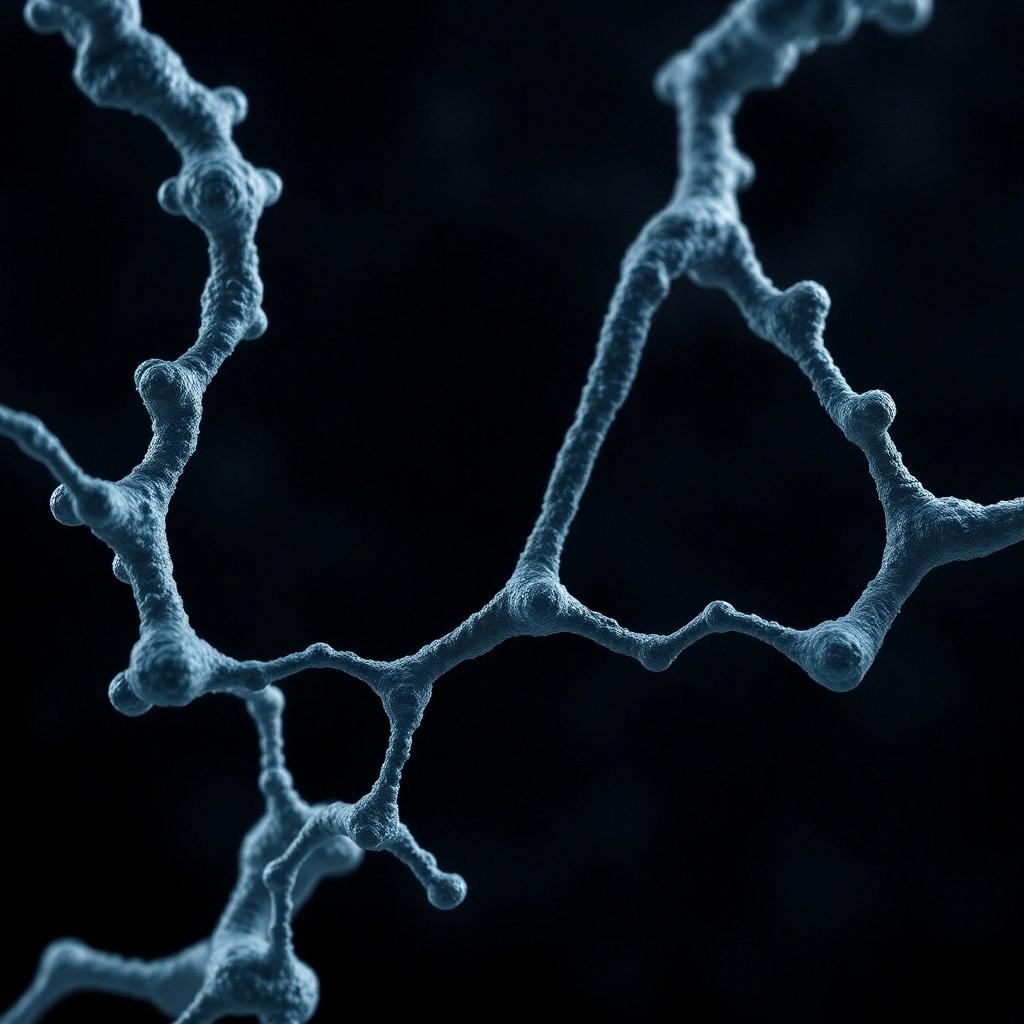
    Paper Review: The interleukin-10 family of cytokines Science Art

     Science Movie


    Make a narrated HD Science movie for this answer ($32 per minute)


     Discussion


    Get Ahead With Science Insights

    Custom summaries of the latest cutting edge Science research. Every Friday. No Ads.


    My BGPT