Quickly verify claims by accessing the underlying experimental data and figures.
Press Enter ↵ to solve
Fuel Your Discoveries
"The scientific man does not aim at an immediate result. He does not expect that his advanced ideas will be readily taken up. His work is like that of the planter - for the future. His duty is to lay the foundation for those who are to come, and point the way."
- Nikola Tesla
Quick Answer
Copied
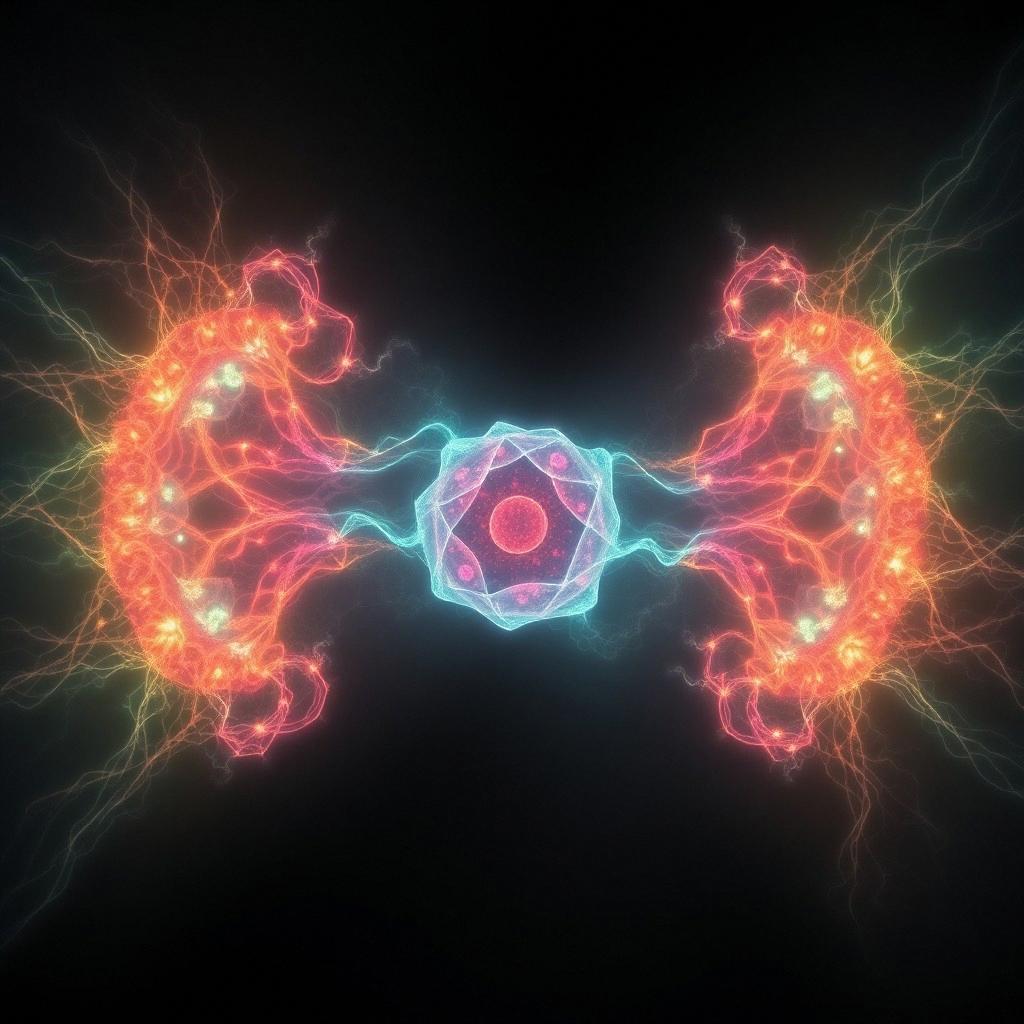
Core claim: CHIP/STUB1 dynamically remodels the nucleolus under heat shock into a reversible proteostasis (PQC) storage state by steering HSP70 away from refolding toward sequestration and transient suppression of rRNA synthesis, while VCP/p97 drives ubiquitinated-substrate flux to enable recovery; intrinsic nucleolar gatekeepers NOL6 and WDR55 tune storage vs exit, producing three structural “PQC capacity” morphologies (free-flow, peripheral, sealed).
Skeptical punchline: The work is mechanistically rich (genetic + FRAP + reporters + RNA-seq + morphologies + proteostasis readouts), but several causal links remain inferential (e.g., VCP inhibitor effects on nucleolar flux; DRiPs vs stalled ribosome complexes as retained “clients”; and incomplete substrate/Ub-chain-type identification within nucleoli).
Long Answer
Paper Review (visual + skeptical, evidence-based)
Paper
“CHIP, VCP, and Nucleolar Gatekeepers Remodel the Nucleolus into a Stress-Responsive Proteostasis Hub”
Heat paradigm, cell models, and multi-modal assays are detailed in the provided text (e.g., HeLa Flp-In T-REx, HEK293 Flp-In T-REx, MCF7; 42°C heat shock with recovery; imaging, FRAP, luciferase/5-EU/OPP/DRiP reporters, inhibitors/knockdowns, and RNA-seq with GEO deposition).
1) Visual framework: what the authors propose
Evidence basis (from the preprint text): CHIP nucleolar recruitment during heat shock and dynamic release during recovery; CHIP/HSP70 coordination; Ub-dependent sequestration and delayed clearance; VCP/p97 dependence for nucleolar ubiquitin flux and recovery; NOL6 and WDR55 opposing effects; and three nucleolar morphologies correlated with PQC fates during stress recovery.
2) Data visualization from the paper text (quantitative anchors)
The preprint reports uniquely regulated genes under heat shock in CHIP-depleted vs control cells (heat shock condition, with recovery context described in the text).
The text emphasizes that CHIP expands storage/sequestration and delays clearance (including persistence of luciferase/sequestration foci and DRiPs), which antagonizes recovery of rRNA synthesis during stress recovery; conversely, conditions that block nucleolar PQC resolution can bias toward “sealed” or “storage-dominant” states with impaired rRNA recovery.
3) Evidence evaluation by claim (known vs inferred vs uncertain)
Claim A — CHIP is recruited to nucleoli during heat shock and released during recovery
Known (supported by the paper text): CHIP enrichment in nucleoli after heat shock, release during recovery, and heat specificity versus several other stressors (arsenite/sorbitol/thapsigargin/puromycin).
Mechanistic inference (conditional): Super-resolution imaging places CHIP predominantly in the granular component (GC) with weak overlap to DFC, consistent with GC-linked storage of misfolded clients.
Claim B — CHIP promotes HSP70-mediated sequestration and biases the fate of misfolded clients
Known (supported): CHIP overexpression increases nucleolar dispersed FBL phenotypes during heat and recovery and increases nucleolar sequestration of a thermolabile luciferase reporter independent of additive HSP70 co-expression.
Known (supported): CHIP mutants indicate HSP70-binding/adaptor logic: CHIP K30A (HSP70-binding defective) fails to promote DRiP accumulation; both WT CHIP and catalytic-inactive H260Q promote DRiPs accumulation.
Inferred (needs further direct biochemical specificity): The paper argues ubiquitination/deubiquitination act as switchable signals rather than passive damage marks; however, chain types and direct CHIP nucleolar substrates are not fully resolved in the provided text.
Claim C — VCP/p97 is required for Ub-substrate flux and nucleolar recovery
Known (supported): VCP inhibition (CB5083) reduces nuclear Ub and suppresses recruitment of VCP/Ub to nucleoli; it also disrupts nuclear Ub–CHIP foci in WDR55-depleted cells and reduces overall nucleolar Ub burden while CHIP localization is largely preserved.
Uncertainty (explicitly acknowledged): The authors use inhibitor-based and localization-based logic rather than direct measurements of VCP ATPase/segregase action inside nucleolar condensates; this can confound interpretations about which substrate pool is fluxing and whether the effect is direct vs indirect.
Claim D — NOL6 and WDR55 act as opposing intrinsic gatekeepers controlling storage capacity vs exit
Known (supported): NOL6 depletion reduces CHIP sequestration during stress and promotes faster recovery; WDR55 depletion impairs CHIP clearance during recovery, increasing persistence of a storage-active state and correlating with persistent DRiPs foci.
Important causal caveat: Some phenotypes may be indirectly driven by rRNA metabolism and dynamics, not solely by PQC architecture; the preprint explicitly notes indirect contributions via altered rRNA metabolism cannot be excluded.
4) Mechanistic integration with condensate physics & nucleolar biology (grounding, not speculation)
Why “condensate” language is relevant (supported context)
Nucleoli are widely modeled as multiphase liquid condensates, with coexisting liquid phases underlying subcompartments.
Phase separation-based models also frame nucleolar roles in protein QC, including the idea that the nucleolus can function as a phase-separated PQC compartment.
Stress-induced nucleolar reorganization plausibly maps onto changing condensate states (e.g., liquid-like to more solid-like/immobile states). This general logic aligns with broader stress condensate literature where aberrant phase transitions can occur under proteotoxic load.
5) Critique: strengths, blind spots, and what would disprove the core story
Strengths (why this paper is scientifically persuasive)
Multi-level causality: They combine dynamic localization (nucleolar recruitment/release), perturbations of chaperone cycling (HSP70 inhibition/depletion), catalytic/mutant CHIP logic, and segregation/flux perturbations (VCP inhibition).
Functional coupling to ribosome biogenesis: The paper links PQC state to rRNA synthesis suppression and recovery using multiple readouts (ActD checkpointing, 5-EU incorporation, 47S pre-rRNA FISH) and a reciprocal switching logic between CHIP and Bystin.
Omics + targeted screen: RNA-seq identifies nucleolar-related transcriptional programs, and a nucleolar gene siRNA screen prioritizes NOL6 and WDR55 with opposing effects on CHIP storage vs clearance.
Blind spots / uncertainty drivers (what a skeptical reviewer should ask)
Identity of retained “clients”: DRiP-positive foci are used, but the authors note difficulty distinguishing DRiPs from stalled ribosome biogenesis complexes as the primary retained substrates.
VCP biochemical activity in condensates: VCP mechanistic claims are supported largely via inhibitor effects and localization flux rather than direct in situ biochemical segregation/unfolding measurements.
NOL6/WDR55 causal specificity: Because these proteins are also tied to rRNA metabolism, it is possible that PQC phenotypes are partly downstream of altered biogenesis dynamics rather than purely PQC material-property tuning.
Ub signaling model incompleteness: The paper states Ub is structured and regulatory, but substrate identity and ubiquitin chain types in nucleoli are not fully identified in the text provided.
Generalizability: Most mechanistic work is in immortalized human cell lines; species/cell-type scope is not demonstrated in the text beyond MCF7 as an additional context.
6) How to improve this analysis / what to ask next
Most high-yield next falsification experiments (based on the paper’s own limitations):
Directly resolve which substrates accumulate in nucleolar PQC during heat: separate DRiP signals from stalled ribosome biogenesis complexes using orthogonal assays plus substrate-specific perturbations (the paper explicitly notes this ambiguity).
Measure VCP activity and Ub extraction kinetics inside nucleoli (rather than only inhibitor-based localization logic) to establish direct causal flux.
Identify CHIP nucleolar substrates and ubiquitin chain types (and test DUB “off-switch” candidates) to make the ubiquitination “switch” model mechanistically specific.
7) Optional deep links inside BGPT (targeted next questions)
Author reviews (jump to BGPT)
Feedback:
Updated: May 01, 2026
BGPT Paper Review
Study Novelty
90%
The paper advances nucleolar PQC from descriptive observations to a staged, reversible, mechanistic “proteostasis continuum” with specific regulators (CHIP→HSP70 sequestration bias; VCP→Ub flux; NOL6/WDR55 gatekeepers) and structural morphological states (free-flow/peripheral/sealed) tied to rRNA output.
Scientific Quality
80%
Scientifically strong integration of imaging dynamics, perturbations/mutants, reporters, RNA-seq, and a nucleolar gene screen, with clear mechanistic narrative. Main quality downgrades are acknowledged: VCP activity is largely inferred from localization/inhibitor perturbations (not direct biochemical kinetics), retained-substrate identity (DRiPs vs stalled ribosome complexes) is not unambiguously resolved, and Ub-chain/substrate specificity inside nucleoli is incomplete.
Study Generality
70%
Mechanisms are shown across multiple human cell lines (HeLa, HEK293; plus transient CHIP in MCF7) but remain largely cell-line based and stress-context specific (heat shock ± ER stress modulation). The general concept likely extends to nucleolar condensate stress states, but the precise CHIP/VCP/NOL6/WDR55 wiring needs broader validation beyond the reported models.
Study Usefulness
90%
High utility for researchers studying nucleolar phase transitions, proteostasis coordination, and Ub-mediated PQC signaling. Provides testable structural-state framework (free-flow/peripheral/sealed) and a concrete mechanistic scaffold tying known PQC enzymes (CHIP, VCP) to rRNA synthesis outputs.
Study Reproducibility
70%
Methods are described in detail (cell culture, perturbations, imaging/analysis, FRAP analysis software, DESeq2 usage, GEO accession GSE190142), supporting reproducibility. However, some data are not code-released (“does not report original code”), and multiple inhibitor-based interpretations and manual image delineation reduce full procedural transparency.
Explanatory Depth
90%
The paper’s explanatory strength is in connecting multiple levels: molecular recruitment/turnover (CHIP/HSP70), ubiquitin-mediated sequestration and clearance, morphological states of nucleoli, and downstream effects on rRNA transcription and recovery, integrated with global stress pathway rerouting (ISR/ER stress granule-related localization).
It will download GEO GSE190142 expression matrices, perform differential-expression contrasts for siCHIP under basal vs heat shock vs recovery, run ribosome-biogenesis-focused enrichment, then plot network-style module summaries for nucleolar regulators NOL6/WDR55.
Get emailed when your analysis is done!
We'll email you the results when your analysis is finished.
Hypothesis Graveyard
“VCP inhibition blocks nucleolar recovery mainly by globally disabling proteasome function rather than nucleolar Ub flux.” Why less likely: the paper reports CB5083 alters nuclear/cytoplasmic Ub distributions and nucleolar Ub recruitment patterns, with specific effects on CHIP/Ub foci and recovery dynamics, but the exact proteasome vs nucleolar flux separation is not fully shown.
“NOL6 and WDR55 simply affect nucleolar size/rounding as generic stress modifiers, with no causal role in PQC fate.” Why less likely: the paper reports opposing effects on CHIP sequestration vs clearance and on DRiP persistence, plus LMB-based phenotypic class shifts indicating altered Bystin dynamics rather than merely morphology.

 Quick Answer
 Long Answer
 Top Data Sources
ExportMCP
Top Data Sources
ExportMCP
 Keep Exploring
 Analysis Wizard
 Hypothesis Graveyard
 Potential Experiments
 Discussion
 Fuel Your Discoveries
 Ask a Follow-Up
 Key Insight