Why BGPT?
logo

Assess an author's data and outputs

See the raw experimental evidence behind an author's publications and reproducibility signals.


Press Enter ↡ to solve


    Fuel Your Discoveries


     Quick Explanation


    Yong Lai β€” scientific-strength check (from provided raw-data paper set)
    The strongest evidence in your provided corpus comes from mechanistic, perturbation-based human iPSC neural-crest work linking CXADR copy-number dosage to migration phenotypes, with rescue/recapitulation experiments and multi-assay validation ().
    Other items in the provided set are either (i) bio/biophysics mechanistic but less directly evidenced from the raw extraction you gave (e.g., HIV gp41 fusion-inhibitor escape) (), (ii) mechanistic in vitro neuroinflammation using kinase perturbation but with limited model realism in your extraction (immortalized astrocyte line; clonal and off-target concerns) (), (iii) narrative/systematic-review style items where mechanistic causality is inherently weaker without direct primary datasets ( ).


     Long Explanation


    Author Review: Yong Lai (science-strength critique from provided raw-data items)

    This review is constrained to the information explicitly present in your message: (i) the four primary mechanistic/non-review items with extracted quantitative data, and (ii) the bibliographic/metric fragments you provided. I avoid extrapolating beyond that evidence.

    1) Visual evidence-first: what the provided raw data actually shows

    The clearest causal signal in the provided extraction comes from the CXADR (Down syndrome neural crest) dataset ().

    2) Scientific strength assessment (skeptical, evidence-weighted)

    2.1 Highest-evidence item (mechanistic causality + perturbations): CXADR dosage & neural crest migration

    • Known vs inferred: The extracted numbers show that DS hiPSC lines have reduced migration and reduced postmigratory p75High/HNK1+ NCSC-like populations compared with euploid controls in at least the monolayer and selected EB-derived readouts ().
    • Causal test quality: The same system is perturbed at the candidate level using both knockdown and CRISPR knockout, with apparent directional rescue of the DS phenotype, plus an attempt to recapitulate defects by overexpression in euploid lines ().
    • Mechanism status: The study uses RNA-Seq and pathway inference to nominate dosage-sensitive HSA21-linked genes, but the exact signaling cascade downstream of CXADR remains incompletely defined (based on your provided limitations text), so β€œmechanism” is partially inferred rather than fully resolved ().
    • Blind spots / threats to validity:
      • Three DS lines (n=3 lines) is often enough for directional phenotypes but remains a vulnerability for generalization and for ruling out line-specific confounders ().
      • In vitro neural crest differentiation may not fully recapitulate in vivo developmental complexity (a limitation explicitly noted in your extraction) ().
      • Off-target effects and genetic background differences can influence KD/KO interpretation; the study attempts multiple perturbation directions, which helps, but doesn’t eliminate all off-target risks ().

    2.2 Other mechanistic entries: where evidence appears strong vs where uncertainty remains

    HIV gp41 escape mutants (cross-resistance & altered activation)
    • Evidence type: Perturbation under peptide pressure followed by sequencing and multi-inhibitor dose–response quantification supports a mechanistic resistance phenotype rather than a purely correlational observation ().
    • Mechanism inference strength: The paper argues resistance arises via increased endogenous 6HB stability (an indirect mechanism). That is a plausible biophysical route, but in vitro systems and fitness-cost confounding mean mechanism remains probabilistic rather than fully proven in all contexts ().
    FynT kinase & DHA-induced pyroptosis in human astrocytes
    • Evidence type: The study uses kinase activity perturbation (WT vs kinase-dead), plus a pharmacologic Fyn inhibitor, measuring canonical pyroptosis readouts (caspase-1 activity, GSDMD-N, caspase-3 activation) and cytotoxicity (LDH release) ().
    • Primary uncertainty: The model uses an immortalized normal astrocyte line with clone-specific effects, plus inhibitor off-target risk (PP2/saracatinib can affect other Src-family kinases). In vivo relevance is not established from your extracted description ().

    2.3 Review/abstract-style items: lower causal resolution by design

    • Systematic review abstract on VTE incidence: useful for epidemiology synthesis, but it inherits observational bias (coding validity, heterogeneity, selection/reporting) and does not create new causal biological evidence ().
    • Narrative RA SphK/S1P mini-review: it synthesizes preclinical/clinical literature about signaling pathways and therapeutic targets; without new primary datasets, causal strength is limited by upstream study quality and by context-dependence across cell types/species ().

    3) What this implies about Yong Lai’s scientific quality (from your provided evidence)

    • Strength signal: In the DS neural crest item, the author set (as provided) aligns with higher rigor patterns: explicit phenotype quantification, multiple genetic perturbation directions (KD, KO, overexpression), transcriptomic nomination of candidates, and consistent directional rescue ().
    • Weakness signal / uncertainty: Across other mechanistic items, model limitations are important: immortalized cell systems and inhibitor off-target risks (FynT–pyroptosis) and confounding from assay systems/fitness costs (HIV gp41 escape) reduce certainty about real-world biological universality ( ).
    • Evidence-scope caveat: Your provided set contains fewer direct raw quantitative extracts tied to author-led biology than a full CV review would. So this score is a partial view of scientific breadth, not a complete bibliometric adjudication.

    4) How to disprove/pressure-test the strongest claim in this corpus

    The most falsifiable biological link in the provided raw evidence is the CXADR→neural crest migration mechanism in DS hiPSC models. If CXADR expression did not track with the migration deficits, or KD/KO failed to rescue migration and postmigratory NCSC generation, or euploid overexpression failed to reproduce deficits, the mechanistic link would be weakened ().


    Feedback:   

    Updated: May 01, 2026

    BGPT Author Review


    Scientific Quality

    60%

    Based on the provided evidence set, the author’s work shows at least one high-rigor pattern (directional phenotype + multi-direction genetic perturbations and transcriptomic nomination) while other entries are more model-dependent (immortalized cells, pseudovirus/fitness confounds) or are reviews/abstract-like where causal resolution is inherently weaker. The assessment is limited by incomplete corpus coverage in your message; without full paper metadata/author contribution details, I weight strongly toward the mechanistic DS item and moderately toward virology/neuroinflammation items.


    Communication Quality

    70%

    From the provided extracts, the work appears to communicate experimental logic and limitations (e.g., perturbation strategy; noted model constraints). However, I cannot evaluate writing clarity directly because the prompt includes mostly structured summaries and not full narrative text.


    Author Novelty

    60%

    The DS CXADR neural crest link and cross-resistance mapping are plausibly novel relative to their specific mechanistic questions, but the provided set is too small to confirm broader novelty of the author’s overall portfolio.


    Scientific Rigor

    70%

    Rigor is highest where perturbation experiments plus multiple readouts are used (DS CXADR migration/NCSC phenotypes). Rigor is moderated where model realism and confounds (clonal effects, inhibitor specificity, pseudovirus vs replication context, fitness effects) constrain inference. Review/abstract items lower rigor by design because they do not add new experimental evidence in your extraction.

     Top Data Sources ExportMCP


     Analysis Wizard


    It will compute DS-vs-control fold-changes for migration and postmigratory NCSC metrics from your extracted figure values, then generate log-scale plots quantifying the rescue effect sizes for CXADR KD/KO.


     Hypothesis Graveyard


    β€œCXADR affects neural crest migration purely through transcriptional noise without specific functional contribution” β€” weakened because your provided extraction includes knockdown/KO rescue and overexpression recapitulation patterns consistent with a functional role rather than random noise ().


    β€œFynT-WT suppresses DHA-induced pyroptosis via general cytotoxicity differences rather than pathway regulation” β€” less likely given the mechanistic alignment of multiple pyroptosis markers (caspase-1 activity, GSDMD-N, caspase-3 activation, LDH release) with kinase activity directionality ().

     Science Art


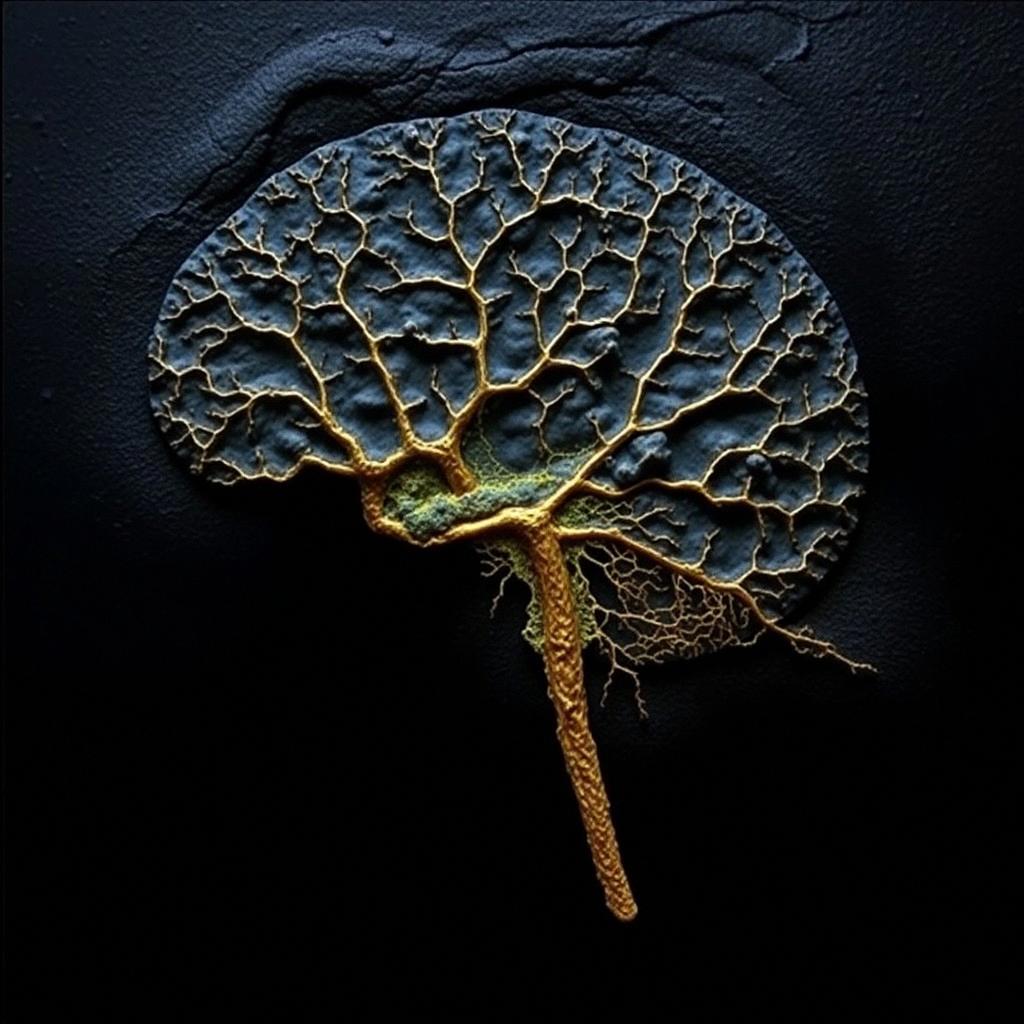
    Author Review: Yong Lai Science Art

     Science Movie


    Make a narrated HD Science movie for this answer ($32 per minute)


     Discussion


    Get Ahead With Science Insights

    Custom summaries of the latest cutting edge Science research. Every Friday. No Ads.


    My BGPT