Check each claim against its experiments, reported results, scope, and stated limitations.Know what the science actually supports before you trust the answer.
Press Enter ↵ to start review
Explore by Goal
"The aim of science is not to open the door to infinite wisdom, but to set a limit to infinite error."
- Bertolt Brecht
Quick Answer
Copied
Bottom line: This paper summarizes emerging (mostly correlational + animal) evidence linking gut microbiota alterations and the microbiota–gut–brain axis to autism spectrum disorder (ASD), but it does not deliver mechanistic causality or reproducible, quantitative effect estimates.
Long Answer
Paper Review (Critical): “ROLE OF MICROBIOTA-GUT-BRAIN AXIS IN AUTISM SPECTRUM DISORDER”
Paper DOI:10.56238/isevjhv4n2-003Type: narrative synthesis / “systematic review” approach as described by authors
Visual model of what the paper is claiming (and where uncertainty sits)
Mechanistic arrows reflect the paper’s framing (e.g., dysbiosis → permeability/inflammation → ENS/CNS → ASD-related symptoms). Causality is not established in the review; it relies on heterogeneous literature.
1) Scope & methods (what the authors say they did)
Database / timeframe / filters: PubMed/Medline; English-language studies; 2019–2024; includes studies using MeSH terms “autism spectrum disorder” AND “gut microbiota” AND “gut-brain axis” (authors also mention impact factor ≥2).
Study types: authors state they excluded review papers/commentaries/editorials and included clinical & preclinical studies focusing on gut-brain axis and gut microbiota.
Important critical point: The manuscript functions as a narrative synthesis; the excerpt you provided does not show a full PRISMA-style list, risk-of-bias tool usage, or quantitative meta-analytic handling (so the reproducibility of the “systematic review” claim is limited by reporting).
2) Reported ASD-associated taxa-directionality (from within the paper text)
This chart is not a pooled effect estimate; it merely summarizes the review’s stated “decreased vs increased” examples (directional claims).
The review repeatedly invokes immune/inflammatory signaling, intestinal barrier/permeability, microbial metabolites, and neural routes (including vagus-linked anti-inflammatory pathways).
These pathway categories are consistent with broader MGBA literature reviews.
Critical skepticism: qualitative emphasis ≠ evidence strength. The review does not provide statistical effect sizes for these pathways in ASD.
4) Evidence quality: what looks strongest vs weakest
Stronger evidence types (still not automatically causal in humans)
Mechanistic plausibility: The MGBA is supported by multi-pathway physiological frameworks (immune/neural/metabolic signaling).
Human GI comorbidity with ASD: the review reports that GI problems are common and often correlate with ASD severity (as cited within the review).
Weaker evidence types / major limitations emphasized by the paper
Human microbiome signatures are heterogeneous: the review lists multiple taxa differences, but without standardized methods and pooled statistics; replication and generalization remain uncertain.
Causality gap: narrative synthesis of correlational human data and animal transfer studies can support plausibility but cannot alone establish that microbiota changes cause ASD core symptoms in people.
Intervention evidence described as “no definitive therapy yet”: microbiota transfer therapy, probiotics, and diet appear in the narrative, but the review itself concludes that effective therapies are not established.
5) Interventions mentioned and how strong the external evidence is (where available)
The review mentions multiple intervention classes. Below we anchor a few examples in the provided reference set: microbiota transfer therapy (MTT), probiotics/systematic review, and the broader MGBA review frameworks that discuss evidence limitations.
MTT example: Kang et al. reported gastrointestinal and autism-symptom changes in an open-label microbiota transfer therapy setting; however, open-label designs cannot fully rule out placebo/expectancy and confounding.
Probiotic/synbiotic systematic review (behavioral symptoms): Tan et al. reviewed probiotic/prebiotic/synbiotic/FMT evidence for behavioral symptoms and concluded results are not conclusive (systematic review framing).
Mechanistic baseline: A comprehensive MGBA physiological framework exists, but it does not by itself establish intervention efficacy for ASD.
Important note about citations: Several intervention examples in the provided reference list do not include DOIs in your excerpt. Where DOI was not provided, I avoid making new mechanistic claims and instead keep the statement descriptive; in a fully DOI-resolved version, this panel should be updated with DOI-backed citations.
6) Falsification targets: what would disprove the paper’s core framing?
Below are concrete falsification criteria aligned with what the review claims (microbiota/dysbiosis/permeability/metabolites link to ASD severity), using the review’s own uncertainty statements and the broader MGBA causality discussion.
The review itself concludes that the connection is still unclear and that more studies are needed, which implies that causality remains open to falsification.
Broad MGBA reviews likewise emphasize translational gaps and limited robust causal clinical evidence.
Publication/positive result bias: microbiome studies with striking taxa/metabolites may be preferentially reported; narrative reviews are vulnerable because they may not systematically quantify effect sizes or non-significant findings.
Confounding (diet, medications, geography): the review’s summarized taxa/metabolites are plausibly confounded because gut ecology is strongly diet- and environment-sensitive; the paper does not provide enough stratified controls in this excerpt to neutralize these confounders.
Correlation ≠ causation: observational ASD microbiome differences can reflect reverse causality (diet selectivity, GI dysfunction, medication exposure) or shared drivers (genetics/environment), not necessarily microbial causation. The review itself signals causality uncertainty.
Species translational gap: animal germ-free / transfer paradigms support mechanism plausibility but do not guarantee human relevance due to microbiota differences and developmental timing differences.
Final judgment (skeptical, balanced)
What the paper does well
It provides an accessible narrative map from gut symptoms → dysbiosis/taxa changes → barrier/permeability and immune signaling → ENS/CNS pathways → ASD severity, plus it lists several intervention directions and explicitly states therapy uncertainty.
What limits its scientific contribution
No formal quality appraisal / meta-analytic pooling in the provided excerpt: without standardized extraction and bias assessment, readers cannot judge how consistent or effect-sized the proposed differences are across studies.
Risk of overgeneralization from heterogeneous taxa/metabolites: the review lists multiple taxa/phylum directions; microbiome sequencing pipelines and patient cohorts vary greatly, so “a signature” may not be stable across geography, diet, sequencing, and developmental stage.
Author Reviews (open targeted critique)
Note: the provided TEI author fields include “João Víctor Ferreira Santos” and “Mariana Heyden Barbosa” (names are ambiguous in the excerpt). The buttons are constructed from visible full-name strings; if you want exact author identity matching, paste the paper’s author list as plain text.
Feedback:
Updated: April 06, 2026
BGPT Paper Review
Study Novelty
60%
The paper mostly consolidates an established MGBA framework (immune/neural/metabolic routes) and applies it to ASD with commonly discussed dysbiosis, permeability, and metabolite hypotheses; novelty is limited by the narrative synthesis format rather than new quantitative synthesis or new mechanistic evidence.
Scientific Quality
50%
Scientific quality is limited by the narrative synthesis structure and reporting gaps (no clear PRISMA flow/meta-analytic details in the excerpt, no formal risk-of-bias appraisal shown), plus heavy reliance on heterogeneous correlational microbiome literature and cross-species inference; the paper acknowledges uncertainty but does not substantially tighten evidence with quantitative synthesis.
Study Generality
70%
The topic is broad (MGBA → ASD) and the paper is general-purpose for readers seeking a map of hypotheses and intervention directions; however, because it does not provide stable biomarkers or pooled mechanistic estimates, its generality is more expository than explanatory.
Study Usefulness
70%
Useful as an orientation document: it identifies recurring mechanistic categories (barrier/inflammation/metabolites/neural signaling) and lists candidate taxa/metabolites plus broad intervention classes; less useful for making evidence-based causal claims or prioritizing targets.
Study Reproducibility
40%
Reproducibility is limited because the excerpt does not show full PRISMA details, a transparent study inventory, or a quantitative extraction table/risk-of-bias assessment; “systematic review” labeling is therefore hard to verify.
Explanatory Depth
60%
Mechanistic depth is moderate: it links gut dysbiosis to permeability/cytokines and then to ENS/CNS/behavior, consistent with MGBA models; however, it does not dissect which mediators are causally necessary/sufficient, nor does it quantify effect sizes.
It extracts the review’s stated taxa-direction list, encodes them into a direction matrix, then generates a taxonomy-direction table and interactive Plotly bar chart to visualize heterogeneity qualitatively.
Get emailed when your analysis is done!
We'll email you the results when your analysis is finished.
Hypothesis Graveyard
“One specific microbial species causes ASD core symptoms in most patients” is weakened because the review reports multiple different taxa changes and concludes that mechanisms remain unclear, consistent with heterogeneity rather than a single universal driver.
“Diet alone explains ASD via microbiome changes” is not sufficiently supported: while diet–microbiome links exist conceptually, the review includes multiple non-diet mechanisms (immune, permeability, neural signaling) and still reports causality uncertainty.

 Explore by Goal
 Quick Answer
 Long Answer
 Top Data Sources
 Ask a Follow-Up
 Key Insight
 Keep Exploring
 Analysis
  Hypothesis Graveyard
 Potential Experiments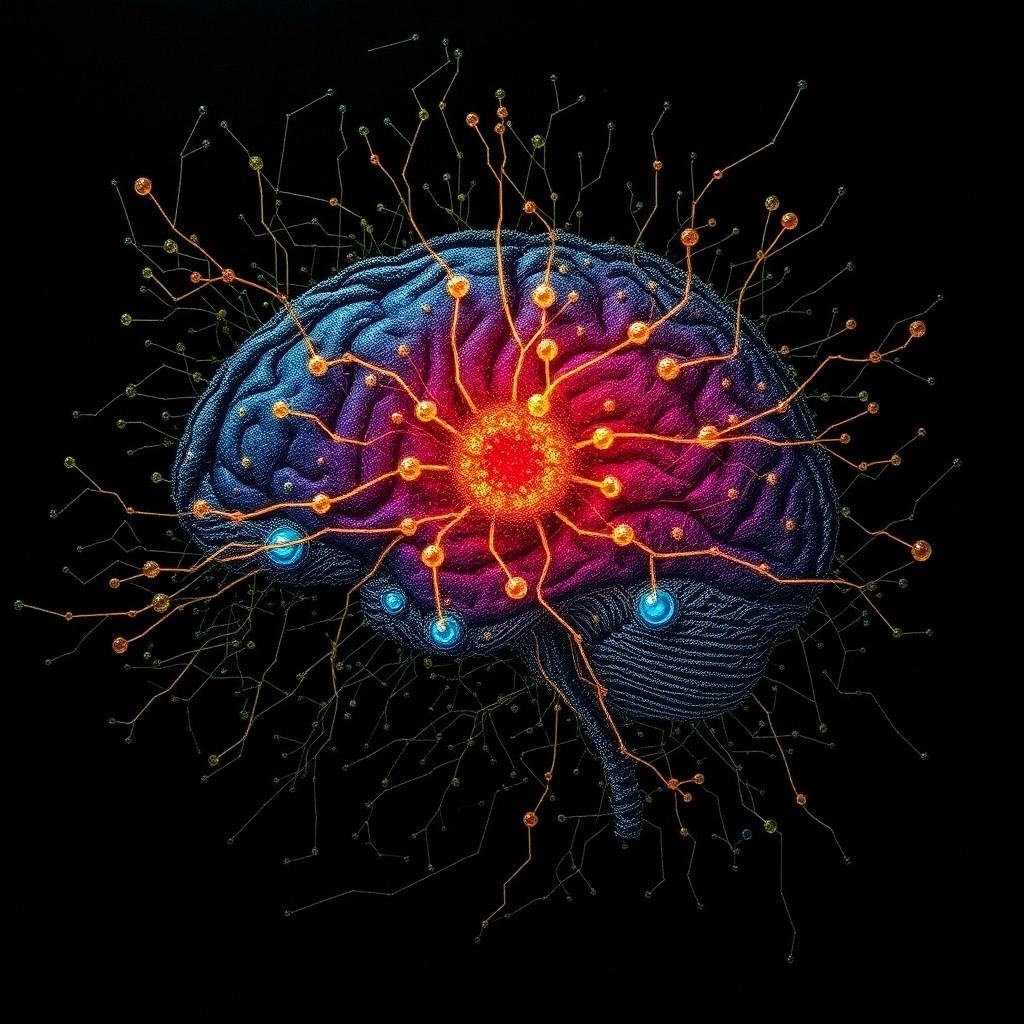
 Discussion