Why BGPT?
logo

Review papers with raw data transparency

Quickly verify claims by accessing the underlying experimental data and figures.


Press Enter ↵ to solve


    Fuel Your Discoveries


     Quick Explanation


    Core finding: Cbk1 phosphorylation state of the mRNA-binding protein Ssd1 switches its subcellular partitioning—promoting cortical/polarized mRNA localization when phosphorylated, but recruiting Ssd1 (and its bound mRNAs, e.g., SRL1) to P-bodies/stress granules when Cbk1 is inhibited or Ssd1 is dephosphorylated—linking a RAM kinase to translational repression and cell integrity.


     Long Explanation


    Paper review (visual-first): Cbk1 kinase → Ssd1 → mRNA localization
    Citation:
    What the authors show (high-level, testable logic)
    1. Ssd1 is spatially regulated: a fraction of Ssd1-GFP localizes to bud cortex/neck rather than being purely diffuse.
    2. Cbk1 inhibition or Ssd1 dephosphorylation drives Ssd1 into puncta that behave like P-bodies/stress granules.
    3. Ssd1-P-body recruitment does not require Ssd1’s RNA-binding domain (e.g., Ssd1 truncations localize to P-bodies after stress).
    4. Phosphomutants establish causality between phosphorylation state, P-body partitioning, and toxicity: Ssd1-9A (phospho-deficient) is toxic and constitutively P-body-localized; Ssd1-9D (phosphomimetic) is not toxic and does not strongly concentrate in P-bodies.
    5. SRL1 mRNA polarity depends on Ssd1 phosphorylation state: SRL1 bud-tip polarity is diminished in ssd1Δ and restored by phosphomimetic Ssd1-9D; SRL1 colocalizes with Ssd1-9A puncta and disperses to multiple P-body-associated spots upon Ssd1-9A induction.
    Figure-style visualization (rawly extracted proportions)
    Note: the paper reports ranges in some contexts (e.g., % cortical puncta in small buds). I visualize only the explicitly reported values here.
    Mechanism diagram (evidence-weighted)
    The model is explicitly stated in the paper’s Discussion: phosphorylation promotes polarized/cortical Ssd1 activity; inhibition/stress/dephosphorylation promotes Ssd1 association with P-bodies/stress granules, repressing translation of Ssd1-bound mRNAs.
    SRL1 polarity quantitative view (fold change from paper text)
    The text states SRL1 polarity is reduced by ~10-fold in ssd1Δ versus SSD1.
    How strong is the evidence? (skeptical weighting)
    • Strengths
      • Multi-modal readouts combine live-cell localization (GFP/RFP imaging), biochemical co-precipitation, genetics (deletion + dosage suppressors), and mRNA localization (MS2/MS2-CP GFP imaging).
      • Genetic logic is consistent: phospho-deficient Ssd1 is toxic and accumulates in P-bodies; phosphomimetic Ssd1 is non-toxic and is more cortical/cytoplasmic and fails to strongly accumulate in P-bodies; toxicity requires the RNA-binding domain (RBD deletion mutant is not toxic).
      • SRL1 mRNA fate is tightly linked to Ssd1 phosphorylation state via localization and colocalization.
    • Potential blind spots / sources of uncertainty
      • Causality vs correlation for “translation repression”: the paper’s model is mechanistically plausible and P-bodies/stress granules are associated with translational repression, but the provided excerpt does not show direct translation measurements for SRL1 under each phosphosite condition. P-bodies’ roles in translation repression are supported in the literature, but the mechanistic link remains inference in this paper’s argument.
      • Overexpression / phosphomutant artifacts: phosphomimetic/dephosphorylation mutants may not perfectly match endogenous multisite phosphorylation dynamics, and inhibitor specificity (1NA-PP1) can have off-target effects. The paper uses several internal controls and genetic approaches, which helps, but this remains an interpretive risk.
      • Species generalization is implied, not demonstrated: the work positions LATS/NDR kinases as “tumor suppressor” kinases, but direct evidence in mammalian systems for an analogous Cbk1–Ssd1-like substrate-to-mRNA localization mechanism is not provided in the excerpt.
      • Unpublished-data references are present in the excerpt, which reduces auditability from the provided text alone.
    What would most efficiently falsify the main model?
    A falsification-focused checklist (without introducing new claims):
    • Demonstrate that preventing Cbk1-mediated phosphorylation of Ssd1 (using more endogenous phosphorylation perturbations than 9A/9D) does not drive Ssd1 into P-bodies/stress granules or alter SRL1 polarity.
    • Directly measure SRL1 translation (not just localization) and show that Ssd1/P-body sequestration does not correspond to translational repression under these states.
    • Show that Ssd1 recruitment to P-bodies occurs via a pathway independent of phosphorylation state, such that phosphosite changes mainly change other properties (e.g., protein stability or interactions) rather than partitioning.
    BGPT critique in one sentence
    The paper is unusually strong in connecting kinase phosphorylation state to Ssd1 compartment switching and SRL1 asymmetric localization, but the translation repression step is largely model-inferred in the excerpt and would be maximally persuasive with direct translation kinetics for SRL1 under each phosphosite condition.


    Feedback:   

    Updated: April 09, 2026

    BGPT Paper Review


    Study Novelty

    90%

    The paper advances a mechanistic link between a RAM/LATS-NDR kinase (Cbk1) and post-transcriptional control by connecting phosphorylation-state-dependent Ssd1 partitioning to P-body sequestration and polarized mRNA localization (SRL1), with phosphomutant genetics and in vivo mRNA imaging.


    Scientific Quality

    80%

    Scientific quality is high due to convergent evidence (live imaging, coIP, genetic epistasis with dosage suppressors, and SRL1 polarity quantification), but the excerpted material suggests mechanistic reliance on inference for translational repression and includes references to unpublished data, which slightly reduces auditability.


    Study Generality

    60%

    Mechanistic specificity to budding yeast RAM and Ssd1/P-body biology is strong, while extrapolation to LATS/NDR tumor suppressor function in higher eukaryotes is largely speculative in the provided text, so generality is moderate.


    Study Usefulness

    80%

    Useful for designing mechanistic experiments connecting kinase phosphorylation states to RNA granule partitioning and polarized mRNA localization; it also provides a clear hypothesis space for testing whether other kinases/substrates modulate mRNA localization through granule sequestration.


    Study Reproducibility

    70%

    Methods are described at a typical yeast cell-biology level (strains, markers, induction conditions, imaging, MS2 tagging) and the paper references online supplemental material; however, some claims cite unpublished data and the excerpt does not include full quantitative tables for every variable.


    Explanatory Depth

    80%

    Depth is strong mechanistically at the level of phosphorylation-state-dependent partitioning and spatial mRNA outcomes, but direct translation measurement per SRL1 condition is not shown in the provided excerpt, making the translational repression mechanism partially inferential.


    🎁 Authors: Collect 387 Free Science Tokens (≈ $38.7 USD)

    Claim My Author Tokens

    Use for 96 days of free BGPT access (4 tokens = 1 day) or trade/sell (≈ $38.7 USD)

     Top Data Sources ExportMCP


     Analysis Wizard


    No new raw numeric transcript/protein datasets are provided for computational reanalysis beyond extracting the reported localization percentages; code would mainly reformat those counts and compute fold-change summaries.


     Hypothesis Graveyard


    A simple explanation that Ssd1 toxicity arises primarily from global mRNA degradation rather than granule sequestration is less consistent with the strong evidence that SRL1 polarity and SRL1 colocalization with Ssd1-9A puncta change together, and with the reported RBD dependence.


    A strong “Cbk1 regulates SRL1 polarity only through Ace2 transcription” model is disfavored by the paper’s direct phosphomutant-driven partitioning and SRL1 colocalization with Ssd1-9A puncta.

     Science Art


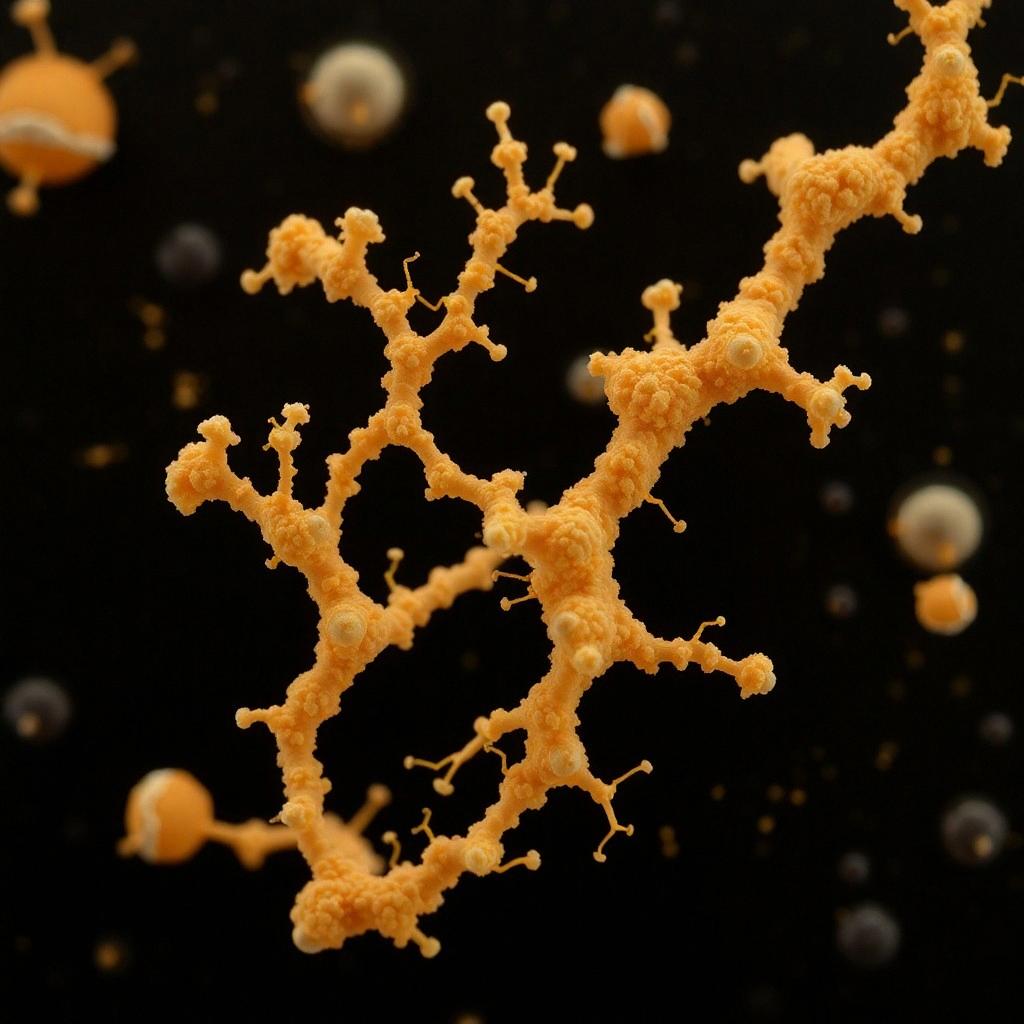
    Paper Review: The yeast Cbk1 kinase regulates mRNA localization via the mRNA-binding protein Ssd1 Science Art

     Science Movie


    Make a narrated HD Science movie for this answer ($32 per minute)


     Discussion


    Get Ahead With Science Insights

    Custom summaries of the latest cutting edge Science research. Every Friday. No Ads.


    My BGPT