Why BGPT?
logo

Review papers with raw data transparency

Quickly verify claims by accessing the underlying experimental data and figures.


Press Enter ↵ to solve


    Fuel Your Discoveries


     Quick Explanation


    Paper review: “The Sec-dependent pathway”
    This narrative review explains how the bacterial SecYEG translocon, SecA ATPase, SecB chaperone, and auxiliary factors (SecD/F, SecG, signal peptidase, and YajC) enable export to the periplasm/outer membrane, and how this couples to—yet differs from—the SRP (co-translational) route.
    Evidence basis: full-text review content summarized here, primarily from Beckwith (2013).


     Long Explanation


    Visual paper analysis — The Sec-dependent pathway
    Narrative synthesis of bacterial Sec-mediated protein export and its relationship to SRP-dependent routes, with emphasis on historical genetic/biochemical logic and the roles of Sec components.
    Primary source cited throughout:
    What the paper claims (structured)
    • Sec-dependent export moves secretory proteins across the cytoplasmic membrane to periplasm/outer membrane, and SecYEG is the core translocon.
    • SecA provides ATP-driven translocation activity and interacts with both cytosolic factors and the membrane translocon while remaining bound during translocation.
    • SecB prevents premature folding for many Sec-dependent substrates (with additional folding-prevention routes described).
    • Bacterial secretion has both post- and co-translational components for signal sequence proteins, with a subset engaging an SRP-like pathway; SRP contributes to co-translational initiation and transfer to SecYEG.
    • SecDF is presented as important for export efficiency, while SecG, YajC, and the signal peptidase (lep) are treated as additional functional pieces with some remaining uncertainties (especially YajC).
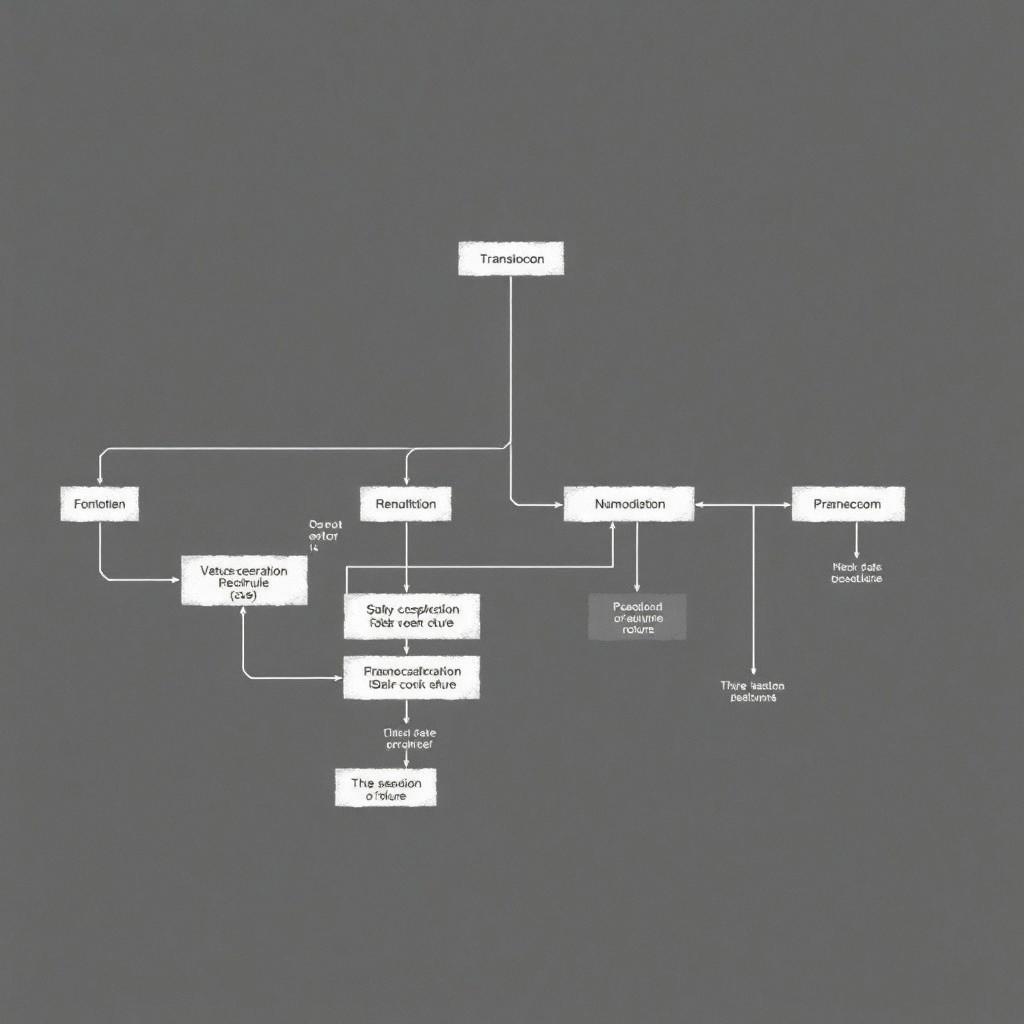
    Figure 1 — Qualitative pathway map (Sec-dependent vs SRP-dependent)
    Interpretation caveat: values are qualitative (unit weights), because the provided text does not provide quantitative fluxes between steps. The node/edge structure is taken from the review’s mechanistic description.
    Figure 2 — “Evidence logic” used to define the Sec machinery
    The review explicitly uses multiple methodological classes (genetics, fusions, suppressors, and in vitro vesicles) to converge on the Sec machinery and its organization.
    Critical evaluation (skeptical, mechanistic)
    1) Known vs uncertain mechanistic claims
    • More strongly grounded: the roles of SecA (ATPase/translocation driving), SecYEG as the core pore, and SecB’s folding-prevention logic are presented as established from converging genetics + biochemical approaches.
    • Moderate uncertainty: SecDF and YajC are treated as important but mechanistically less complete; YajC’s role is explicitly described as unclear.
    • Ongoing/open questions: the review highlights pathway diversity questions (e.g., archaea) and possible multiple Sec pathways in some bacteria, plus new findings that challenge existing views (e.g., SecA–ribosome complexes).
    2) How the paper handles co- vs post-translational export
    • The review argues that bacterial secretion of signal-sequence proteins can show mixed co- and post-translational behavior by substrate class.
    • It additionally states that SRP’s major role (as framed here) is to co-translationally initiate membrane incorporation, followed by handoff to SecYEG for proper localization.
    3) Blind spots / potential overreach risks (review-specific)
    • As a narrative review, the mechanistic “picture” relies on prior primary studies selected/weighted by the author’s perspective; the provided content itself does not quantify how strong each underlying dataset is across proteins/species.
    • The review explicitly emphasizes E. coli as a dominant model in the historical narrative; applicability to less-studied Gram-negative species and different envelope architectures is therefore not guaranteed from the narrative alone.
    • The review highlights unresolved questions (e.g., YajC role; archaeal export; possible distinct Sec pathways; SecA–ribosome interactions), but the text provided here does not provide the experimental designs/controls needed to adjudicate among competing mechanistic models.
    Figure 3 — Component-role matrix (qualitative)
    Sec/related component Primary function (as described) Strength of role statement
    SecYEG Core translocon; gated pore enabling ATP-driven translocation Strong
    SecA ATPase that interfaces with SecB and SecYEG; drives translocation Strong
    SecB Chaperone preventing nascent-chain folding (for many Sec substrates) Strong
    SecD/SecF Highly dependent for export; proposed roles include using proton motive force from the periplasmic side (as a proposed model) Moderate
    SecG Additional translocon component; translocon partly functional without it, but defects appear (notably at low temperature) Moderate
    lep (signal peptidase) Cleaves signal peptides during/after export Strong
    YajC Co-purifies with SecDFYajC; role in export described as unclear Weak→Moderate
    SRP components (ffh/4.5S; FtsY receptor) Co-translational targeting subset; handoff to SecYEG for membrane localization Moderate
    This matrix compresses the review’s qualitative component-role statements into a visual summary; “strength” reflects how explicitly the review assigns function/importance rather than any formal meta-analytic evidence weighting.
    Figure 4 — “Known vs unknown” map of the review’s agenda
    This figure uses heuristic axes derived from whether the review presents a role as central vs explicitly uncertain/open. It is not extracted numeric data from experiments.
    Decision-use guidance for a reader
    • If you’re designing mechanistic experiments: prioritize components where the review asserts defined functions (SecYEG pore gating; SecA energy coupling; SecB folding prevention) and then treat SecDF/SecG/YajC and pathway switching as hypothesis-driven unknowns.
    • If you’re evaluating theory: the co-/post-translational split and SRP/SecYEG handoff logic are presented as a reconciliation of earlier discrepancies; challenge it with substrate-specific readouts rather than assuming uniform kinetics across proteins.
    • If you need a reproducible mechanistic “module”: convert the review’s qualitative component logic into falsifiable predictions (e.g., whether a substrate’s export depends on folding prevention by SecB vs disulfide timing).
    Explore related author-focused reviews


    Feedback:   

    Updated: April 29, 2026

    BGPT Paper Review


    Study Novelty

    60%

    The document is a mechanistic/historical synthesis rather than a new primary experimental contribution; novelty comes mainly from organizing and reconciling Sec vs SRP concepts within the Sec-dependent pathway framing.


    Scientific Quality

    70%

    Strengths: coherent mechanistic narrative with clear component roles and explicit future questions. Limitations: as a narrative review, it does not provide new primary quantitative data, and uncertainty handling is mainly qualitative; specific empirical adjudication across proteins/species is not fully recoverable from the provided text alone.


    Study Generality

    70%

    The Sec translocon machinery is highly conserved in the review’s framing and the Sec/SRP conceptual split is broadly relevant, but the narrative leans heavily on specific model systems and does not fully quantify cross-species variability within the provided text.


    Study Usefulness

    80%

    High utility as a structured conceptual scaffold: it connects historical experimental logic to component functions and clarifies how SRP and SecYEG integrate for mixed co-/post-translational export models.


    Study Reproducibility

    50%

    Because this is a narrative review without new raw datasets/methods, one cannot directly reproduce the chapter’s conclusions from the provided text; reproducibility would require retrieving the cited primary studies and re-deriving the synthesis.


    Explanatory Depth

    80%

    Mechanistic depth is strong for the core Sec components (SecYEG/SecA/SecB) and moderately deep for auxiliary and pathway-choice logic; the review also transparently flags areas where roles remain unclear.


    🎁 Authors: Collect 188 Free Science Tokens (≈ $18.8 USD)

    Claim My Author Tokens

    Use for 47 days of free BGPT access (4 tokens = 1 day) or trade/sell (≈ $18.8 USD)

     Top Data Sources ExportMCP


     Analysis Wizard


    Construct a qualitative component–step network from Beckwith’s review text and output a graph image plus a searchable table of Sec/SRP components and claimed functions.


     Hypothesis Graveyard


    A simple one-size-fits-all rule that “SRP exports proteins that are fully folding-compatible, Sec exports proteins that must be kept unfolded” is unlikely; the review already describes mixed behaviors and suggests additional determinant features (e.g., signal hydrophobicity and timing).


    Treating YajC as strictly redundant with other SecDF-associated factors is not supported by the review’s emphasis that its role is uncertain; if it were truly redundant, the review would likely treat it as dispensable with clear evidence.

     Science Art


    Paper Review: The Sec-dependent pathway Science Art

     Science Movie


    Make a narrated HD Science movie for this answer ($32 per minute)


     Discussion


    Get Ahead With Science Insights

    Custom summaries of the latest cutting edge Science research. Every Friday. No Ads.


    My BGPT