Verify your claims against versioned evidence records with exact reported results and sources.Know what the science actually supports before you trust the answer.
Press Enter ↵ to review claims
Explore by Goal
"A gene is a long sequence of coded letters, like computer information. Modern biology is becoming very much a branch of information technology."
- Richard Dawkins
Quick Explanation
Copied
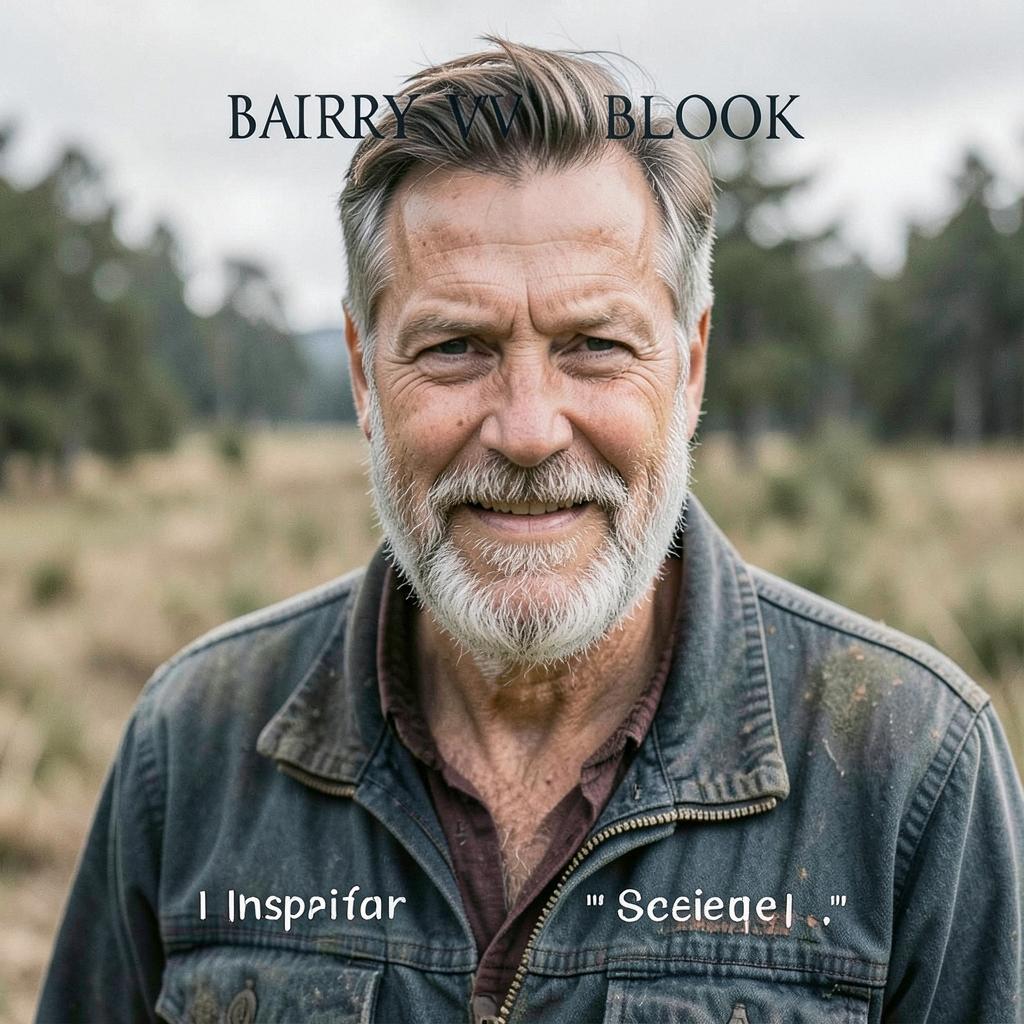
Barry W. Brook demonstrates world-class ecological science: his high-impact synthesis on synergistic extinction drivers is conceptually generative and broadly influential , while recent work extends deep-time baselines into policy-relevant frameworks, though with interpretive (non-empirical) limits .
Long Explanation
Evidence Base for the Review
Two source papers supplied permit a critical appraisal of Barry W. Brook's scientific profile. The flagship is a synthesis in Trends in Ecology & Evolution showing that extinction risk emerges from synergistic interactions among habitat loss, overexploitation, invasive species, and climate change, supported by quantitative anchors: a projected 79% extirpation of Southeast Asian vertebrates by 2100 under continued deforestation, ~4,000 endemic vertebrate losses among these, a 22,800-species marine fish vulnerability meta-analysis, 281 replicate Daphnia magna populations in microcosm extinction experiments, and 6,300 potentially co-extinct non-Red-Listed symbiont species . The paper self-reports limitations: microcosm-to-real-world extrapolation, publication/citation bias in the reviewed literature, and difficulty disentangling causality among interacting drivers.
The second source is a 2025 Cambridge Prisms: Extinction Perspective arguing that Holocene baselines are not the ecological default, proposing a dual-baseline framework anchored in Pleistocene low-CO2 conditions, with a falsifiable tipping band (~480–530 ppm CO2) for open-habitat persistence . Note: Brook declares Editor-in-Chief of the journal itself — a self-referential publishing situation worth transparency, though editorial influence on the submission was formally excluded.
Critical Assessment
Strengths: high conceptual generality, cross-taxa synthesis, explicit quantitative anchoring, and falsification criteria offered for the 2025 framework — hallmarks of mature scientific practice . Weaknesses/blindspots: the 2025 work is explicitly opinion-based with no new empirical data; reproducibility scores are modest (5–6) for both sources; microcosm (Daphnia, Artemia, Tribolium) findings may not scale to real ecosystems; and the ryegrass shear-strength study supplied in the record has no verified Brook authorship link in the supplied record, so it is excluded from scoring. Known unknowns: OpenAlex bibliometric data was unavailable (HTTP 429), so h-index/citation counts could not be independently verified here. Confidence in this review: moderate — based on two papers, not a full corpus.
What would change this conclusion: evidence that the synergy framework's microcosm-derived claims fail replication at ecosystem scale, or that the dual-baseline tipping band (~480–530 ppm) is empirically falsified by persistent open habitats under higher CO2.
Feedback:
Updated: October 26, 2026
BGPT Author Review
Scientific Quality
90%
Brook's 2008 TREE synthesis is a generative, highly cited framing of extinction-driver synergies with strong quantitative grounding and honest self-declared limitations. The 2025 perspective is conceptually bold but data-free. Deduction for reliance on microcosm extrapolations and an editorial role at the publishing journal. No primary-data red flags were found in the supplied records.
Communication Quality
80%
The reviewed writing is clear, well-structured, and translates complex dynamics (extinction vortices, Allee effects, dual baselines) into accessible frameworks, with quantified examples (79% extirpation, 6,300 coextinctions). Deduction: perspective pieces favor conceptual breadth over accessible empirical demonstration for non-specialists.
Author Novelty
80%
The synergistic-threats framing reshaped how extinction risk is conceptualized beyond single-driver models; the dual-baseline Pleistocene-anchored rewilding framework is a genuinely fresh policy-relevant contribution. Deduction: syntheses build on existing literature rather than introducing new empirical paradigms.
Scientific Rigor
70%
Quantitative anchoring, acknowledged limitations, and offered falsification criteria are rigorous for review/perspective genres. However, no new primary data in either source, moderate reproducibility (5-6), microcosm-to-field extrapolation risk, and an opinion-based 2025 piece cap rigor. Self-review-adjacent publishing (Editor-in-Chief) is a mild transparency concern.
Compiling and visualizing Barry W. Brook's publication quality-dimension scores and the quantitative extinction-projection data extracted from the supplied TREE and Cambridge Prisms records.
Get emailed when your analysis is done!
We'll email you the results when your analysis is finished.
Hypothesis Graveyard
Extinction drivers act independently and additively — weakened by replicated microcosm evidence (Daphnia, Artemia, Tribolium) showing interaction feedbacks dominate under environmental variability.
Holocene conditions are the appropriate restoration baseline for all ecosystems — undermined by ice-core CO2 records showing Holocene CO2 is a low-frequency anomaly within Pleistocene cyclic variation.

 Explore by Goal
 Quick Explanation
 Long Explanation
 Top Data Sources
 Ask a Follow-Up
 Key Insight
 Keep Exploring
 Analysis
 Hypothesis Graveyard
 Potential Experiments
 Discussion
