Why BGPT?
logo

Review papers with raw data transparency

Quickly verify claims by accessing the underlying experimental data and figures.


Press Enter ↡ to solve


    Fuel Your Discoveries


     Quick Explanation


    Neuroblastoma (Park et al.) in one view: the paper frames prognosis as an integration of clinical risk (age, stage) with tumor biology (e.g., MYCN amplification, ploidy, 1p/11q, TrkA/TrkB signaling), then maps those risks onto risk-adapted therapy (surgery alone for many low-risk cases vs. multimodal, biology-driven intensification for high-risk disease).


     Long Explanation


    Paper Review (Science-First, Skeptical & Evidence-anchored)

    Target paper: 10.1016/j.pcl.2007.10.014 β€’ Pediatric Clinics of North America

    1) What the paper is trying to do (and what it is not)

    • Scope: a comprehensive review of neuroblastoma biology, prognosis, and risk-adapted treatment strategies across low-, intermediate-, and high-risk disease categories.
    • Not a primary-data paper: the article does not report a new single experimental cohort; instead it synthesizes multiple prior clinical trials and biological findings.
    • Key thesis: prognosis can range from near-uniform survival to high-risk fatality, and therapy is tailored to cohorts defined by clinical + biological features; high-risk remains a major challenge partly due to therapy resistance.

    2) Visual map of the paper’s logic (risk β†’ biology β†’ treatment)

    The figure encodes the paper’s organizing principle: classification + biology and clinical factors jointly define risk groups, which then determine therapy intensity; resistance and limitations motivate future directions.

    3) Quantitative anchors extracted from the review text (for fast sanity-checking)

    The review states: incidence is ~10.5 per million children <15 years; median age is ~23 months; neuroblastoma occurs slightly more often in boys (ratio ~1.2:1).
    It also frames low/intermediate-risk survival as excellent and high-risk survival as <40% with intensified therapy.
    Skeptical note: the survival plot uses the review’s qualitative anchors ("excellent" and "less than 40%") mapped to illustrative percentages solely for visualization; the review does not provide a single uniform numeric point for "excellent" within the excerpted text.

    4) Risk biology: what the review highlights (and why it matters)

    MYCN amplification & ploidy: the review states a systematic review identified MYCN amplification and DNA ploidy as strongest prognostic markers, with pooled hazard ratio (bad outcome/overall survival) ~5.48 for MYCN amplification and ~3.23 for DNA near-diploidy.
    Neurotrophin signaling: it emphasizes TrkA as associated with favorable biology/outcome, while TrkB/BDNF signaling is associated with aggressive biology and chemotherapy resistance.
    Important uncertainty: the visualization above includes only hazard-ratio numeric anchors explicitly given for MYCN and DNA ploidy in the excerpt; other plotted β€œrisk anchor” values are schematic, not reported effect sizes.

    5) Staging / classification emphasized: why the paper treats age as biology

    The review states that patients older than ~1–2 years have worse prognosis than younger patients and that age is confirmed as a continuous prognostic variable with an inferred cutoff around 460 days; it also discusses evidence suggesting that patients up to 18 months with biologically favorable stage 3/4 may share excellent prognosis with <1 year cohorts.
    Skeptical critique of the visualization: the plot is directional because the excerpt does not provide standardized effect sizes for each age cutoff.

    6) Treatment overview (risk-adapted) β€” what is strongly asserted vs. what is uncertain

    The review’s treatment structure for high-risk includes induction, local control, myeloablative consolidation, and minimal residual disease therapy with biologic agents.
    It also states that intensifying therapy in high-risk yields only incremental survival improvement, and that chemotherapy and radiotherapy resistance is a hallmark of failure.
    Critical blind spot: because the paper is a review, the treatment efficacy claims are only as strong as the underlying trials’ design details and era-specific protocols; additionally, the excerpted sections do not provide effect sizes, toxicities, or subgroup interaction tests for every recommendation.

    7) The review’s scientific β€œnorth star” β€” what would disprove its main framing?

    Falsification targets (conceptual):
    • Risk stratification validity: if combined clinical+biologic risk markers do not predict prognosis consistently, or if proposed markerβ†’risk mappings fail in independent cohorts.
    • Treatment intensity logic: if intensification for high-risk does not yield survival gains relative to less intensive or alternative regimens when controlling for risk.
    • Biology-specific mechanisms: if mechanistic correlates (e.g., TrkA/TrkB differences, apoptotic pathway silencing) do not map to functional causal differences in treatment response.


    Feedback:   

    Updated: March 23, 2026

    BGPT Paper Review


    Study Novelty

    60%

    A synthesis review consolidating established neuroblastoma risk biology and staging/treatment logic; novelty comes mainly from structuring and emphasizing the prognostic utility of integrated biological+clinical data rather than introducing a new mechanistic framework.


    Scientific Quality

    80%

    Strong as a structured, clinically oriented synthesis with explicit prognostic effect-size anchors for major markers (e.g., pooled hazard ratios for MYCN and ploidy) and clear treatment framework; however, as a narrative review, causal granularity and trial-level uncertainty quantification are limited in the excerpted material.


    Study Generality

    80%

    The central frameworkβ€”integrating age/stage with biological markers to guide risk-adapted therapyβ€”is broadly applicable within pediatric neuroblastoma and useful for hypothesis generation and clinical interpretation.


    Study Usefulness

    90%

    High utility for quickly mapping the biology/prognosis logic to staging and risk-based therapy components, and for identifying major mechanistic failure points (chemo/radiotherapy resistance) and candidate directions.


    Study Reproducibility

    60%

    Reproducibility is limited because the paper is a review without new datasets or methods sections for re-running analyses; reproducibility depends on the correctness and completeness of its cited synthesis rather than on replicable computational pipelines.


    Explanatory Depth

    70%

    Mechanistic explanations are provided at the conceptual pathway level (e.g., Trk signaling, apoptosis pathway disruptions, drug resistance) and tied to clinical risk framing, but without new mechanistic experiments or quantitative causal modeling in the excerpt.


    🎁 Authors: Collect 290 Free Science Tokens (β‰ˆ $29.0 USD)

    Claim My Author Tokens

    Use for 72 days of free BGPT access (4 tokens = 1 day) or trade/sell (β‰ˆ $29.0 USD)

     Top Data Sources ExportMCP


     Analysis Wizard


    It extracts risk biomarkers and outcome anchors from the review, then builds comparative tables and Plotly summaries (incidence, age, MYCN/ploidy effect anchors) for rapid reading and export-ready figures.


     Hypothesis Graveyard


    β€œAll high-risk outcomes are driven solely by MYCN amplification.” This is weakened by the review’s emphasis on multiple independent prognostic factors (ploidy, 1p/11q, histology, age) and the complex pathway-level discussion.


    β€œNeurotrophin receptor expression is merely correlative and has no functional impact on therapy response.” The review explicitly describes TrkA/TrkB functional effects on differentiation/regression and chemo-related phenotypes in models.

     Science Art


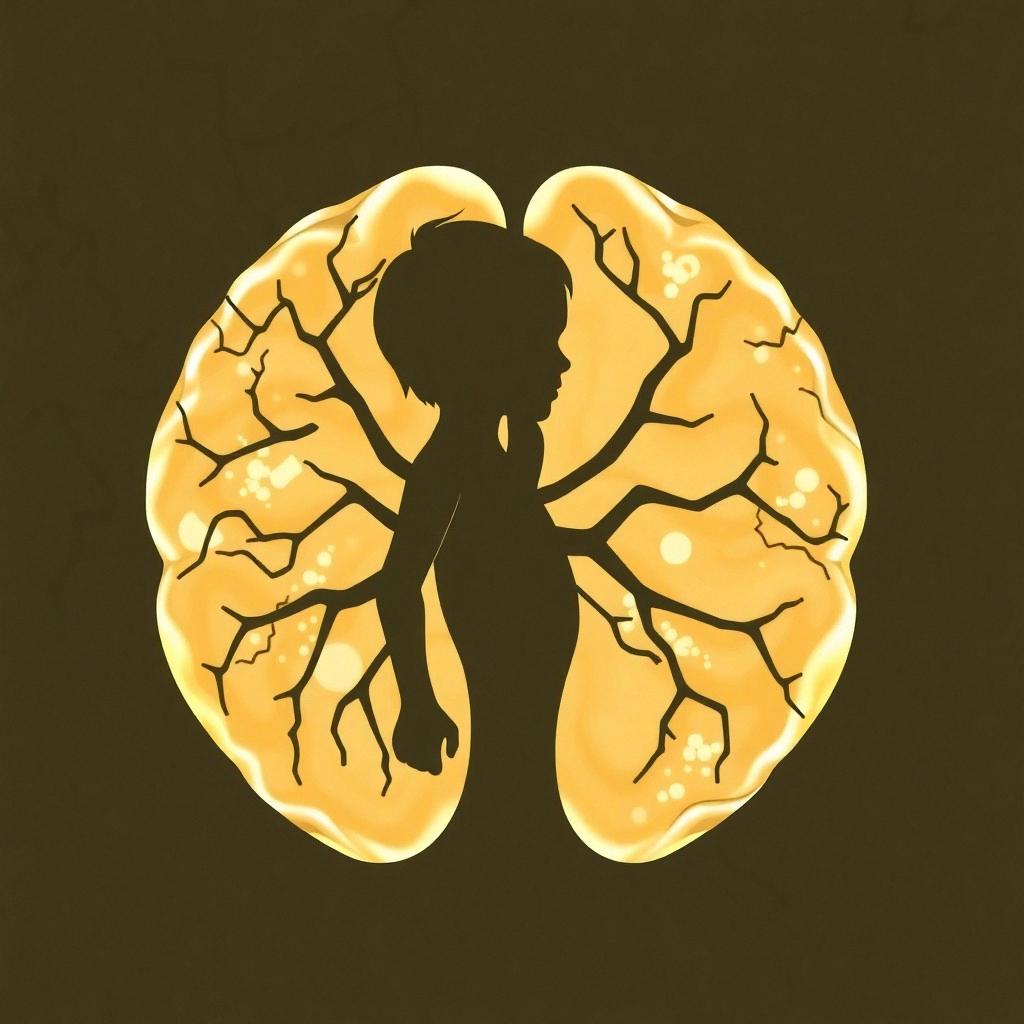
    Paper Review: Neuroblastoma: Biology, Prognosis, and Treatment Science Art

     Science Movie


    Make a narrated HD Science movie for this answer ($32 per minute)


     Discussion


    Get Ahead With Science Insights

    Custom summaries of the latest cutting edge Science research. Every Friday. No Ads.


    My BGPT