Verify your claims against versioned evidence records with exact reported results and sources.Know what the science actually supports before you trust the answer.
Press Enter ↵ to review claims
Explore by Goal
"Biology gives you a brain. Life turns it into a mind."
- Jeffrey Eugenides
Quick Explanation
Copied
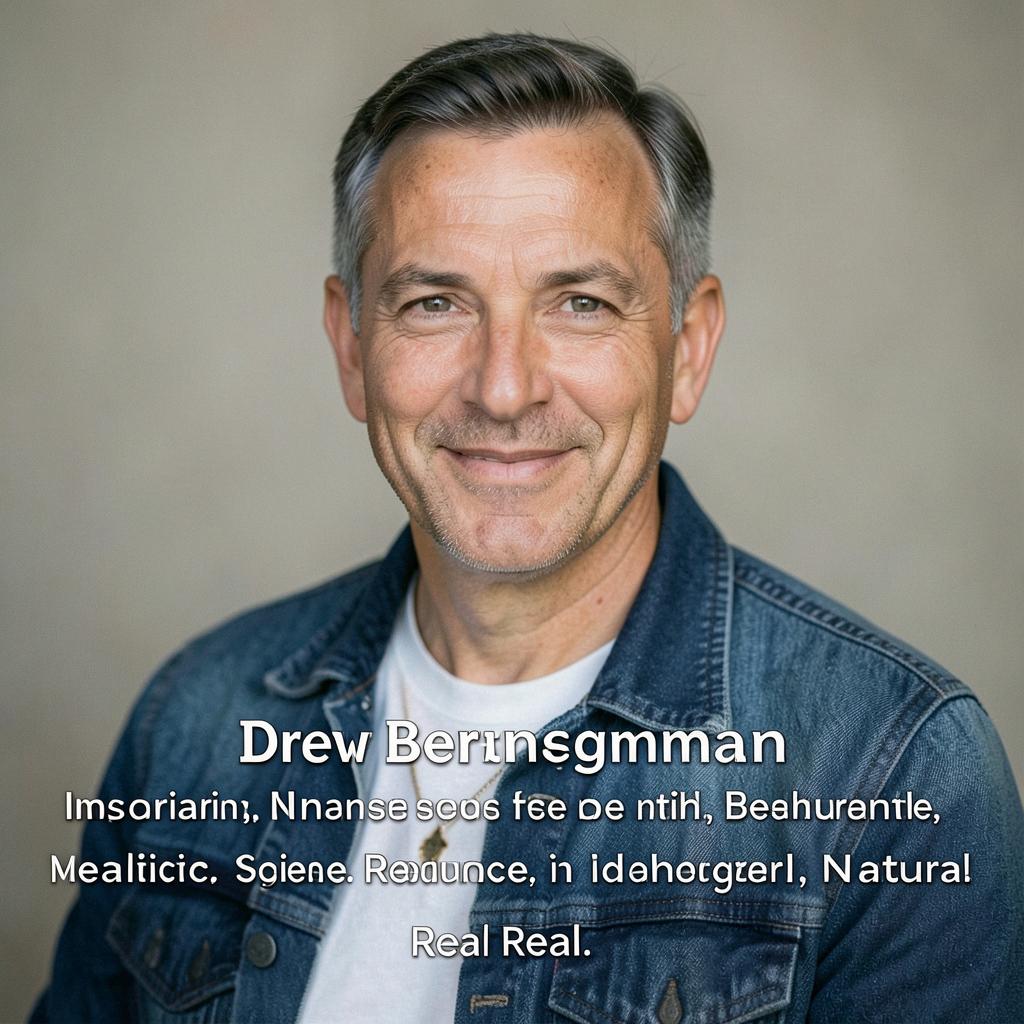
Drew T. Bergman (Broad Institute) is a strong computational genomics researcher: 26 works, ~2,248 citations, h-index 10, with first- and middle-author papers in Nature and Nature Genetics on enhancer–promoter regulation and CRISPR perturbation modeling. His impact is concentrated in a few landmark papers rather than broad independent output.
Long Explanation
Publication Impact Profile
OpenAlex records for Drew T. Bergman (ORCID 0000-0002-8314-7088) show 26 works with ~2,248 citations and an h-index of 10, peaking in 2019–2021 when his two flagship papers were published (citations: 1,121 in 2019; 687 in 2021) .
Key Contributions
ABC (Activity-by-Contact) model — first author Fulco et al., Bergman as co-author, built enhancer–promoter prediction from thousands of CRISPRi perturbations in Nature Genetics (2019, ~1,100 citations); the preprint version drew a further ~21 citations .
First-author work on compatibility rules of enhancer and promoter sequences in Nature 2022 (~156 citations), showing independent mechanistic leadership .
Contributions to coronary artery disease genetics (Nature 2024, ~110 citations), causal variant prioritization at TNFAIP3 (Nature Communications 2020, ~76 citations), and HyPR-seq single-cell RNA quantification (PNAS 2020, ~36 citations) .
Critical Assessment and Uncertainties
Strengths: high-impact, highly reproducible computational genomics within an elite team (Broad Institute, Engreitz lab); a first-author Nature paper indicates independent scientific contribution; strong open-access practices (most works OA). Blindspots: nearly all citations trace to two collaborative papers; OpenAlex shows no primary institution listed, and a duplicate author profile (5 works, 1 citation) suggests entity-resolution noise — metrics should be treated as approximate. Career-stage matters: the recent drop in citations (2023–2026) plus rising output (7 works in 2026) is consistent with a researcher transitioning to independence, but independent impact is unproven .
Feedback:
Updated: October 26, 2026
BGPT Author Review
Scientific Quality
70%
Bergman co-authored two exceptionally influential methods papers (ABC model, genome-wide enhancer maps) in top-tier journals with thousands of citations, and a first-author Nature paper demonstrates independent mechanistic contribution. However, h-index 10 and ~2,248 citations at this career stage reflect heavy reliance on collaborative team science; independent post-2023 impact is not yet demonstrated. Metrics partly reflect lab brand (Broad/Engreitz) rather than sole scientific ownership.
Communication Quality
70%
His papers target fundamental questions (which enhancers regulate which genes) with clear framing and open preprints; the ABC model became a widely adopted community tool, implying effective communication of method design. Communication skill inferred from adoption and venue quality, not directly measured.
Author Novelty
70%
The ABC model and enhancer-compatibility rules were genuinely novel quantitative frameworks for enhancer-gene prediction, shaping a subfield. Novelty is diluted by dense collaboration and by building on pre-existing CRISPRi/Hi-C infrastructure.
Scientific Rigor
80%
Work is validated against thousands of CRISPR perturbation gold standards, published in top venues with extensive peer review, and made openly available; the observational epistemics are strong. Rigor of independent projects cannot yet be separately assessed.
We'll email you the results when your analysis is finished.
Hypothesis Graveyard
'Cohesin deletion abolishes enhancer function' — the 2024 preprint shows cohesin loss disrupts contacts but only modestly changes expression, favoring contact-tuning rather than contact-required models of enhancer action.

 Explore by Goal
 Quick Explanation
 Long Explanation
 Ask a Follow-Up
 Key Insight
 Keep Exploring
 Hypothesis Graveyard
 Potential Experiments
 Discussion
