Why BGPT?
logo

Review papers with raw data transparency

Quickly verify claims by accessing the underlying experimental data and figures.


Press Enter ↵ to solve


    Fuel Your Discoveries


     Quick Answer


    Key claim
    RNF121 (a Golgi-resident RING E3 ubiquitin ligase) enhances NF-κB promoter activity, and promotes IκBα proteasomal degradation after TNFR stimulation; its knockdown broadly dampens NF-κB activation across multiple innate-stimulation classes (TLRs, RLRs, NLRs, and DNA damage).


     Long Answer


    Paper review (visual + critical): RNF121 and NF-κB
    Citation:
    1) What the paper did (evidence map)
    The study uses (i) an unbiased siRNA screen targeting 46 transmembrane E3 ubiquitin ligases to identify new regulators of NF-κB activation after TNFα/TNFR stimulation, then (ii) validates RNF121 hits with multiple siRNAs and (iii) mechanistic assays focusing on RIP1 ubiquitination, IKK activation, IκBα phosphorylation/degradation, and NF-κB nuclear translocation; finally (iv) it tests whether RNF121 also regulates NF-κB output downstream of multiple innate receptor classes.
    2) “Breadth across stimuli” derived from the paper text
    RNF121 knockdown is reported to reduce NF-κB activation after multiple receptor classes and DNA damage. The chart below encodes, per the paper’s statements, whether RNF121 silencing is reported as affecting the NF-κB readout for each stimulus.
    Encoding is based on the paper’s reported qualitative findings that RNF121 silencing inhibits NF-κB activation after these stimuli.
    3) Mechanistic logic the paper proposes (and where it is uncertain)
    • RNF121 increases NF-κB output (NF-κB promoter reporter activity) when overexpressed; this is dependent on its RING catalytic function, since a RING mutant (C226-229A) shows reduced NF-κB activation.
    • RNF121 knockdown does not block upstream IKK activation or IκBα phosphorylation, yet it impairs IκBα proteasomal degradation; this correlates with reduced nuclear NF-κB (p65/p50) and reduced NF-κB–dependent cytokine secretion (e.g., IL-8).
    • The paper reports that RNF121 knockdown does not alter RIP1 ubiquitination and RNF121 does not directly ubiquitinate IκBα even though RNF121 and IκBα are found in the same immunocomplex; the authors therefore propose RNF121 may regulate the degradation process indirectly (e.g., via SCFβ-TRCP function), but this is explicitly described as requiring further exploration.
    4) Evidence strength by claim (skeptical grading)
    Claim (paper text) Core evidence type Confidence (from presented evidence)
    RNF121 silencing decreases TNFR-induced NF-κB reporter activity; overexpression increases it siRNA library screen; validation with multiple siRNAs; reporter assays with TNFα stimulation High (direct reporter readout + genetic perturbations)
    RNF121’s RING catalytic activity is required for NF-κB activation RING-domain mutant tested; reported reduced ability to activate NF-κB; auto-ubiquitination assessed Moderate–High (functional catalytic dependence shown, but substrate specificity not fully mapped)
    RNF121 knockdown impairs IκBα proteasomal degradation and p65/p50 nuclear translocation, without reducing IKK activation or IκBα phosphorylation Immunoblotting, fractionation, immunofluorescence/confocal quantification, and mechanistic pathway probes Moderate (strong correlation; mechanistic “why degradation fails” remains indirect)
    RNF121 does not directly ubiquitinate IκBα; affects degradation likely indirectly (proposed SCFβ-TRCP control) Immunoprecipitation/co-complexing and ubiquitination assays described; authors explicitly propose indirect control Moderate (proposal not fully demonstrated in this paper)
    RNF121 acts as a broad regulator of NF-κB across TLRs/RLR/NLR and DNA damage Multiple stimulus readouts using NF-κB reporter and relevant controls (e.g., IFNβ reporter for TRIF pathway specificity) Moderate (breadth shown in cell model; universal mechanism not proven)
    The table’s evidence mapping is derived from the paper’s described experimental logic.
    5) Blind spots, limitations, and what would disprove the model
    • Cell-type scope: the mechanistic work is performed primarily in HEK293T (plus HeLa for localization/ICBα-related imaging). Without testing RNF121 in additional immune-relevant cell types, it remains uncertain how general the pathway wiring is.
    • Direct substrate and complex mechanism: the paper reports RNF121 does not directly ubiquitinate IκBα and suggests indirect regulation (e.g., via SCFβ-TRCP), but it does not fully establish the intermediate molecular substrate(s)/events.
    • Interpretation risk from reporter assays: NF-κB reporter readouts capture promoter activity/overall NF-κB transcriptional output, but do not by themselves prove which step controls NF-κB dynamics across time or whether different stimuli engage distinct upstream branches.
    • Potential knockdown artifacts: siRNA perturbations can have off-target effects; although the paper uses independent siRNAs to validate the hit, a gold-standard disproof would be demonstrating the same phenotype with an orthogonal genetic strategy (e.g., complementation with RNF121 variants that preserve localization but alter catalytic function).
    What would most directly disprove the RNF121 → IκBα degradation control?
    Demonstrating that RNF121 catalytic mutants (or RNF121 loss) do not change IκBα proteasomal degradation kinetics (and therefore do not alter p65/p50 nuclear entry) under tightly matched stimulation conditions would counter the central mechanistic model.
    6) Quick “what’s new” in one mechanistic sentence
    The paper adds a Golgi-anchored RING E3 ubiquitin ligase, RNF121, to NF-κB regulation by linking it to the proteasome-dependent step downstream of IκBα phosphorylation rather than changing IKK activation or RIP1 ubiquitination in the TNFR pathway.


    Feedback:   

    Updated: April 29, 2026

    BGPT Paper Review


    Study Novelty

    70%

    It identifies RNF121 (a Golgi-anchored RING E3) as a positive regulator of NF-κB and positions its action at the level of IκBα proteasomal degradation rather than upstream IKK activation, across multiple innate-stimulus branches.


    Scientific Quality

    70%

    Strengths include an unbiased siRNA screen, independent siRNA validation, catalytic RING mutant testing, and mechanistic readouts spanning phosphorylation/degradation and nuclear translocation. Main limitations are the indirect nature of the proposed molecular mechanism (RNF121 does not directly ubiquitinate IκBα despite co-complexing) and reliance on HEK293T/HeLa cell models for most mechanistic conclusions.


    Study Generality

    50%

    The work shows breadth of NF-κB pathway impairment across multiple stimulus types, but largely in a limited set of human cell lines; the underlying molecular intermediates (e.g., SCFβ-TRCP control) remain proposed rather than fully proven, limiting generality across cell states/tissues.


    Study Usefulness

    70%

    Useful as a mechanistic lead: it provides a new candidate E3 ligase and a pathway position (IκBα degradation) plus suggested complex-level hypotheses (SCFβ-TRCP involvement), generating clear follow-up targets for mechanistic dissection.


    Study Reproducibility

    60%

    Reproducibility is moderately supported by multiple siRNAs and catalytic mutant controls and by common assays (reporters, immunoblotting, immunofluorescence, fractionation, ELISA). However, detailed methods/conditions are not fully provided in the excerpt supplied here, and no independent datasets/resources are enumerated in the provided text.


    Explanatory Depth

    60%

    Mechanistic depth is solid at the level of pathway positioning (degradation of IκBα despite normal phosphorylation/IKK activation) and correlation with nuclear translocation. It is less deep about the precise biochemical substrate(s) and intermediates, because RNF121 does not directly ubiquitinate IκBα and the SCFβ-TRCP-linked idea is presented as a hypothesis for future exploration.


    🎁 Authors: Collect 123 Free Science Tokens (≈ $12.3 USD)

    Claim My Author Tokens

    Use for 30 days of free BGPT access (4 tokens = 1 day) or trade/sell (≈ $12.3 USD)

     Analysis Wizard


    Extract RNF121 sequence features (RING motif and predicted TM anchors) from public databases, then map them to the paper’s catalytic mutant residues to visualize functional domains.


     Hypothesis Graveyard


    RNF121’s primary effect is upstream RIP1 ubiquitination (and not IκBα degradation): this is undermined by the paper’s statement that RIP1 ubiquitination is not altered when RNF121 is silenced.


    RNF121 directly ubiquitinates IκBα to trigger its degradation: this is contradicted by the paper’s report that RNF121 does not appear to directly ubiquitinate IκBα, despite co-complexing with it.

     Science Art


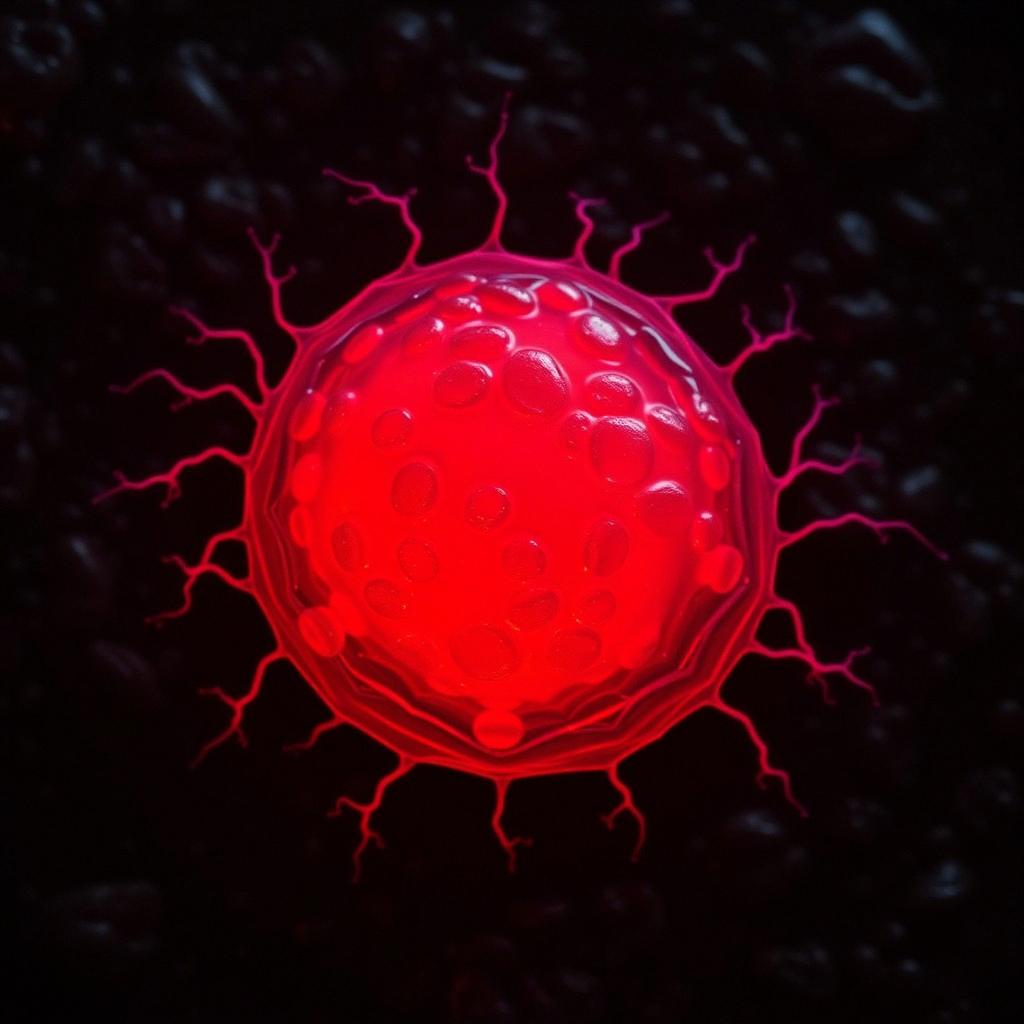
    Paper Review: The E3 ubiquitin ligase RNF121 is a positive regulator of NF-κB activation Science Art

     Science Movie


    Make a narrated HD Science movie for this answer ($32 per minute)


     Discussion


    Get Ahead With Science Insights

    Custom summaries of the latest cutting edge Science research. Every Friday. No Ads.


    My BGPT