Why BGPT?
logo

Ecology — Field Data at Scale

Discover observational and experimental ecology data, trends, and metadata from full papers.

Press Enter ↵ to search



    Explore by Goal


     Quick Answer


    Yes—most wildfire–species research from historically fire-prone regions is partly transferable, but it can miss “novel fire regime” mechanisms that matter when fire frequency/intensity expand into areas with little evolutionary or ecological fire history.
    • Transferable core: fire can cause mortality/thermal injury, habitat loss/fragmentation, and altered resource availability; these mechanisms recur across biomes.
    • What may break: in newly fire-prone regions, pre-fire vegetation structure, fuel continuity, symbioses, dispersal/colonization routes, and disturbance–recovery trajectories can differ—so “effect direction” and “recovery speed” can change.
    • Best practice: treat existing studies as mechanistic priors, then explicitly test whether local traits and disturbance-history (not just “fire happened”) predict species responses.


     Long Answer


    Wildfire–species research from “fire-prone” regions: how relevant is it to “newly fire-prone” regions?

    Key scientific question: When climate change increases fire risk in regions that were historically not strongly shaped by wildfire, does prior ecological wildfire research still generalize to impacts on species abundance/richness/demography/habitat extent?

    VISUAL 1 — Relevance map (conceptual, not quantitative)

    Why we need this distinction: climate change is widely linked to increased fire weather and, in many regions, expanded burning relative to historical regimes (including drought/heat-driven conditions that increase likelihood of large fires).
    But ecological responses depend on local disturbance history and biological traits—not just whether a fire occurs.

    VISUAL 2 — What is likely transferable vs potentially non-transferable

    How to read: This is a logic map—not an effect-size meta-analysis. The “likely transferable” entries reflect that many wildfire impacts include common mechanisms (direct injury, structural changes). The “may change / often non-transferable” entries reflect that in newly fire-prone places, baseline vegetation/fuel structure and biological recovery pathways may be different.

    Empirically, wildfire regime changes are driven by climate-weather controls on fire risk across regions . Ecologically, whether a given disturbance translates into population decline or recovery can depend on the presence/absence of prior fire-adapted traits and on recovery windows.

    VISUAL 3 — What “relevance” should mean for study design

    Interpretation: When transporting results from historically fire-prone regions, scientific relevance increases when the study’s design matches (i) the degree of fire-regime departure from history, (ii) the pre-fire community context, and (iii) the demographic/recolonization time windows relevant to the focal taxa.

    Climate-to-fire links motivating the “newly fire-prone” framing include evidence that warming/drying can elevate wildfire activity and alter fire regimes .

    VISUAL 4 — Known blind spots & error modes when generalizing

    Risk How it biases relevance What to look for in studies
    Baseline mismatch Historically fire-shaped ecosystems differ in fuel continuity, structure, and species trait distributions. Compare pre-fire conditions and disturbance history; quantify fuel/structure differences.
    Time-scale mismatch Short-term post-fire surveys may miss delayed demographic effects and recovery. Multi-year follow-up and explicit recovery trajectories.
    Confounding Fire severity can covary with weather, land use, and habitat fragmentation. Severity metrics, habitat covariates, and causal/stratified approaches.
    Publication bias Studies finding clear effects are more likely to be published. Look for null findings and pre-registered or comprehensive reporting.
    Over-generalization Mechanisms differ across taxa and fire types (surface vs crown, severity gradients). Mechanistic interpretation grounded in species traits and fire behavior.
    These are methodological concerns standard to ecological inference, relevant when exporting results across regimes. They matter because the “newly fire-prone” premise implies regime change, not merely “more fires,” consistent with climate–fire regime evidence .

    Bottom line (evidence-weighted)

    • Yes, relevant as mechanistic priors: wildfire can directly injure individuals, change habitat structure, and alter resources—mechanisms likely present across fire-prone and newly fire-prone regions.
    • No, not safely generalizable without regime/context matching: climate-driven shifts in wildfire regimes mean “historical baseline ecology” can be violated .
    • Practical interpretation: treat “fire-prone region studies” as hypotheses-generating; evaluate transferability using baseline ecology, trait relevance, fire behavior/severity, and time-to-response.
    Confidence: Moderate that the framework above is broadly correct; limited by not performing an on-the-fly, full systematic extraction of species-level studies specifically contrasting historically fire-prone vs newly fire-prone regions.

    Run an iterative Science agent (recommended)

    To answer this with higher precision, an agent should extract and compare species-level wildfire-effect papers from both (a) historically fire-prone regions and (b) documented “newly fire-prone/expanding fire” contexts, then quantify effect-direction shifts and identify which taxa/mechanisms change most.


    Feedback:   

    Updated: July 08, 2026

     Hypothesis Graveyard


    A “fire is fire” null where effects transfer with no change in direction or magnitude across regimes is unlikely if wildfire regime characteristics (frequency/intensity/seasonality) shift under climate change .


    All differences are explained purely by sampling bias (e.g., only severe fires are measured in expanding regions). This is possible in part, but the disturbance template itself is expected to shift mechanistically with climate-fire links . Better designs would test this explicitly.

     Science Art


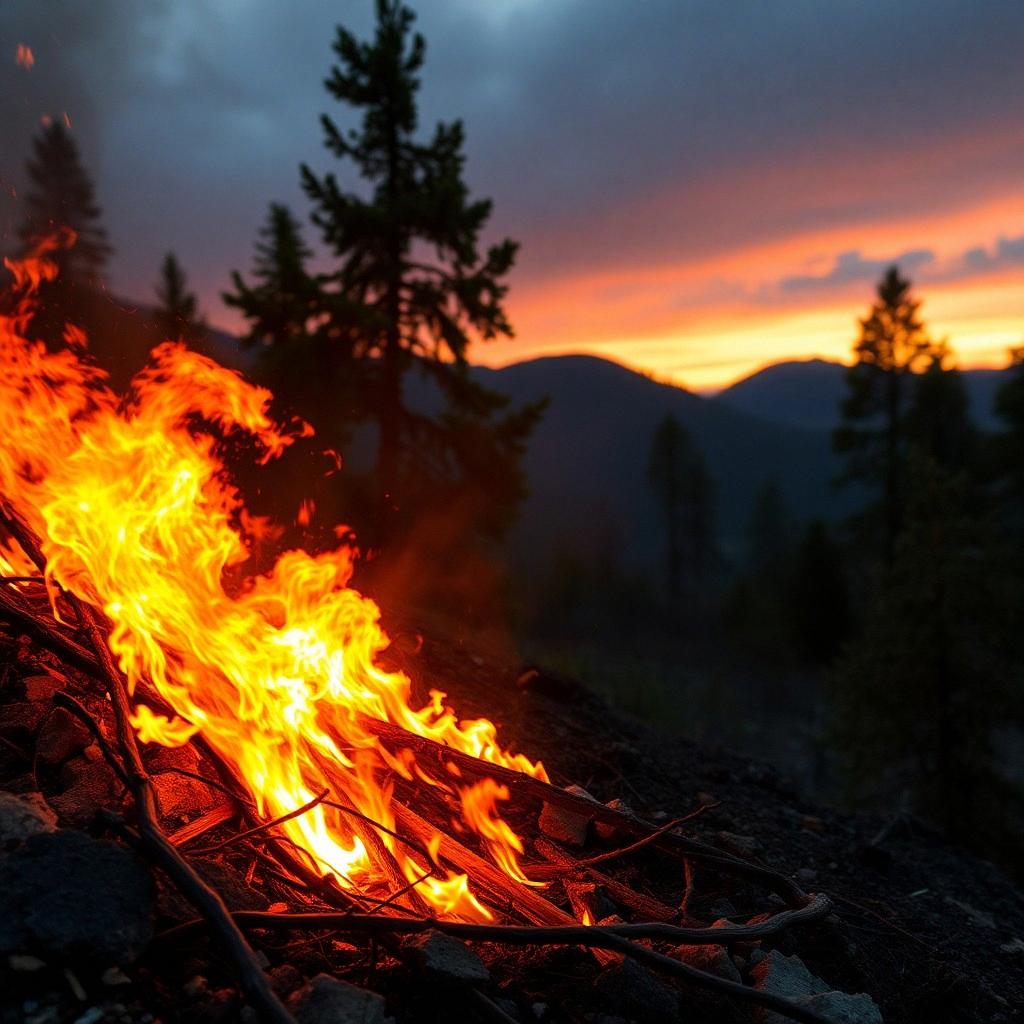
    Most research into the impacts of wildfire on species (e.g. abundance, richness, demographic changes, changes in habitat extent etc) tends to focuses on fire-prone regions. Is this research relevant when considering impacts of wildfire on species which are not historically fire-prone but are becoming so due to climate change? Science Art

     Science Movie


    Make a narrated HD Science movie for this answer ($32 per minute)


     Discussion


    Follow the Evidence

    New scientific claims, supporting evidence, and important limitations. Every Friday. No ads.


    My BGPT