Why BGPT?
logo

Review papers with raw data transparency

Quickly verify claims by accessing the underlying experimental data and figures.


Press Enter ↵ to solve


    Fuel Your Discoveries


     Quick Explanation


    Mitochondrial dynamics in astrocytes — what’s strongly supported vs what stays unresolved
    • Supported core idea: astrocyte mitochondria buffer cytosolic Ca2+ (via MCU uptake and NCX release) and this buffering can causally affect astrocyte glutamate release dynamics .
    • Supported spatial logic: ER–mitochondria proximity/MAMs can tune inter-organelle Ca2+ transfer efficiency, and close ER–OMM gaps enhance Ca2+ transfer in cell models .
    • Quantified trafficking claim in this review: in astrocytic fine processes, ~44% mitochondria move retrograde and ~56% anterograde, with slower/shorter range transport than dendrites .


     Long Explanation


    Paper Review (narrative review): “Mitochondrial dynamics in astrocytes”
    DOI: 10.1042/BST20140195 • Published: 01 Dec 2025
    This review synthesizes evidence on how astrocyte mitochondria regulate Ca2+ buffering, local ATP supply, organelle positioning/contacts (MAMs), transport, fission/fusion, and mitophagy, and how these processes may shape neuron–glia communication and disease mechanisms .
    1) Visual map of claims → mechanisms → evidence types
    The review’s synthesis repeatedly links Ca2+ handling (MCU/NCX; ER release) to downstream functional outcomes (e.g., glutamate release) and frames mitochondrial position/contacts (MAMs) as a spatial control layer .
    2) Quantitative anchors extracted from the review narrative
    The review states that in astrocytic fine processes (<600 nm diameter) mitochondria show bidirectional movement with 44% retrograde and 56% anterograde, and that trafficking is slower/shorter than in dendrites .
    The review reports an even split (≈50% fission and 50% fusion) for individual astrocytic mitochondria under physiological conditions in acute cortical slices .
    3) Critical mechanistic review (known vs inferred vs uncertain)
    3.1 Known mechanistic core: mitochondrial Ca2+ handling shapes astrocyte functional output
    • The review states that mitochondria take up Ca2+ via MCU and release via NCX, and that ER store release via IP3Rs (and ryanodine/caffeine receptors) contributes to cytosolic Ca2+ rises .
    • Pharmacological disruption of mitochondrial membrane potential with FCCP reduces mitochondrial Ca2+ buffering capacity and slows cytosolic Ca2+ decay during ER-induced Ca2+ waves, consistent with mitochondria exerting negative feedback on Ca2+ propagation .
    • The review links changes in mitochondrial Ca2+ buffering (e.g., NCX blockade/mitochondrial Ca2+ manipulation) to changes in astrocyte glutamate release .
    Skeptical note: the causal chain “mitochondrial Ca2+ buffering → altered glutamate release” depends strongly on pharmacological specificity and on how Ca2+ sensors/reporters separate cytosolic vs mitochondrial contributions. The review itself emphasizes remaining mechanistic questions about astrocyte-specific pathways .
    3.2 Spatial coupling: MAMs and ER–mitochondria geometry tune Ca2+ transfer
    • The review discusses mitochondria-associated ER membranes (MAMs) as structural/functional zones enabling efficient Ca2+ and lipid exchange, while noting that components and regulation in astrocytes remain incompletely explored .
    • It also cites geometric control of Ca2+ transfer: increasing ER–OMM distance to ~15 nm enhances ER-to-mitochondria Ca2+ transfer efficiency, whereas reducing the gap to ~5 nm can block efficient transfer due to physical constraints affecting IP3R accommodation .
    Uncertainty to watch: evidence on “gap size” and “transfer efficiency” is not automatically “astrocyte-specific,” and the review explicitly states that components and regulation within astrocytes are not fully resolved .
    3.3 Trafficking and perisynaptic positioning: supported correlations, mechanistic unknowns
    • The review summarizes evidence that astrocytic mitochondrial distribution is non-uniform along fine processes (<600 nm) and that mitochondrial mobility is reduced relative to neuronal dendrites .
    • It further claims activity-related positioning near glutamate transporters and altered motility when Na+/Ca2+ handling is inhibited .
    Skeptical note: “positioning” is correlational unless tested with sufficient loss-of-function and with orthogonal assays that separate energy effects from Ca2+ effects. The review itself frames neuronal regulation of astrocyte trafficking as “expected but still only inferred” .
    3.4 Morphology (fission/fusion) and quality control: mechanisms linked to injury and inflammation, but astrocyte specificity remains incomplete
    • The review describes classical fission/fusion machinery (Drp1/Fis1 for fission; Mfn1/Mfn2/OPA1 for fusion) and states that injury/inflammatory stimuli shift the balance toward increased fission with Drp1 activation, alongside impaired ATP production and increased ROS .
    • For quality control, it highlights PINK1/Parkin-driven mitophagy as a main selective mitochondrial degradation route and notes links to trafficking regulators like Miro1 .
    • The review also mentions transcellular mitophagy as a potentially widespread CNS phenomenon, citing evidence that retinal ganglion cell axons shed mitochondria and adjacent astrocytes internalize/degrade them .
    Key blind spot: the review emphasizes that timescales and dysregulation mechanisms of astrocyte mitophagy (and how widespread the phenomenon is beyond the specific context) remain major mechanistic questions .
    4) Evidence strength critique & potential bias/error modes
    What the paper does well
    • Mechanistic coherence: it consistently integrates Ca2+ buffering, ER–mitochondria proximity, trafficking, and quality control into a single functional narrative about astrocyte-neuron communication .
    • Uses mechanistic perturbations in cited primary work: e.g., FCCP/NCX-linked manipulations are cited for mitochondrial Ca2+ buffering contributions .
    Where skepticism is warranted
    • Model dependence: much of the mechanistic picture is assembled from cultured astrocytes, acute/organotypic slices, and non-astrocyte-specific inter-organelle contact experiments; the review explicitly flags that discerning components and regulation within astrocytes is not fully resolved .
    • Pharmacology off-target risk: using FCCP/NCX blockers and other perturbagens changes mitochondrial membrane potential and ion handling globally; this can confound interpretation if downstream readouts reflect broader cellular stress .
    • Correlational-to-causal leap: the review notes that activity regulation of astrocyte mitochondrial trafficking is expected but still inferred .
    5) Fast “how to falsify” map (derived from the review’s central claims)
    • If mitochondrial Ca2+ buffering is functionally necessary for astrocyte Ca2+ wave shaping and glutamate release modulation, then disrupting MCU/NCX-mediated mitochondrial Ca2+ handling specifically in astrocytes should eliminate the cited FCCP/NCX-linked shifts in Ca2+ decay kinetics and glutamate release .
    • If ER–mitochondria geometric coupling governs astrocyte mitochondrial Ca2+ uptake efficiency, then changing ER–OMM spacing in astrocyte-relevant contexts should flip Ca2+ transfer efficiency in line with tethered-gap results .


    Feedback:   

    Updated: March 24, 2026

    BGPT Paper Review


    Study Novelty

    70%

    As a narrative review, it is not a wholly new dataset-generating contribution; novelty comes from the integrative framing of astrocyte mitochondrial dynamics (Ca2+ buffering, trafficking/positioning, MAMs, morphology, and mitophagy including transcellular mitophagy) into a single mechanistic agenda centered on unresolved astrocyte-specific questions .


    Scientific Quality

    80%

    High quality for synthesis: it organizes mechanistic claims around explicit proteins/pathways (MCU/NCX, IP3Rs, MAMs, Drp1/fission, Mfn/OPA1/fusion, PINK1/Parkin mitophagy, Miro1-linked trafficking) and cites experimental perturbations in primary literature; limitations typical of narrative reviews remain (selection bias risk; heavy reliance on in vitro/slice models; astrocyte-specific mechanistic gaps are acknowledged) .


    Study Generality

    70%

    The topic is specialized (astrocyte mitochondrial dynamics), but the mechanistic modules (organelle Ca2+ coupling, trafficking/positioning logic, fission/fusion and quality control) are broadly relevant to cell biology and neuroglial communication; generality is capped by astrocyte-specific unresolved in vivo quantification .


    Study Usefulness

    80%

    Useful as a structured “mechanistic checklist” for what to test in astrocytes (MCU/NCX, MAM geometry, Miro-linked transport/retention, fission/fusion shifts under injury, PINK1/Parkin-linked mitophagy, and transcellular mitophagy hypotheses) with concrete cited entry points .


    Study Reproducibility

    60%

    As a narrative review, reproducibility is limited by the absence of new datasets/methods and by dependence on heterogenous underlying studies; however, many mechanistic claims correspond to specific experimental perturbations in the cited literature .


    Explanatory Depth

    80%

    Explanations are mechanistically deep: it connects molecular machinery (MCU/NCX, Drp1/Mfn/OPA1, PINK1/Parkin, Miro1) to spatial-functional outputs (Ca2+ wave dynamics, glutamate release, per-process localization) and proposes explicit geometry/retention rationales (MAM gap distance constraints; Miro Ca2+ sensing models in neurons) .


    🎁 Authors: Collect 301 Free Science Tokens (≈ $30.1 USD)

    Claim My Author Tokens

    Use for 75 days of free BGPT access (4 tokens = 1 day) or trade/sell (≈ $30.1 USD)

     Top Data Sources ExportMCP


     Analysis Wizard


    No bioinformatics computation is required from this review; instead, it can extract pathway/protein entities (MCU, NCX/NCLX, Drp1, PINK1, Parkin, Miro1) from cited sections to build a mechanistic knowledge graph.


     Hypothesis Graveyard


    “MAMs are irrelevant in astrocytes; Ca2+ transfer is governed entirely by diffusible cytosolic Ca2+.” This is disfavored by mechanistic tether-gap evidence that ER–mitochondria spacing can enhance or block Ca2+ transfer .


    “Mitochondrial trafficking changes in astrocytes are purely stochastic and do not relate to astrocyte functional outputs.” The review’s cited studies link mitochondrial motility/positioning to neuronal activity and glutamate uptake, and separately link mitochondrial Ca2+ buffering changes to glutamate release .

     Science Art


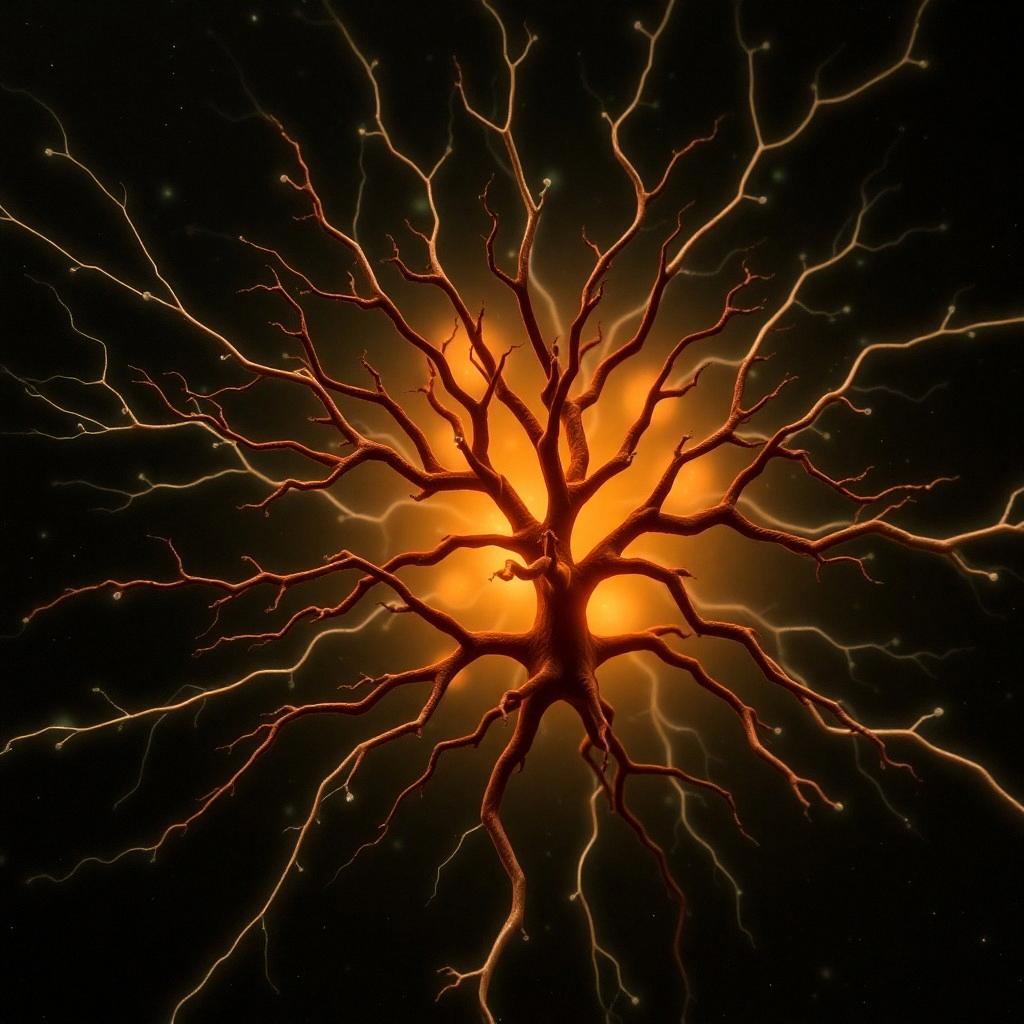
    Paper Review: Mitochondrial dynamics in astrocytes Science Art

     Science Movie


    Make a narrated HD Science movie for this answer ($32 per minute)


     Discussion


    Get Ahead With Science Insights

    Custom summaries of the latest cutting edge Science research. Every Friday. No Ads.


    My BGPT