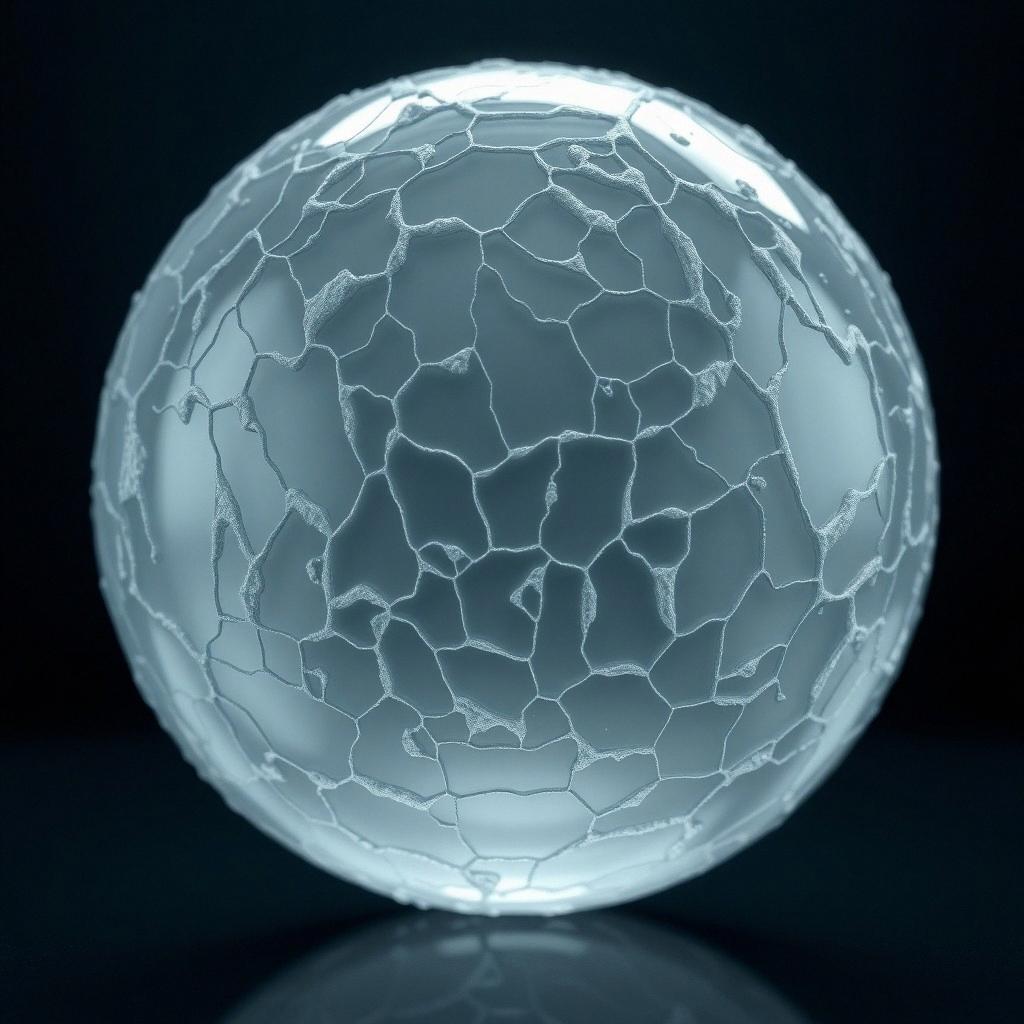
The paper reports a bottom-up assembly where PSS latex nanospheres are coated with a single cationic DODAB bilayer formed from DODAB bilayer fragments, then used to immobilize biomolecules (DNA, BSA, cholera toxin, and a Taenia crassiceps protein mixture) with adsorption curves fit to Langmuir-type isotherms for proteins and peptide-like behavior for DNA under the tested range.
Key numbers (1 mM NaCl, ~5Γ10^9 PSS particles/mL, DODAB BF ~0.01 mM): protein affinity constants K β 10^10 Mβ1 and limiting coverages of ~10^17 molecules/m^2 were reported for BSA/CT/18-14-Tcra, while DNA lacked a saturation maximum up to the tested range.
DOI: 10.1002/masy.200651369 β’ Venue/date (from provided metadata): Macromolecular Symposia, Dec 01, 2006
One-sentence claim (as stated by the paper): cationic bilayer-covered PSS latex nanoparticles assembled from DODAB fragments can adsorb/immobilize biomolecules and produce highly monodisperse particulate systems; proteins show Langmuirian adsorption with reported affinities and coverages, whereas DNA shows linear adsorption without a limiting maximum up to the tested range.
The following plots are reconstructed only from the numeric values present in your provided Table 1/2 excerpts. No additional hidden data are introduced.
The paperβs data support the idea that surface organization (charge state + bilayer structure + homodispersity) can strongly modulate how different biomolecules adsorb (saturable proteins vs non-saturating/linear DNA behavior within the tested range).
Custom summaries of the latest cutting edge Science research. Every Friday. No Ads.