Why BGPT?
logo

Review papers with raw data transparency

Quickly verify claims by accessing the underlying experimental data and figures.


Press Enter ↡ to solve


    Fuel Your Discoveries


     Quick Explanation


    Quick take: This qualitative study (n=25 stakeholders; 13 policy documents) finds Iran provides free primary healthcare to many migrants but major gaps persist for ~3 million undocumented migrants β€” legal status and cost are dominant barriers; authors recommend extending insurance, reducing out-of-pocket costs, and stronger government–NGO–UNHCR coordination


     Long Explanation


    Visual critique β€” Healthcare access for migrants in Iran (Ghiasi et al., 2025)

    Visualize first, explain second β€” key empirical facts from the paper shown below, followed by critical appraisal and improvement suggestions.
    Key empirical inputs (paper):
    • Methods: 25 semi-structured interviews + review of 13 policy documents; Braun & Clarke thematic analysis; MAXQDA used for coding
    • Main finding: Government provides free PHC to many migrants, but ~3 million undocumented migrants lack UPHI coverage and face high out-of-pocket costs; UNHCR subsidizes insurance for ~95,000 vulnerable refugees (paper reports UNHCR activities)
    • Policy recommendations: expand health insurance to undocumented migrants, reduce treatment costs, improve government–NGO–UNHCR coordination, consider telemedicine/digital solutions

    Critical appraisal β€” strengths

    • Clear question addressing an urgent public-health issue in a major refugee-hosting LMIC; timely, policy-relevant focus (covers PHC, curative care, CBR)
    • Triangulation of data sources: stakeholder interviews + document review strengthens credibility of the themes (policy + lived experience)

    Critical appraisal β€” limitations & blindspots

    1. Sampling and generalisability: 25 stakeholders is appropriate for in-depth qualitative coding but may underrepresent migrant voices (only 3 migrant interviewees reported) β€” risk of privileging institutional perspectives over lived experiences of undocumented migrants; limits transferability outside Iran
    2. Missing utilization data: The paper reports access and barriers but lacks quantitative utilization/outcome measures (service uptake, morbidity/mortality differences, cost burdens) that would permit stronger causal inference or policy costing analyses β€” the claim that undocumented migrants delay care is credible but not quantified
    3. Potential selection & confirmation bias: purposive + snowball sampling of stakeholders may bias toward those engaged in migrant health policy; without detailing recruitment frame or saturation criteria, thematic completeness is hard to judge
    4. Policy evidence linkage: recommendations (e.g., multinational social insurance) are bold but speculative; feasibility (political, fiscal) and unintended consequences (adverse selection, portability administration) are not modelled or empirically tested in paper

    Concrete ways to strengthen the study (actionable)

    • Recruit a larger purposive sample of undocumented migrants (stratified by sex, age, urban/rural, employment) and include health service utilization logs or facility records to triangulate self-report.
    • Include simple quantitative measures: rates of vaccination completion, insurance enrollment, OOP expenditure estimates β€” even survey modules embedded in qualitative sampling would enable mixed-methods inference.
    • Perform a basic costed policy simulation comparing current UPHI coverage vs. universal UPHI for migrants (budget impact, projected utilization changes) to test feasibility of recommendations.

    Confidence statement and what would falsify the main conclusion

    Confidence in primary claims (that free PHC exists but undocumented migrants face major legal/financial barriers) is moderate given concordant interview and document evidence in the paper; falsification would require high-quality administrative data showing no systematic difference in healthcare access or insurance coverage between documented and undocumented migrants in Iran (contradicting authors' claims)

    Minimal reproducible replication checklist (what a replicator needs)

    1. Study protocol: semi-structured interview guide (not provided in paper) β€” include verbatim guide in supplement.
    2. Recruitment frame: stakeholder categories, inclusion/exclusion criteria, recruitment dates and locations.
    3. Document search strategy: exact databases, search terms, inclusion/exclusion for the 13 documents reviewed.
    4. Codebook and inter-coder agreement statistics (e.g., % agreement or kappa) β€” authors state independent review but numeric metrics would help reproducibility.

    Short, prioritized next-research experiments (feasible & decisive)

    1. Cross-sectional facility survey in high-refugee urban areas to measure (a) vaccination completion among migrant vs host children, (b) percent uninsured, (c) mean OOP payments β€” will quantify the qualitative claims.
    2. Budget-impact model comparing current UPHI reach vs UPHI expansion to all migrants including sensitivity to enrollment/adverse selection β€” will assess fiscal feasibility of policy recommendations.


    Feedback:   

    Updated: March 16, 2026

    BGPT Paper Review


    Study Novelty

    60%

    Addresses an important, timely policy problem in a high-burden LMIC (Iran) with a mixed document+stakeholder qualitative approach; novelty is moderate because migrant-health access issues are well documented globally, but the Iran-specific policy mix (Amayesh/Hoviat cards, UPHI, UNHCR role) and the suggested multinational insurance idea add new applied policy suggestions.


    Scientific Quality

    70%

    Reasonable methodological transparency (explicit methods, analytic approach Braun & Clarke, MAXQDA), triangulation of documents and stakeholders, and ethical approval; key weaknesses: small number of migrant participants (3), limited reporting of saturation or inter-coder reliability metrics, absence of interview guide in supplement, and no quantitative triangulation of utilization or outcome data.


    Study Generality

    60%

    Findings are specific to Iran's legal/insurance instruments (Amayesh/Hoviat cards, UPHI) but the three thematic structure (PHC / curative / CBR) and identified barriers (legal status, cost, culture/language) are transferable to many LMIC migrant-hosting settings.


    Study Usefulness

    70%

    Provides clear, actionable policy recommendations (extend insurance, public–private partnerships, telemedicine) and maps stakeholder roles β€” useful for policymakers and NGOs in Iran and comparable LMICs, but lacks costed feasibility or implementation pathways.


    Study Reproducibility

    60%

    Methods are described (sampling type, interview length, analysis method), but reproducibility would be improved with release of interview guide, full codebook, and inter-coder agreement statistics; dataset is available on request which helps reproducibility.


    Explanatory Depth

    70%

    Thematic analysis links legal/policy structures to lived access barriers and service gaps; explanation depth is solid for qualitative policy work but lacks quantification of effect sizes or causal inference, and does not model the policy interventions proposed.


    🎁 Authors: Collect 148 Free Science Tokens (β‰ˆ $14.8 USD)

    Claim My Author Tokens

    Use for 37 days of free BGPT access (4 tokens = 1 day) or trade/sell (β‰ˆ $14.8 USD)

     Top Data Sources ExportMCP


     Hypothesis Graveyard


    Policy-only recommendations without enrollment pathway fixes will not change undocumented migrants' access because administrative barriers (ID requirement, fear of deportation) β€” thus broad policy statements alone are insufficient.


    Multinational social insurance (large-scale cross-border portability) as a near-term intervention is likely infeasible due to governance and fiscal constraints and therefore is less practical than targeted domestic enrollment subsidies.

     Science Art


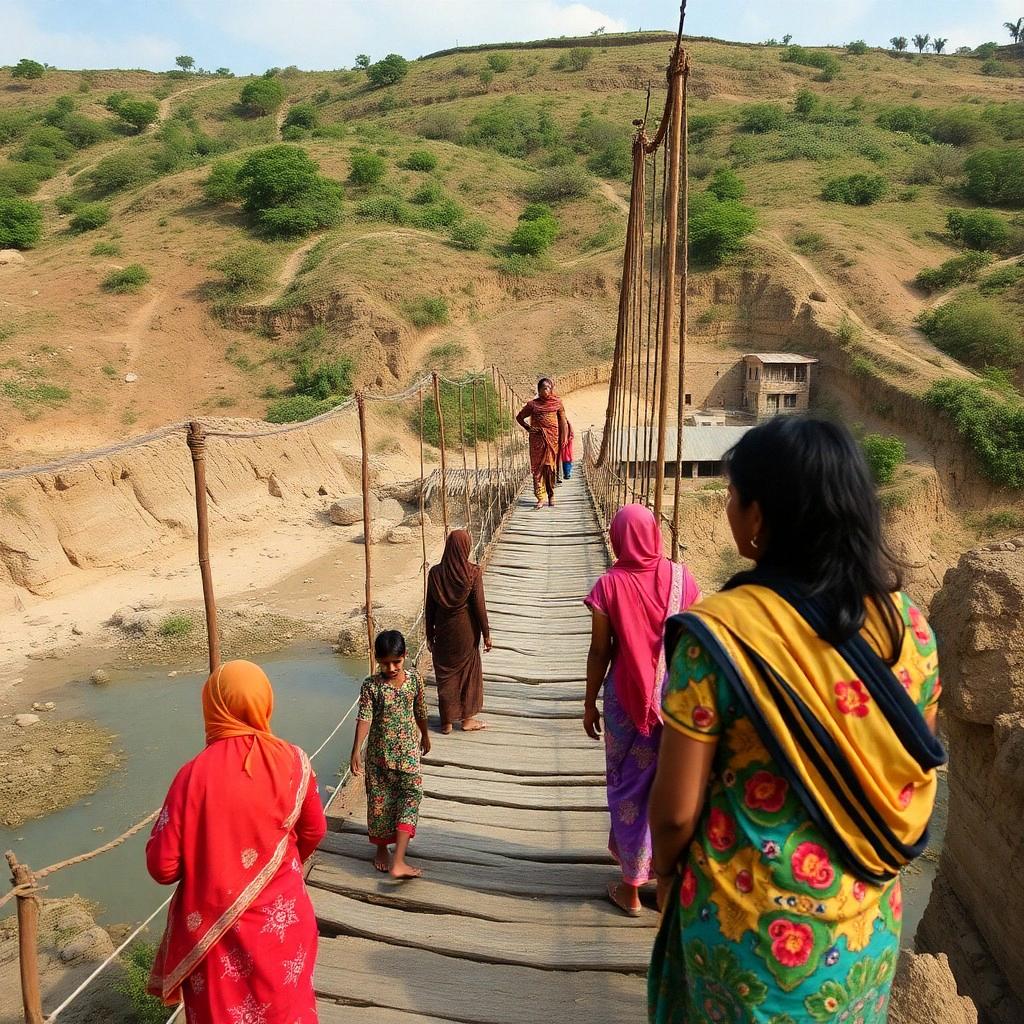
    Paper Review: Healthcare access for migrants in Iran: a qualitative study Science Art

     Science Movie


    Make a narrated HD Science movie for this answer ($32 per minute)


     Discussion


    Get Ahead With Science Insights

    Custom summaries of the latest cutting edge Science research. Every Friday. No Ads.


    My BGPT