Ask questions across claims linked to experiments, exact results, limitations, and sources.Know what falsifiable science actually supports before you trust the answer.
Press Enter ↵ to search evidence
Explore by Goal
"The most important scientific revolutions all include, as their only common feature, the dethronement of human arrogance from one pedestal after another of previous convictions about our centrality in the cosmos."
- Stephen Jay Gould
Quick Analysis Plan
Copied
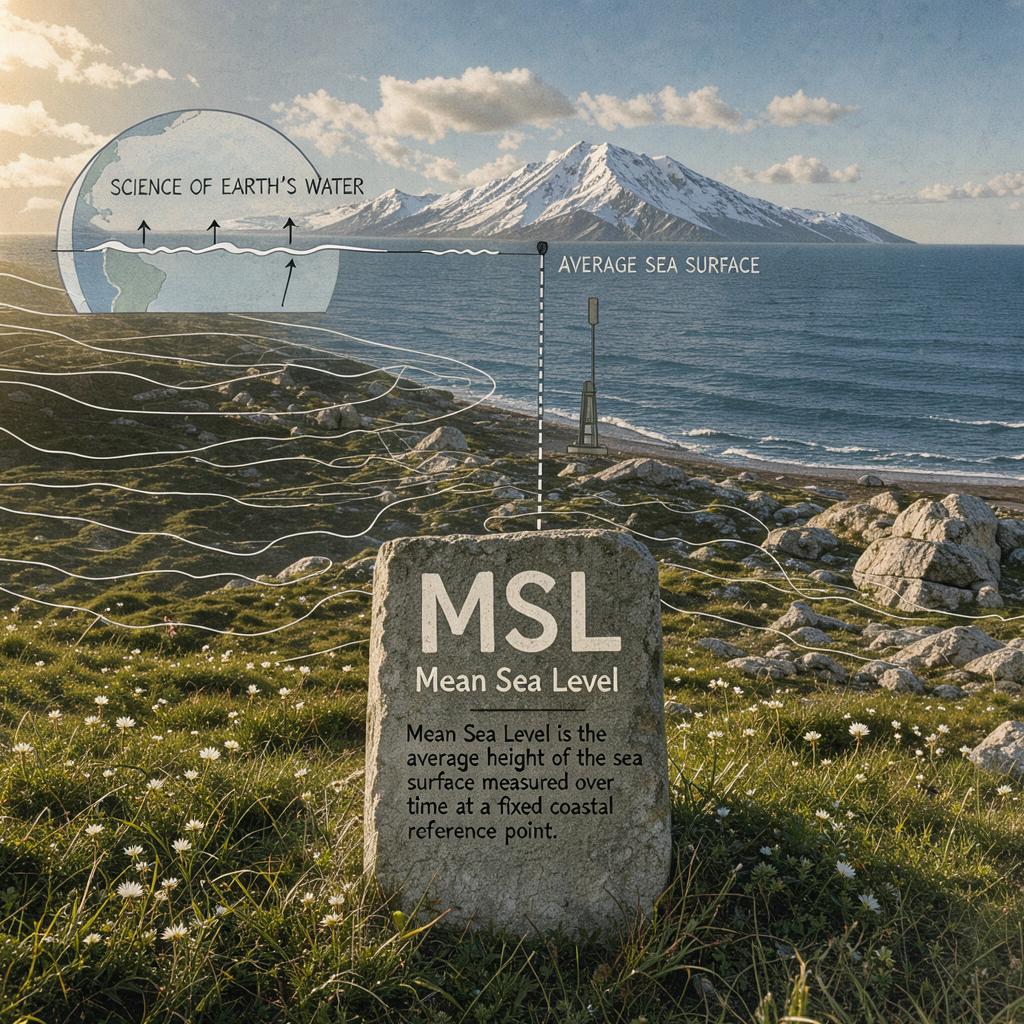
"MSL" is ambiguous; the supplied evidence supports three distinct meanings: (1) MscS-Like mechanosensitive ion channels in plants, present across green plants and diversified into three clades with four angiosperm groups ; (2) the male-specific lethal (MSL) chromatin complex that recruits MOF/KAT8 for H4K16 acetylation and X-chromosome dosage compensation in Drosophila and humans ; and (3) multi-soil-layering (MSL) wastewater treatment technology .
Long Analysis Plan
Disambiguation and evidence-based plan
What is known: The supplied evidence supports three unrelated entities called "MSL." In plants, MSL = mechanosensitive channel of small conductance-like proteins, MscS-homolog ion channels found in green plants but not animals, originating before the green plant lineage split and diversifying into three clades; angiosperms expanded into four groups (MSL1, MSL2/3, MSL4-8, MSL9/10) with four parallel expansions and Brassicaceae-specific duplications (AtMSL4/5, AtMSL4/7, AtMSL9/10 segmental; AtMSL7/8 tandem) . In animals, MSL = male-specific lethal complex, a dosage-compensation machinery: in Drosophila it sequesters the histone acetylase MOF to the X chromosome, with MSL binding predicted by H3K36me3 and spreading from nucleation sites . In humans, the MSL complex (MSL1, MSL2, MSL3L1, MOF/KAT8) is distinct from the NSL complex and predominantly acetylates H4K16, whereas NSL-MOF acetylates H4K5, K8, and K16 . A 2026 cryo-EM study defined the structural logic: dual anchoring (MSL1 to SHL 1.5 DNA; KAT8 to the H2A-H2B acidic patch) plus three gates funnel the H4K16 side chain into the catalytic pocket . A third, non-biological meaning, multi-soil-layering wastewater technology, also appears in the sources .
Bioinformatics analysis plan
Plant MSL (channels): Reproduce the genome-wide identification pipeline: HMMER with PF00924 plus BLASTP against 176 plant proteomes (NCBI, Phytozome v13.0, Gigadb), validate domains with SMART/CDD, predict TM domains with TMHMM, align with MAFFT, build phylogenies with IQ-TREE (ultrafast bootstrap 1000) and MrBayes, run MEME motif analysis, GSDS exon/intron plots, MCScanX synteny, and Wolf PSORT localization . Key residues to check: R326/D327 (MSL1), R280/E281 (MSL2), G556/N557 (MSL4-10).
Animal MSL (dosage compensation): Analyze MSL subunit recruitment and H4K16ac: process CUT&Tag (GSE318456), ATAC-seq (GSE318125), and RNA-seq (GSE318124) with Bowtie2, MACS2, deepTools, and DESeq2; test MSL1 anchor-helix mutants (R516E, R519E) effects on promoter-proximal H4K16ac and accessibility . Optionally visualize the MSL-nucleosome structure from PDB 23FT.
Wastewater MSL (if intended): Reproduce the FFNN prediction of total coliforms: 7 features (HLR, pH, TSS, TN, TKN, PO4-, TC_in), nnet with 11 hidden neurons, 10-fold repeated CV; pH and TSS were the most influential predictors, HLR least .
Limitations and uncertainties
Reported limitations: The plant MSL study is entirely computational, with in silico localization and structure predictions lacking functional validation, potential sampling/annotation bias, and an internal count discrepancy (2123 vs 2113) . The human MSL structural work relies on chemical trapping (H4K16CMC) and crosslinking that may bias conformational states, and the 2:2 assembly is observed in vitro with uncertain in vivo relevance . The wastewater ANN study is geographically confined to one Moroccan village, lacks external validation data, and did not publish raw data . Missing information: the query does not specify which "MSL" is intended, so this plan covers all three; confidence is highest for the biological meanings (strong evidence) and moderate for the wastewater technology.
Reproducing the genome-wide plant MSL identification pipeline (HMMER PF00924 search across 176 plant proteomes), computing per-lineage abundance statistics and preparing phylogeny-ready alignments for clade/group assignment.
Get emailed when your analysis is done!
We'll email you the results when your analysis is finished.
Hypothesis Graveyard
MSL binding to the X chromosome is determined primarily by DNA sequence motifs; this was superseded by evidence that H3K36me3 mark and sequence-independent recruitment dominate targeting.
MSL proteins are animal-specific; this was falsified by the genome-wide survey showing MSLs across green plants but not animals, indicating an ancient plant origin.

 Explore by Goal
 Quick Analysis Plan
 Long Analysis Plan
 Top Data Sources
 Ask a Follow-Up
 Key Insight
 Keep Exploring
 Analysis
 Hypothesis Graveyard
 Potential Experiments
 Discussion
