Check a paper's claims against linked experiments, exact results, stated scope, and limitations.Know what falsifiable science actually supports before you trust the answer.
Press Enter ↵ to search evidence
Explore by Goal
"The art and science of asking questions is the source of all knowledge."
- Thomas Berger
Quick Explanation
Copied
This 2026 Ukrainian Biochemical Journal narrative review competently synthesizes Kearns–Sayre syndrome (KSS) mechanisms, diagnostics (long-range PCR + NGS), and preclinical mtDNA-editing therapies, but its non-systematic design and reliance on older foundational sources limit novelty and reproducibility .
Long Explanation
What the review reports
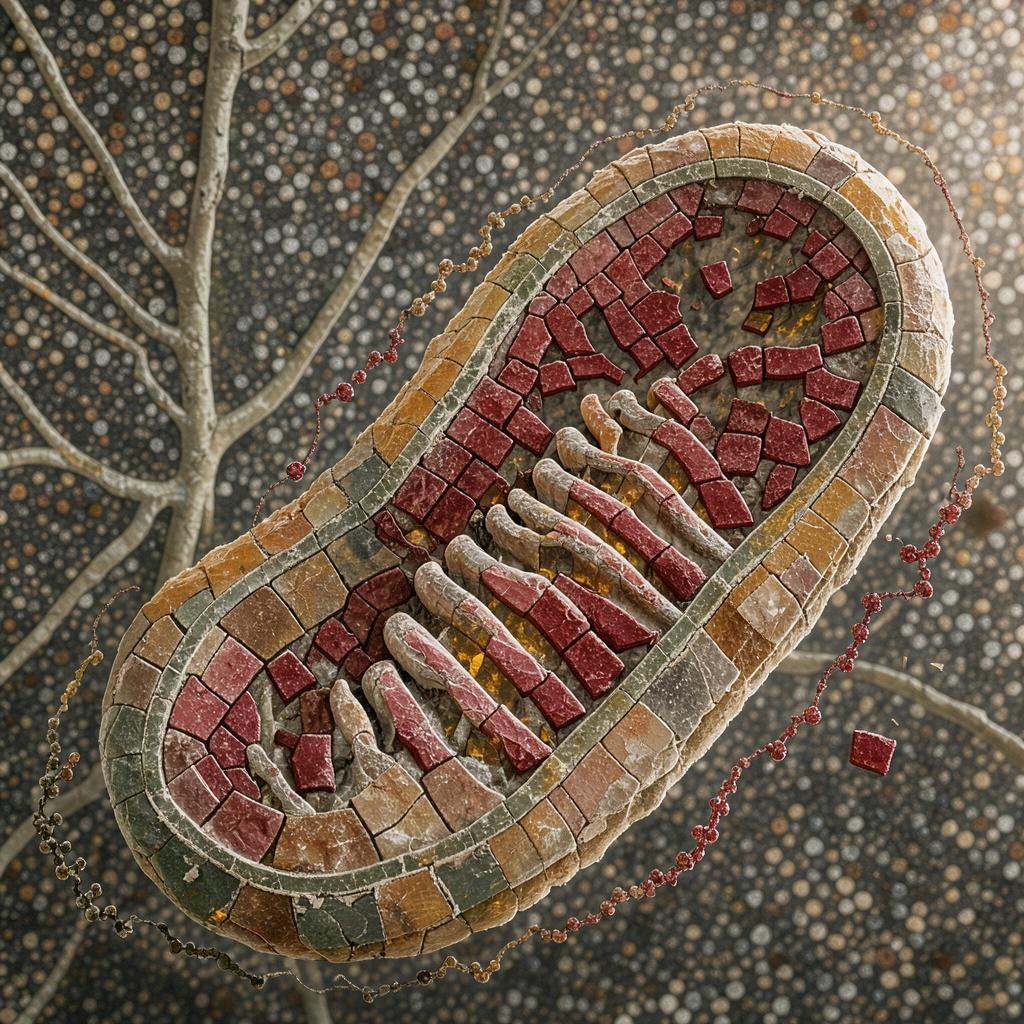
Syrvatka et al. frame KSS, Pearson syndrome, and CPEO as timing-dependent phenotypes of sporadic, large-scale single mtDNA deletions (typically the 4,997-bp 'common' deletion; >150 deletions reported), producing a triad of progressive external ophthalmoplegia, pigmentary retinopathy, and cardiac conduction block before age 20 . The mechanistic chain — complexes I/IV dysfunction → ROS (including reverse electron transport) → anaerobic glycolysis/lactic acidosis → cardiolipin oxidation, mPTP opening, apoptosis — is drawn largely from Turton et al. and Murphy's classic ROS framework .
Primary evidence underlying the field, contextualized here: the original 7-patient series found deletions of 2.0–7.0 kb in every KSS patient and none in controls ; single-patient studies report high heteroplasmy (84.65% for a novel 7,629-bp deletion ; 86–93% for a 5,025-bp deletion ). The review's treatment section accurately stresses that nuclease-based heteroplasmy correction (ZFNs, TALENs, mitochondria-targeted endonucleases) remains preclinical .
Critical assessment
Strengths: unusually candid limitations section (narrative design, KSS rarity, preclinical therapeutics); correct diagnostic algorithm (blood NGS → muscle if negative, to catch low-heteroplasmy false negatives); no funding or COI. Weaknesses: no PRISMA flow, no search-date transparency per source; epidemiology is internally inconsistent (prevalence quoted as 1.6/100,000 in Finns, 1–3/1,000,000 globally, then restated in conclusions as 1–3/100,000 — a likely transcription error); the 2022–2026 search window is contradicted by heavy reliance on 1995–2009 foundational sources; several sentences contain typographic noise ("Changings", "ternally inherited Leigh syndrome"), indicating weak editorial control. Notably, the review omits relevant primary records BGPT holds, e.g., KSS presenting as 2-oxoadipic aciduria , and nuclear-gene causes of multiple deletions (DGUOK) that broaden the differential . What would change the assessment: a systematic update showing LR-PCR/NGS has been superseded by muscle-free high-depth blood NGS thresholds, or human evidence for heteroplasmy-shifting therapy. Confidence: moderate — grounded in the full text, but novelty is low since most content recapitulates La Morgia, Viscomi/Zeviani, and GeneReviews.
Feedback:
Updated: November 22, 2026
BGPT Paper Review
Study Novelty
30%
A competent synthesis but no new data, classification, or hypothesis; content largely recapitulates La Morgia 2020, Viscomi/Zeviani 2020, and GeneReviews, with a 2022–2026 literature refresh as its main value-add.
Scientific Quality
40%
Internal inconsistencies (prevalence quoted as 1–3/1,000,000 vs restated 1–100,000), typographic noise, non-systematic search, and reliance on old sources despite a recent search window reduce quality despite an honest limitations section.
Study Generality
50%
Uses KSS as a model for all large-scale mtDNA deletion disorders, giving moderate breadth within mitochondrial medicine, but no cross-domain insight beyond rare-disease genetics.
Study Usefulness
50%
Useful as an accessible clinical/biochemical primer for trainees and clinicians in Ukrainian-language contexts; of limited value to specialists already familiar with GeneReviews and J Intern Med reviews.
Study Reproducibility
30%
Narrative reviews are inherently hard to reproduce: no PRISMA flow, no per-source search dates, no inclusion/exclusion criteria; conclusions cannot be independently reconstructed.
Explanatory Depth
50%
Mechanistic chain (complex I/IV defect → ROS modes 1/2 → lactic acidosis → cardiolipin oxidation → mPTP/apoptosis) is well explained but synthesized from prior reviews rather than critically re-analyzed.
We'll email you the results when your analysis is finished.
Hypothesis Graveyard
'ROS is the primary driver of KSS progression' — weakened by PolgA mutator-mouse data showing accelerated aging/apoptosis WITHOUT elevated oxidative stress markers, implying mtDNA mutation accumulation itself can be causal upstream of ROS.
'KSS is purely a mtDNA-deletion disease' — weakened by DGUOK/POLG nuclear-mutation phenocopies producing multiple deletions with PEO, showing nuclear maintenance genes must be excluded before attributing single-deletion causality.

 Explore by Goal
 Quick Explanation
 Long Explanation
 Top Data Sources
 Ask a Follow-Up
 Key Insight
 Keep Exploring
 Hypothesis Graveyard
 Potential Experiments
 Discussion
