Why BGPT?
logo

Review papers with raw data transparency

Quickly verify claims by accessing the underlying experimental data and figures.


Press Enter ↡ to solve


    Fuel Your Discoveries


     Quick Explanation


    Sam68 (STAR-family KH-domain RBP) as a signaling–RNA hub: this 2013 narrative review argues that Sam68 integrates extracellular signaling via multi-site phosphorylation/PTMs and scaffold/dimerization modules to shape post-transcriptional gene regulation (splicing, export/transport, translation, miRNA processing) and links dysregulation to diverse development and cancer phenotypes.


     Long Explanation


    Paper Review (Narrative Review)

    Role of Sam68 in Post-Transcriptional Gene Regulation
    Int J Mol Sci Β· Published 2013-11-28 Β· DOI: 10.3390/ijms141223402

    What the paper claims (scope + central framing)

    • Sam68 as an integration node: Sam68 is described as a STAR-family KH-domain RBP whose phosphorylation/PTMs tune RNA-binding and participation in multi-molecular nuclear/cytosolic complexes, thereby coupling signaling to RNA metabolism.
    • Multi-stage post-transcriptional reach: the review synthesizes literature across splicing, export/transport, translation, and miRNA processing.
    • Disease/cancer associations are summarized via a Table 1 narrative mapping diseases to Sam68-linked mechanisms/localization.

    Figure 1. Disease associations summarized in Table 1 (from the provided paper text)

    This is extracted directly from the provided Table 1 entries (no external inference). Counts reflect only how many diseases are listed under the Table’s rows, not prevalence or strength of causality.

    Figure 2. Claimed functional categories (from the paper’s Table 1 text)

    Because the provided Table 1 text includes mechanism phrases, we group them into coarse buckets using only those explicit phrases (e.g., β€œRegulation of alternative splicing”, β€œTumor progression/Metastasis”, β€œInclusion of exon 7”, β€œCGG repeats recruit Sam68”).

    Figure 3. Evidence hierarchy warning for narrative reviews

    This review is a narrative literature synthesis and does not report primary experimental results or dataset deposition on its own.

    Mechanistic model presented by the review (skeptical synthesis)

    Core mechanistic proposal: signaling kinases phosphorylate Sam68 and/or Sam68 interacts with signaling adaptors via proline-rich/SH3-mediated docking and tyrosine phosphorylation/SH2 interactions; PTMs alter Sam68 RNA-binding ability and intracellular localization; this in turn modulates RNA processing outputs (splicing choices, translation, export/transport, miRNA pathway readouts) and thereby influences proliferation/apoptosis/differentiation phenotypes.
    Key strengths (what looks well-supported)
    • Domain logic is coherent: the review repeatedly ties Sam68’s KH-domain RNA-binding with phosphorylation-determined modulation of RNA binding and subcellular localization, producing a mechanistic narrative rather than only phenotypic correlations.
    • Cross-pathway theme: Sam68 is positioned as a convergence point for multiple signaling pathways affecting post-transcriptional processing; this is consistent with Sam68’s described adaptor/scaffold interactions with signaling proteins in cited studies.
    Most important limitations / blind spots (what you should distrust or test harder)
    • Narrative review risk: claims cover many biological contexts; without a systematic inclusion/exclusion strategy, the review may over-represent supportive studies and under-represent null/conflicting findings. This is a known epistemic limitation of narrative syntheses.
    • Context dependence is asserted (β€œSam68 shows different biological functions depending on signaling status”), but causality between specific PTMs and specific RNA outputs is not formally unified in the review. This increases the risk of mechanistic over-extension when reading across disparate systems.
    • Table 1 is correlative: disease localization/expression associations (e.g., nuclear vs cytoplasmic) are presented as β€œsuggested mechanisms” rather than causal proof within the review itself.

    Mechanism examples (anchored in cited work with explicit DOIs from the provided dataset)

    The review cites many studies; here are a few explicitly provided DOI-backed examples from your dataset metadata to illustrate how PTM-dependent switching can be experimentally supported (but note: this does not validate the entire review’s breadth).
    Example A β€” apoptosis control via Bcl-x splicing (Sam68 PTM-dependent switching)
    The review describes Sam68 controlling Bcl-x alternative splicing in apoptosis-related contexts; one supporting study in your provided dataset reports Sam68’s role in switching Bcl-x isoforms (pro-apoptotic vs anti-apoptotic) with experiments in HEK293 cells.
    Example B β€” signaling-coupled splicing (ERK–MAPK axis via PTMs on splicing regulator complex components)
    A later mechanistic PNAS study in your dataset (SMAR1/HDAC6/Sam68–linked splicing) supports the broader notion that PTM machinery can tune Sam68-dependent alternative splicing outputs (CD44v) and link that axis to metastasis in vivo (mouse tail-vein model).
    Example C β€” tumor-relevant transcriptional integration (NF-ΞΊB promoter specificity via Sam68)
    Another dataset item reports Sam68 as a non-Rel component of NF-ΞΊB complex affecting promoter specificity for CD25 transcription in activated T cells.

    How you would falsify the review’s dominant narrative (what would disprove it)

    • Targeted causal tests: demonstrate that modulating Sam68 phosphorylation/PTMs in a controlled system fails to change multiple Sam68-dependent RNA outputs (splicing choices, export/transport, translation/miRNA pathway readouts) expected by the narrative.
    • Consistency across contexts: show that Sam68’s role cannot reproduce across multiple cell types/stimuli where the review implies signaling-to-RNA coupling (especially where localization shifts are claimed as mechanistic).


    Feedback:   

    Updated: March 24, 2026

    BGPT Paper Review


    Study Novelty

    30%

    As a 2013 narrative synthesis, it primarily consolidates previously established STAR-family and Sam68 signaling–RNA ideas rather than introducing a new mechanistic experimental framework or data-driven model.


    Scientific Quality

    60%

    Scientific quality is limited by the narrative-review format (no primary data, no systematic search/weighting, and no quantitative synthesis). However, the paper is structured around plausible domain→PTM→function logic and provides disease mapping.


    Study Generality

    70%

    The core concept (RBP signaling integration via PTM-dependent RNA processing control) generalizes beyond Sam68, but the paper’s breadth across many specific pathways/diseases makes its mechanistic specificity harder to apply to any one target without additional primary literature filtering.


    Study Usefulness

    70%

    Useful as a high-level conceptual map for researchers entering the Sam68 areaβ€”especially for understanding what kinds of RNA outputs and PTMs are repeatedly implicatedβ€”though it is not sufficient for making quantitative predictions without deeper per-target primary evidence.


    Study Reproducibility

    20%

    Reproducibility of the review’s claims is limited because it does not include new methods or datasets; verification requires locating and re-evaluating the original cited studies.


    Explanatory Depth

    60%

    The paper offers mechanistic storytelling (domain architecture and PTM logic) but does not deeply unify causality across all claimed outputs (splicing vs export/translation vs miRNA) with a single quantitative framework. It explicitly calls for further studies to clarify contextual interactions.


    🎁 Authors: Collect 21 Free Science Tokens (β‰ˆ $2.1 USD)

    Claim My Author Tokens

    Use for 5 days of free BGPT access (4 tokens = 1 day) or trade/sell (β‰ˆ $2.1 USD)

     Top Data Sources ExportMCP


     Analysis Wizard


    It extracts Table 1 disease/mechanism rows, clusters mechanism phrases into coarse buckets, and renders interactive plots summarizing how the review maps Sam68 to pathology categories.


     Hypothesis Graveyard


    β€œSam68 simply represses all splicing events in a uniform manner.” This is contradicted by the review’s examples of context-dependent, sometimes pro- versus anti-apoptotic splice isoform switching (e.g., Bcl-x isoform logic described via Sam68 modulation).


    β€œSam68’s disease associations are purely correlative and unrelated to RNA metabolism.” The review argues mechanistic coupling of PTMs to RNA processing outcomes, and cited mechanistic studies support specific Sam68β†’RNA output links (e.g., CD25 transcription promoter specificity; CD44v inclusion via PTM axis).

     Science Art


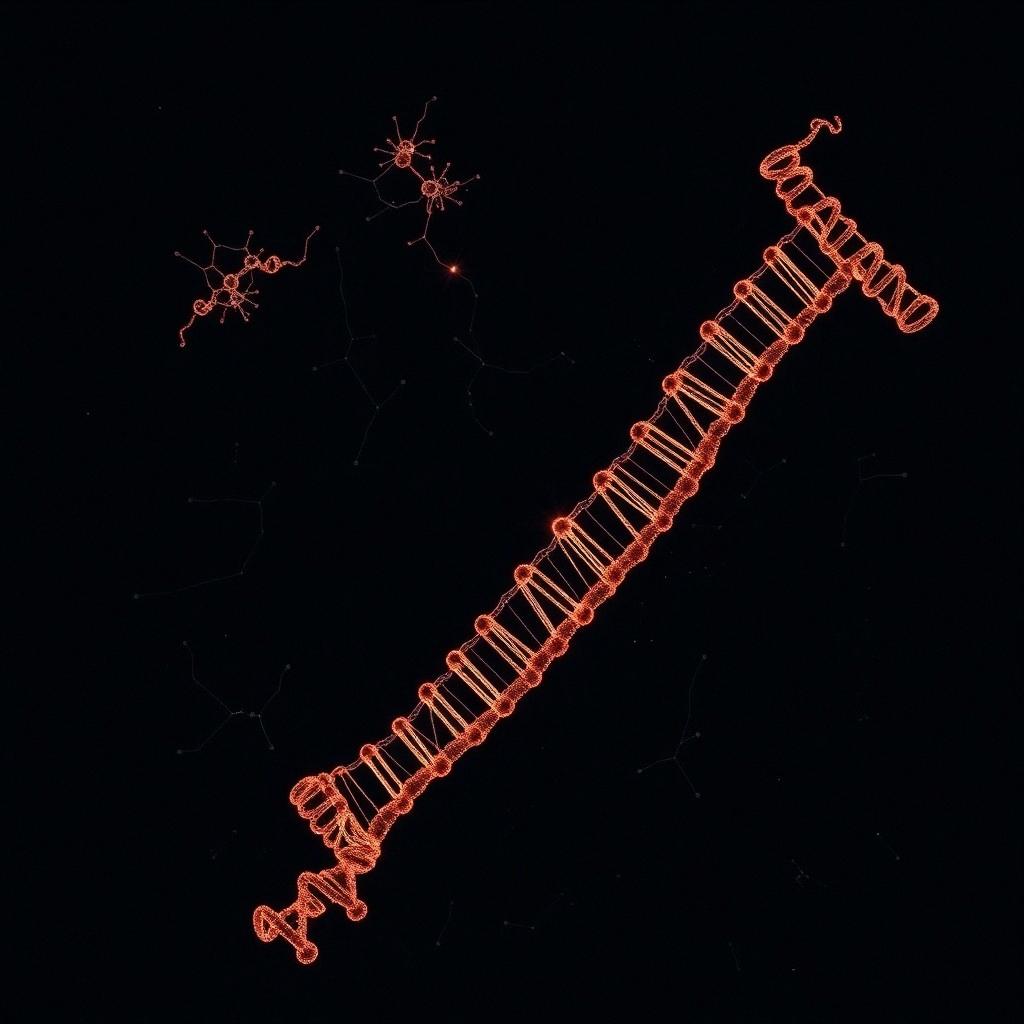
    Paper Review: Role of Sam68 in Post-Transcriptional Gene Regulation Science Art

     Science Movie


    Make a narrated HD Science movie for this answer ($32 per minute)


     Discussion


    Get Ahead With Science Insights

    Custom summaries of the latest cutting edge Science research. Every Friday. No Ads.


    My BGPT