Check each claim against its experiments, reported results, scope, and stated limitations.Know what the science actually supports before you trust the answer.
Press Enter ↵ to start review
Explore by Goal
"In nature, nothing exists alone."
- Rachel Carson
Quick Answer
Copied
High-level result (skeptical reading)
In a Dutch population cohort followed ~3 years, baseline cannabis use predicted later psychosis-spectrum outcomes (e.g., clinician-validated need-for-care diagnosis and BPRS symptom thresholds), with effects strongest for baseline vs more proximal use and with a reported stronger additive interaction in people with an existing psychosis vulnerability.
Long Answer
Paper Review (Critical + Visual): Cannabis Use and Psychosis: A Longitudinal Population-based Study
Van Os et al., Am J Epidemiol, DOI: 10.1093/aje/kwf043 (received 2001; accepted 2002).
What the authors claim (as directly as possible)
Prospective association: baseline cannabis use predicts later psychosis-spectrum outcomes at T2 in participants who were psychosis-free by their baseline CIDI psychosis symptom-item ratings.
Baseline > proximal use: the effect of cannabis at baseline was stronger than cannabis use measured at T1 or T2, arguing against a simple ‘proxy’ of ongoing proximal use driving detection.
Additive interaction with vulnerability: on an additive (risk-difference) scale, the cannabis-associated risk increase was much larger for participants with a baseline DSM-III-R lifetime psychotic disorder vulnerability.
Key design features (why this study is interpretable)
Population-based longitudinal sampling via NEMESIS (Netherlands Mental Health Survey and Incidence Study), multi-stage stratified random sampling.
Psychosis symptom assessment: CIDI administered by trained lay interviewers; then clinical reinterviews were used for those with significant baseline and at T2 symptoms; clinician ratings could replace lay ratings.
Outcomes span a spectrum: BPRS “any psychosis”, BPRS “pathology-level psychosis”, and a needs-based diagnosis using CAN.
Rare outcomes: the pathology-level BPRS outcome had n=10 in the exposed outcome-positive group (as shown in the provided Table 1/2 structure), so the largest OR (24.17) has very wide confidence intervals (5.44–107.46).
Attrition and missed incident cases: they acknowledge no clinical reinterviews at T1 because yearly incidence is low, and therefore some cases between baseline and T1 could have been missed at T2 if symptoms didn’t persist.
Confounding isn’t eliminated: they adjust for demographic and two psychosis risk factors (urbanicity and discrimination), and also jointly model cannabis with other drugs to test whether cannabis retains effect independent of “other drugs.”
Visual 3 — Reported population-attributable fractions (under a causal assumption)
The paper reports PAFs derived from adjusted logistic regression via an AFLOGIT procedure. This is explicitly a causal-assumption quantity: PAF answers “what fraction could be prevented if the exposure were eliminated and the association were causal.”
Blind spots & known-unknowns (what could change the conclusion)
Exposure measurement granularity: cannabis use is assessed at baseline, T1, and T2 via the CIDI L-section, with “any use” and frequency categories; the paper does not show THC/CBD potency measures here (at least in the provided text). Without potency, dose–response inference is limited.
Residual confounding: despite covariate adjustment and a joint modeling check with other drugs, unmeasured factors could co-vary with cannabis use and psychosis vulnerability (e.g., early-life stressors not measured, differential help-seeking affecting symptom discovery). The study adjusts for urbanicity/discrimination and other covariates but cannot prove full exchangeability.
Selection/attrition: they conduct sensitivity analyses by allocating missing reinterview participants to case vs non-case categories to quantify effect-size extremes. But sensitivity analyses can’t recover unknown true states; they reduce (not eliminate) uncertainty.
What would most directly disprove or revise this paper’s interpretation?
Replication with improved exposure measurement (potency/THC:CBD, exact timing) showing the baseline association and additive interaction do not persist after controlling for relevant vulnerability markers.
Alternative causal models in which the observed associations are fully explained by unmeasured factors that change both cannabis use and psychosis vulnerability. The paper’s adjusted models reduce but do not eliminate this possibility.
Author review links (bespoke BGPT pages)
Feedback:
Updated: April 05, 2026
BGPT Paper Review
Study Novelty
70%
It extends the cannabis–psychosis literature by using a population-based longitudinal cohort with a psychosis continuum outcome strategy (symptom thresholds plus needs-based clinician consensus), and by explicitly testing distal vs proximal cannabis timing and additive interaction with baseline psychosis vulnerability. This is not conceptually brand-new, but the specific longitudinal + interaction framing is a meaningful methodological contribution for the early 2000s era.
Scientific Quality
80%
Scientific strengths include: prospective design; population sampling; structured diagnostic interviews; clinician reinterviews for clinically significant symptoms; and sensitivity analyses for missing clinical reinterviews/attrition. Main quality limitations are typical for observational studies: exposure measurement granularity (no potency in the provided text), rare outcomes leading to very wide CIs, and the possibility of missing incident cases due to no clinical reinterviews at T1.
Study Generality
60%
Generalizability is likely moderate: NEMESIS is a Dutch general population sample (not a narrowly clinical population), but cannabis use measurement and social context are cohort-specific, and the paper’s modeling choices depend on 1996–1999 measurement practices.
Study Usefulness
70%
It is useful for hypothesis-building and for informing study design (timing, vulnerability moderation, needs-based outcomes) because it provides a clear prospective framework and quantifies interaction on an additive scale. However, it does not provide raw data or potency-resolved exposure measures in the provided text, limiting mechanistic translation.
Study Reproducibility
60%
Reproducibility is moderate: methods are described (sampling, CIDI/SCID reinterview workflow, outcome thresholds, covariates, sensitivity analyses, logistic modeling). But the provided text does not include public data/code or full model formulas/estimation details, and clinician reinterview procedures include operational elements that may be hard to fully replicate without additional documentation.
Explanatory Depth
60%
The paper provides plausible biological hypotheses (endocannabinoid/dopamine interactions, chronic THC effects) but does not measure those mechanisms directly; explanatory depth is therefore moderate and largely abductive, grounded in external mechanistic literature.
No bioinformatics analysis is needed; the key evidence is already fully quantified (adjusted ORs, CIs, PAFs) in the paper tables, so code would only replot these values for visual critique.
Get emailed when your analysis is done!
We'll email you the results when your analysis is finished.
Hypothesis Graveyard
A “pure self-medication” explanation alone would predict that cannabis use is mainly a response to emerging symptoms, producing stronger effects for proximal exposure than for baseline history. Because this paper reports stronger baseline than proximal effects, the pure reverse-causation-only story is less consistent with their observed timing pattern (though not eliminated).
A “no additive interaction” model would expect similar risk increases across vulnerability strata on the additive scale. The paper reports a much larger additive risk difference in those with baseline vulnerability and a statistically significant interaction, so this null is disfavored by their results (subject to observational confounding).
Science Art
Science Movie
Make a narrated HD Science movie for this answer ($32 per minute)
Discussion
Stay current without chasing every paper.
Know what changed, what holds up, and what remains uncertain. Every Friday. No ads.

 Explore by Goal
 Quick Answer
 Long Answer
 Top Data Sources
 Ask a Follow-Up
 Key Insight
 Analysis
  Hypothesis Graveyard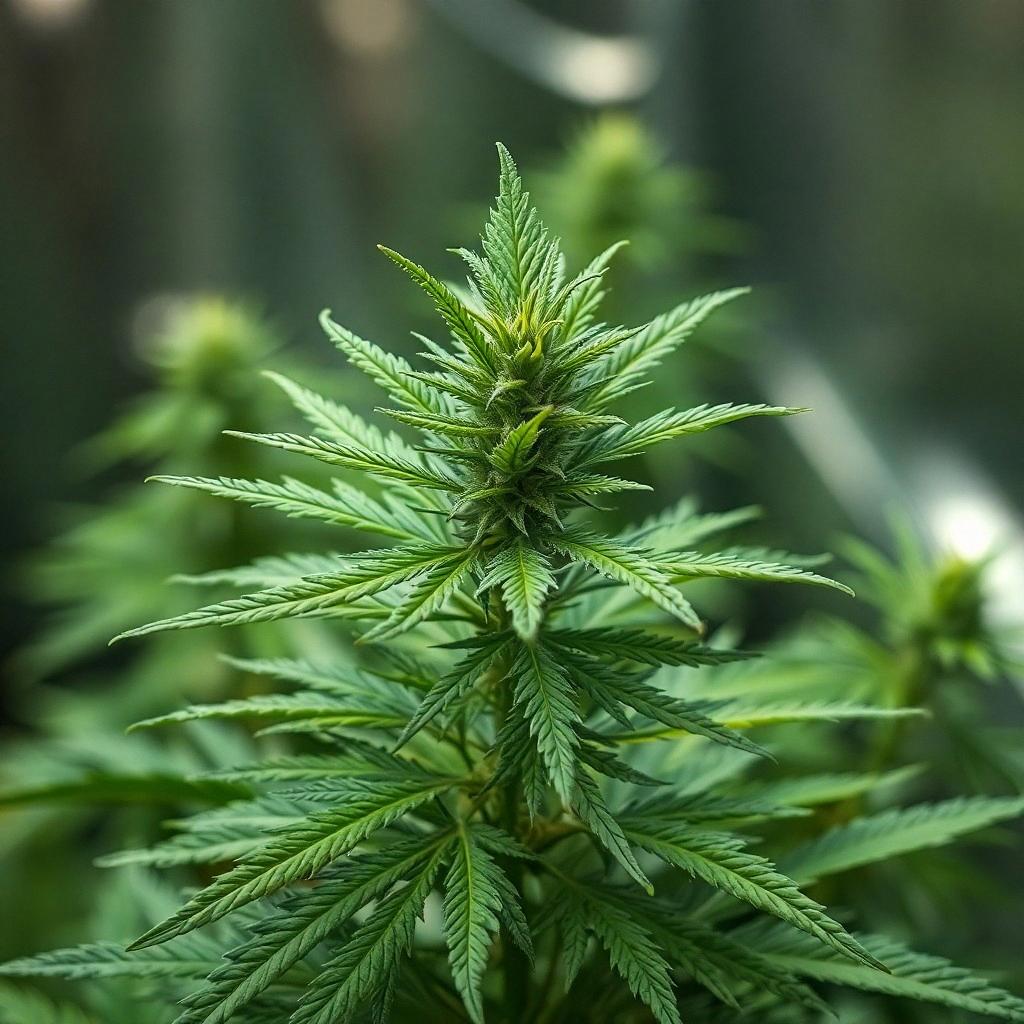
 Discussion
 My BGPT