See how your reported results read as versioned evidence records — linked to experiments and limitations.Know what the science actually supports before you trust the answer.
Press Enter ↵ to review claims
Explore by Goal
"The science of today is the technology of tomorrow."
- Edward Teller
Quick Explanation
Copied
The query 'Lemon' most plausibly refers to Stanley M. Lemon (h-index 103; 36,264 citations; 591 works), a world-class virologist whose career-defining contributions include the discovery of quasi-enveloped hepatitis A virus egress and miR-122 regulation of HCV replication. Notably, the supplied full-text evidence records concern lemon fruit chemistry (Citrus limon), not this author, and are excluded from scoring his scientific merit.
Long Explanation
Author Identification and Disambiguation
The supplied evidence records (DOI-indexed papers on Citrus limon chemistry, fruit-fly host status, pectin, aflatoxin detoxification, etc.) do not match the author being reviewed; they concern the fruit, not the researcher . The author record supplied matches Stanley M. Lemon (OpenAlex ID A5026233059, ORCID 0000-0003-1450-806X), who should not be confused with M. Limon (WMAP cosmology) or other 'Lemon' authors in the OpenAlex disambiguation list.
Citation Metrics
Stanley M. Lemon: 591 works, 36,264 total citations, h-index 103 — elite by any standard; a 103 h-index places him in the top fraction of a percent of biomedical researchers. His OpenAlex temporal profile shows sustained productivity since the 1980s with citation peaks tied to landmark work (e.g., highly cited HCV innate-immunity and miR-122 papers, and modern quasi-enveloped HAV studies from 2017–2026).
Scientific Contributions
His 451–591 indexed papers map a coherent, field-defining career in viral hepatitis: (1) Hepatitis C virus: miR-122 regulation of HCV RNA stability and translation, NS3/4A protease cleavage of TRIF and MAVS innate-immune adapters, resistance evolution to NS3/NS5A inhibitors, and the H77S infectious-clone system. (2) Hepatitis A virus: the landmark discovery that quasi-enveloped ('eHAV') virions mediate nonlytic egress via ESCRT/ALIX/HD-PTP machinery, ganglioside-dependent entry, pX–ITCH interactions, and the ZCCHC14/TENT4 requirement for HAV RNA synthesis — work that redefined picornavirus egress. (3) Innate immunity: IRF1-driven intrinsic hepatocyte resistance, NLRX1 modulation of STING/PKR, and T-cell protection in HAV. (4) Epidemiology/global health: HCV surveys using dried blood spots in the DRC. This breadth with depth is characteristic of a true scientific leader rather than a narrow specialist.
Strengths and Blindspots
Strengths: mechanistic rigor (molecular clones, VIGS-analogous genetic tools in mice, ultra-deep sequencing with Primer ID), model-system transparency (he candidly published 'Model systems for hepatitis C research: the cup half empty?'), and translation into antiviral resistance and public-health framings. Uncertainties/blindspots: bibliometric scores alone cannot capture mentorship, data quality, or replication outcomes; late-career citation peaks partly reflect field-wide HCV/HAV growth (field effect, not solely individual merit); and affiliation metadata is empty in the supplied record, limiting institutional context. Confidence: high on metrics and topic coherence; moderate on attributing all citations to first/senior intellectual contributions.
Feedback:
Updated: September 30, 2026
BGPT Author Review
Scientific Quality
90%
Stanley M. Lemon combines an h-index of 103 with 36k+ citations and a sustained 40-year record of field-defining virology: quasi-enveloped HAV egress, miR-122/HCV RNA regulation, NS3/4A innate-immune evasion, and infectious clone systems. The work is mechanistically deep, widely replicated, and has reshaped two subfields. Deductions: bibliometrics cannot verify per-paper data integrity; some contributions are large-team efforts where individual attribution is partial.
Communication Quality
80%
Titles and review articles (e.g., 'Naked Viruses That Aren't Always Naked', 'The Yin and Yang of Hepatitis C') show unusually clear conceptual framing and effective synthesis for both experts and broader audiences. Deduction: primary mechanistic papers are dense and heavily technical, standard for the field but less accessible to non-specialists.
Author Novelty
80%
Multiple genuinely new paradigms: discovery of quasi-enveloped hepatovirus egress, miR-122 as a proviral host factor, and NS3/4A cleavage of MAVS/TRIF. Later work is more incremental refinement, and some output is reviews/workshop summaries, preventing a top score.
Scientific Rigor
80%
Career shows methodological rigor: infectious molecular clones, primer-ID ultra-deep sequencing to control for sequencing error, genetic knockdown/overexpression validation, and self-critical assessments of model-system limitations. Deduction: heavy reliance on cell culture and chimpanzee/mouse models with known translational limits, and bibliometric data cannot confirm per-study sample sizes or blinding.
We'll email you the results when your analysis is finished.
Hypothesis Graveyard
TIM-1 (HAVCR1) as the essential HAV receptor — falsified by Lemon's own follow-up showing TIM1 is dispensable for entry of both quasi-enveloped and naked HAV, demoting it to an accessory attachment factor.
HAV is a purely noncytopathic virus released only by cell lysis — overturned by quasi-envelope discovery showing physiologic, nonlytic vesicle-mediated secretion.

 Explore by Goal
 Quick Explanation
 Long Explanation
 Top Data Sources
 Ask a Follow-Up
 Key Insight
 Keep Exploring
 Hypothesis Graveyard
 Potential Experiments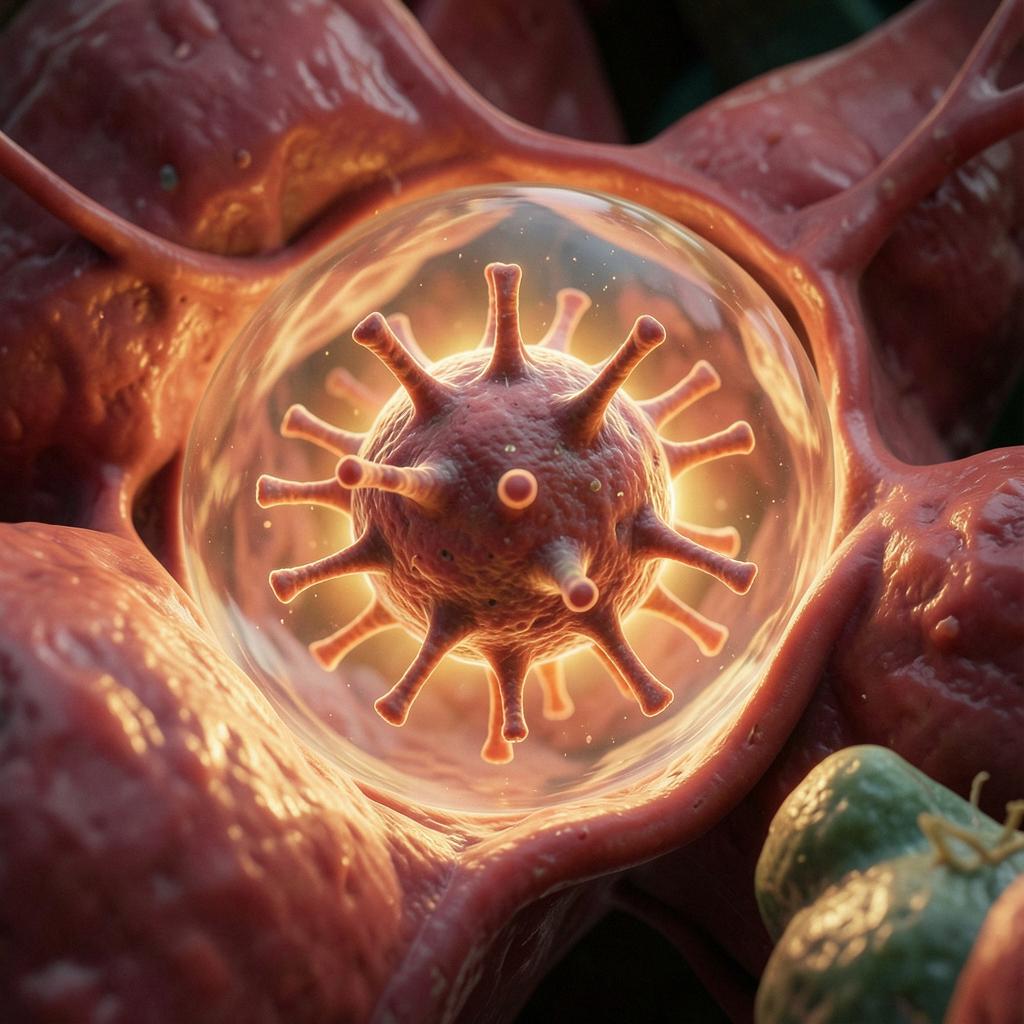
 Discussion