Why BGPT?
logo

Review papers with raw data transparency

Quickly verify claims by accessing the underlying experimental data and figures.


Press Enter ↡ to solve


    Fuel Your Discoveries


     Quick Explanation


    Core claim: the paper proposes that Nedd8 modification of Cullin-5 (Cul-5) is required for Cul-5 to bind and potentiate TRAF6 polyubiquitination, driving NF-ΞΊB activation and inflammatory mediator production in an LPS-induced acute lung injury mouse model .
    Skeptical note: the evidence chain is coherent, but relies heavily on hemizygous Cul-5 deficiency and on MLN4924 (broad neddylation inhibitor), so part of the phenotype may reflect effects on other neddylated cullins or CRL substrates .


     Long Explanation


    Paper review (skeptical, evidence-based): Nedd8 modification of Cullin-5 regulates lipopolysaccharide-induced acute lung injury

    DOI: 10.1152/ajplung.00410.2016 Date (paper metadata provided): July 1, 2017
    Review focus
    • LPSβ†’TLR4β†’TRAF6β†’NF-ΞΊB axis
    • Where Cul-5 and Nedd8 fit mechanistically
    • Strengths, missing controls, and alternative explanations
    Evidence chain schematic (from the paper’s claims)
    This is a claims map (not quantitative). It preserves the logical ordering of experiments as described.
    Cell-type emphasis in the experimental design
    From the paper text provided: in vivo macrophage adoptive transfer + in vitro macrophage-like readouts.

    1) What the study sets out to test

    The authors frame a mechanistic hypothesis: Cul-5 regulates TLR4-linked inflammation via TRAF6, and Nedd8 modification of Cul-5 is required to enable Cul-5’s functional interaction with TRAF6, culminating in NF-ΞΊB activation and inflammatory mediator production during LPS-induced ALI .

    2) In vivo findings: Cul-5 deficiency correlates with reduced ALI severity

    The in vivo model is intratracheal LPS challenge in age/sex/weight-matched wild-type vs Cul-5 +/- mice. The authors report (at early post-LPS timepoints) that Cul-5 haploinsufficiency attenuates lung pathology scores, neutrophil sequestration/infiltration readouts (MPO activity), vascular barrier disruption (Evans blue albumin extravasation), and BALF cellular/protein accumulation, along with reduced mRNA/protein levels of multiple inflammatory cytokines/chemokines .
    Skeptical reading:
    • Genetic model limitation: the study uses Cul-5 +/- (full knockout is embryonically lethal). That means the strongest possible conclusion is about reduced Cul-5 dosage rather than complete loss-of-function .
    • Endpoint window: major measurements are described around ~6 hours (for mechanistic readouts and for injury analysis) and ~12–24 hours (for some BALF/histology). The paper text provided does not give a fine-grained time-course across all endpoints .

    3) Causality via macrophage adoptive transfer

    To test whether the phenotype is macrophage-driven, the authors perform intratracheal adoptive transfer of peritoneal macrophages between histocompatible strains: Cul-5 +/- macrophages are delivered into wild-type recipients, and the LPS phenotype is then assessed. They report that transfer of Cul-5 +/- macrophages attenuates ALI readouts in wild-type mice, including histology, MPO activity, BALF protein/cell counts, and cytokine/chemokine outputs .
    Skeptical reading:
    • Cell type resolution: the paper uses peritoneal macrophages as donor cells, and also studies alveolar macrophages in culture. While they conclude macrophages likely dominate, the provided text indicates multiple lung macrophage subsets exist and the study does not resolve subset-specific Cul-5 function .

    4) Neddylation requirement for LPS-driven inflammatory cytokine expression

    The authors test whether neddylation is upstream/required by using MLN4924 (an inhibitor of the Nedd8-activating step) in macrophage models (primary macrophages and THP-1-Cul-5 stable cells), and by knocking down Nedd8 with siRNA/shRNA. They report that MLN4924 treatment and Nedd8 knockdown abrogate LPS-induced inflammatory cytokine/chemokine expression and also suppress Cul-5–mediated cytokine production .
    Critical alternative explanation:
    • Broad mechanism concern: MLN4924 inhibits neddylation broadly, not only Cul-5. The authors explicitly note that cytokine inhibition magnitude with MLN4924 exceeds the effect expected from Cul-5 hemizygosity, and they discuss possible off-target/broader CRL pathway contributions (e.g., IΞΊBΞ±/Ξ²-TrCP-related impacts) .

    5) Mechanism proposed: Cul-5 neddylation enables TRAF6 binding, polyubiquitination, and NF-ΞΊB activity

    The paper’s mechanistic core uses co-immunoprecipitation and reporter assays in transfected systems to test whether neddylation status changes Cul-5 interaction with TRAF6, TRAF6 dimerization, TRAF6 polyubiquitination, and NF-ΞΊB reporter activity. The key mechanistic claims are:
    • MLN4924 blocks the neddylated band of Cul-5 (neddylation status readout).
    • MLN4924 reduces Cul-5 binding to TRAF6.
    • Cul-5 promotes TRAF6 dimerization, and this enhancement is abrogated by MLN4924.
    • Cul-5-driven TRAF6 polyubiquitination is reduced by MLN4924 or Nedd8 knockdown.
    • A Cul-5 neddylation site mutant (K724R) reduces the ability of Cul-5 to promote TRAF6 polyubiquitination.
    • Cul-5 enhances NF-ΞΊB luciferase activity, and MLN4924 abrogates it.
    These points are all stated directly in the paper’s Results description .
    Biological plausibility (outside the paper, mechanistic context): Nedd8 activation is known to structurally activate cullin-RING ligases by conformational control and assembly principles; cryo-EM work provides mechanistic insight into how Nedd8 nucleates multivalent cullin-RING-UBE2D ubiquitin ligation assemblies .
    However, the paper’s specific claim (Cul-5 neddylation specifically enables TRAF6 binding and the downstream TRAF6 ubiquitin signal) still depends on the study’s experimental design and controls .

    6) Critical appraisal (what looks strong vs what remains uncertain)

    Strengths (within what is shown in the provided text)
    • Multi-level consistency: in vivo ALI phenotype tracks with macrophage transfer experiments and with mechanistic macrophage signaling experiments .
    • Multiple perturbation strategies: pharmacologic inhibition (MLN4924), Nedd8 knockdown, and a Cul-5 neddylation-site mutant (K724R) converge on the pathway claim .
    Uncertainties / blind spots explicitly or implicitly suggested by the text
    • Non-specificity of MLN4924: the authors themselves discuss that MLN4924 inhibition could reflect effects beyond Cul-5, so causal attribution specifically to Cul-5 neddylation (vs broad CRL inhibition) remains partially uncertain .
    • In vivo timing and stoichiometry: the provided text does not include quantitative kinetic data on neddylated Cul-5 abundance over time in vivo, so the claim that LPS induces Cul-5 neddylation at the relevant causal window is not numerically constrained .
    • Species/model generalization: the Discussion states the LPS ALI model does not fully reproduce key aspects of human ARDS, suggesting translation limits .

    Claim-confidence matrix (based only on the provided text)

    β€œStrong” here means: multiple described experimental perturbations and readouts within the paper text; β€œModerate/Weak” means: limited details in the provided excerpt or explicit non-specificity concerns.
    Paper claim (short) Evidence type(s) in text Confidence (qualitative)
    Cul-5 hemizygosity reduces LPS-ALI injury Histology, MPO, Evans blue, BALF cytokines/cell/protein, tissue mRNA Strong
    Macrophage Cul-5 causal role Intratracheal adoptive transfer of macrophages Strong
    Neddylation required for LPS cytokine expression MLN4924 + Nedd8 knockdown/THP-1-Cul-5 Moderate
    Cul-5–TRAF6 binding depends on Nedd8 Co-IP Β± MLN4924; neddylation-site mutant (K724R) Moderate
    Cul-5 neddylation drives TRAF6 polyubiquitination & NF-ΞΊB TRAF6 ubiquitination assays; NF-ΞΊB luciferase; perturbations Moderate
    Evidence mapping is drawn from the paper excerpt you provided, primarily .


    Feedback:   

    Updated: March 28, 2026

    BGPT Paper Review


    Study Novelty

    70%

    It ties Cul-5 (previously implicated in TRAF6-linked NF-ΞΊB signaling) to ALI phenotypes and further adds a specific neddylation dependency in that mechanism, which is a meaningful mechanistic extension rather than entirely new biology .


    Scientific Quality

    70%

    The study shows internal coherence across in vivo phenotype, macrophage causality (adoptive transfer), and mechanistic perturbations (MLN4924, Nedd8 knockdown, and a Cul-5 neddylation-site mutant). Skepticism remains because MLN4924 is broad and the strongest in vivo model is hemizygous Cul-5, with translation limits of the LPS ALI model .


    Study Generality

    50%

    The mechanistic framework (neddylated Cul-5 enabling TRAF6 ubiquitin signaling in macrophages during LPS-driven ALI) is specific to a particular axis and injury model, limiting broad generality beyond related innate immune/neddylation contexts .


    Study Usefulness

    60%

    Useful for hypothesis generation and for targeting strategies around the Nedd8–Cul-5–TRAF6–NF-ΞΊB signaling logic in inflammatory lung injury; however, drug-translation conclusions are constrained by model specificity and MLN4924 non-specificity acknowledged by the authors .


    Study Reproducibility

    60%

    Methods are described at a reasonable level (LPS model, assays like MPO, Evans blue, BALF, qPCR; MLN4924 and knockdown approaches), but the provided excerpt does not include full numeric data tables, randomization/blinding details for all assays, or public datasets/accessions; additionally sample-size specifics are not fully detailed in the excerpt .


    Explanatory Depth

    70%

    Mechanistically, the paper provides a plausible stepwise model linking neddylation to Cul-5/TRAF6 interaction, TRAF6 polyubiquitination, and NF-ΞΊB reporter activity, supported by perturbations including a neddylation-site mutant .


    🎁 Authors: Collect 123 Free Science Tokens (β‰ˆ $12.3 USD)

    Claim My Author Tokens

    Use for 30 days of free BGPT access (4 tokens = 1 day) or trade/sell (β‰ˆ $12.3 USD)

     Top Data Sources ExportMCP


     Science Art


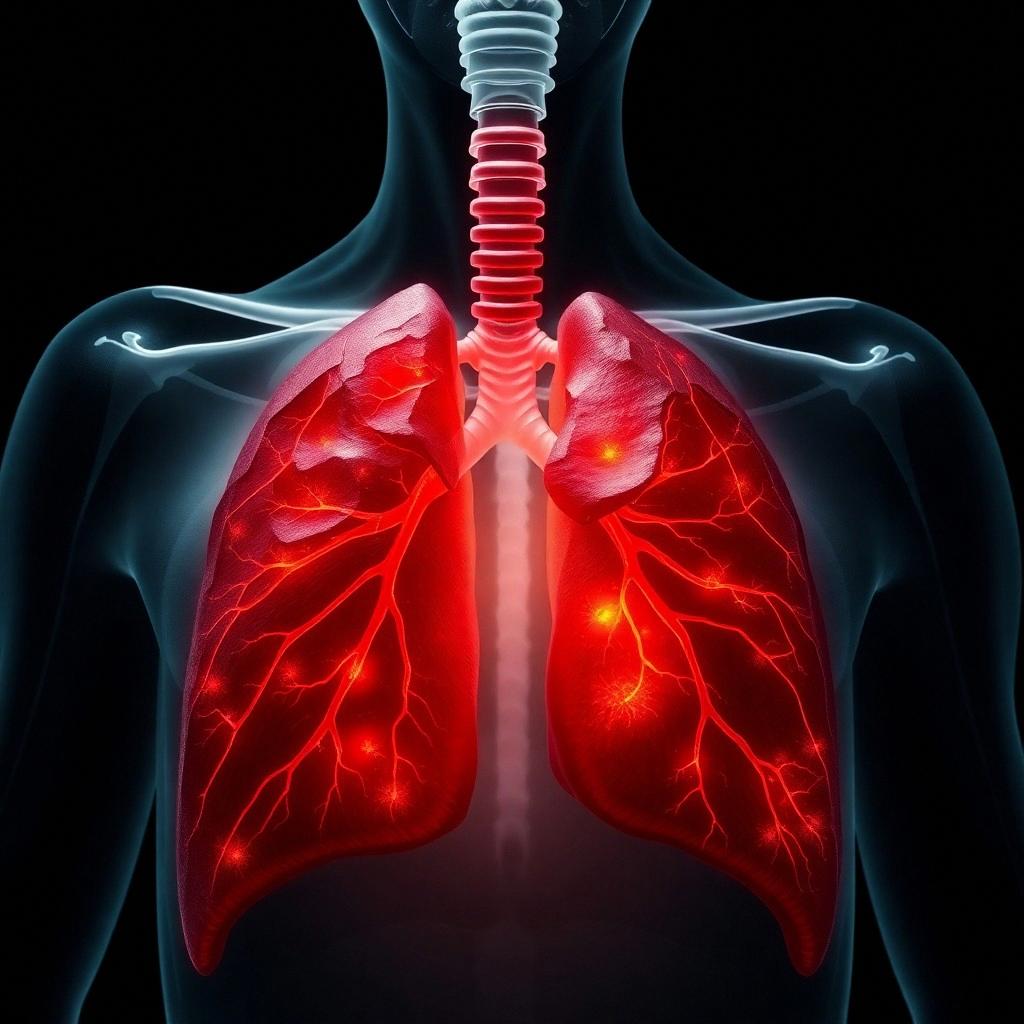
    Paper Review: Nedd8 modification of Cullin-5 regulates lipopolysaccharide-induced acute lung injury Science Art

     Science Movie


    Make a narrated HD Science movie for this answer ($32 per minute)


     Discussion


    Get Ahead With Science Insights

    Custom summaries of the latest cutting edge Science research. Every Friday. No Ads.


    My BGPT