Build figures from exact reported values and versioned claims, each one traceable to its source paper.Know what falsifiable science actually supports before you trust the answer.
Press Enter ↵ to search evidence
Explore by Goal
"I would rather have questions that can't be answered than answers that can't be questioned."
- Richard Feynman
Quick Analysis Plan
Copied
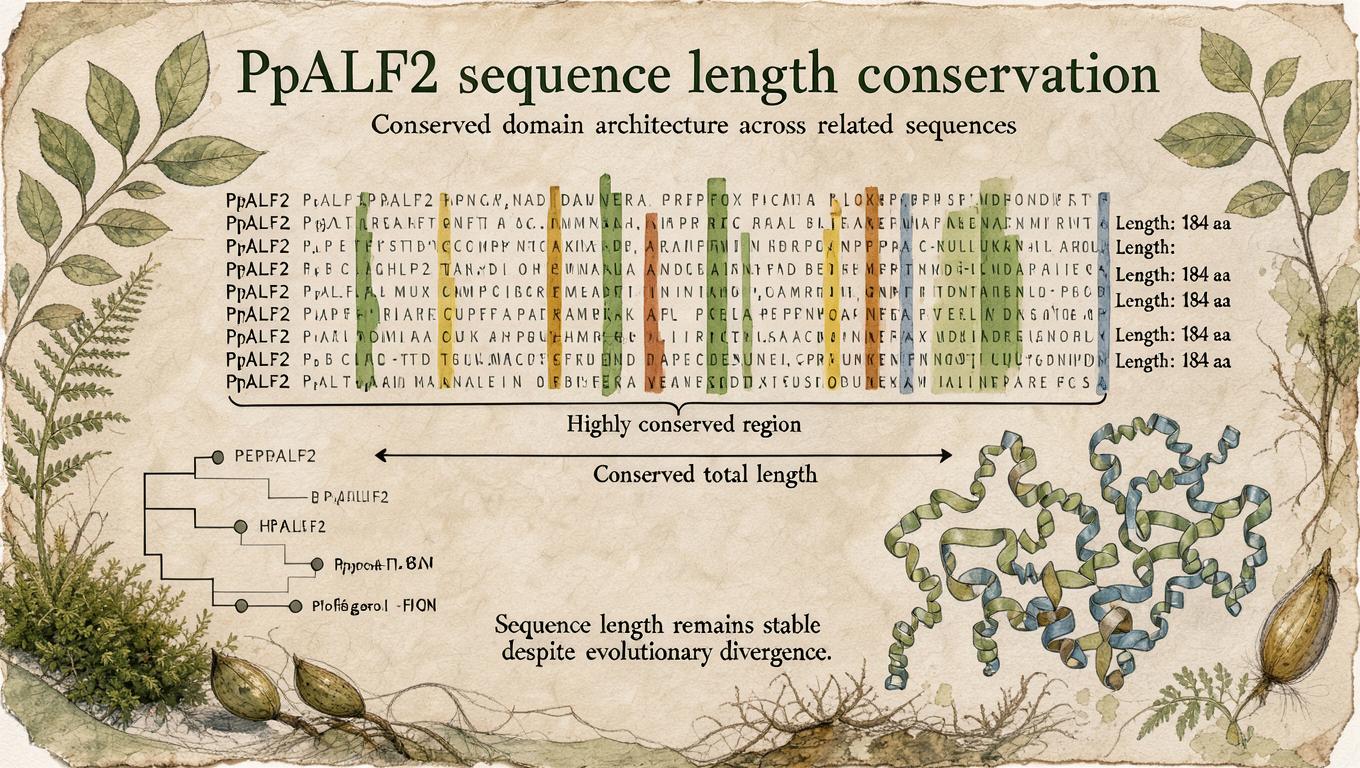
PpALF2 (JQ899452) and StALF (JQ899453) share identical ORFs (372 nt), protein lengths (123 aa), predicted masses (11.2 kDa), and pI (10.0), differing only in total nucleotide length (417 vs 522 nt), i.e., UTR variation .
Long Analysis Plan
Sourced Quantitative Data
The only supplied record relevant to the query is the portunid crab ALF paper; the pipeline-friction paper contains no ALF data and is excluded . Reported values: PpALF2 — 417 nt full length, 372 nt ORF, 123 aa, 11.2 kDa, pI 10.0; StALF — 522 nt full length, 372 nt ORF, 123 aa, 11.2 kDa, pI 10.0 .
Note: pI and mass are rescaled (×0.1) for display; raw values are 10.0 and 11.2 kDa respectively. Protein-level conservation is complete for reported properties: both isoforms encode 123 aa, 11.2 kDa, pI 10.0 — differences arise only in untranslated nucleotide sequence (417 vs 522 nt).
Conservation Loop Analysis Plan
1. Retrieve GenBank JQ899452 and JQ899453 with BioPython (Entrez.efetch). 2. Validate ORF = 372 nt for both; translate codons 1–372. 3. Align the 123-aa products (ClustalW/PairwiseAligner); compute percent identity and locate the conserved LPS-binding loop (the ALF D-domain/hydrophobic–cationic loop typically bordered by disulfide-forming cysteines). 4. Compute pI and mass with Bio.SeqUtils.ProtParam to cross-check reported 10.0 / 11.2 kDa. 5. Loop scan: slide a 10–15 aa window across the alignment, flag windows with ≥80% identity and net charge > +4 as candidate conserved loops; visualize charge/identity tracks in Plotly. 6. Structural check: SWISS-MODEL/AlphaFold to confirm the loop maps to the exposed β-hairpin.
Confidence: high for reported values (direct extraction); moderate for the loop-location step (depends on retrieved sequences, not supplied in the records).
We'll email you the results when your analysis is finished.
Hypothesis Graveyard
Assumption that 'isoform' implies distinct protein products: reported coding parameters are identical, so the isoform distinction cannot rest on peptide properties alone.
Assumption that the extra 105 nt lies in the 3' UTR: the records do not state UTR placement, so 5' UTR vs 3' UTR localization remains unverified.

 Explore by Goal
 Quick Analysis Plan
 Long Analysis Plan
 Top Data Sources
 Ask a Follow-Up
 Key Insight
 Keep Exploring
 Hypothesis Graveyard
 Potential Experiments
 Discussion
