See how your reported results read as versioned evidence records — linked to experiments and limitations.Know what the science actually supports before you trust the answer.
Press Enter ↵ to review claims
Explore by Goal
"Biology is the study of complicated things that have the appearance of having been designed with a purpose."
- Richard Dawkins
Quick Explanation
Copied
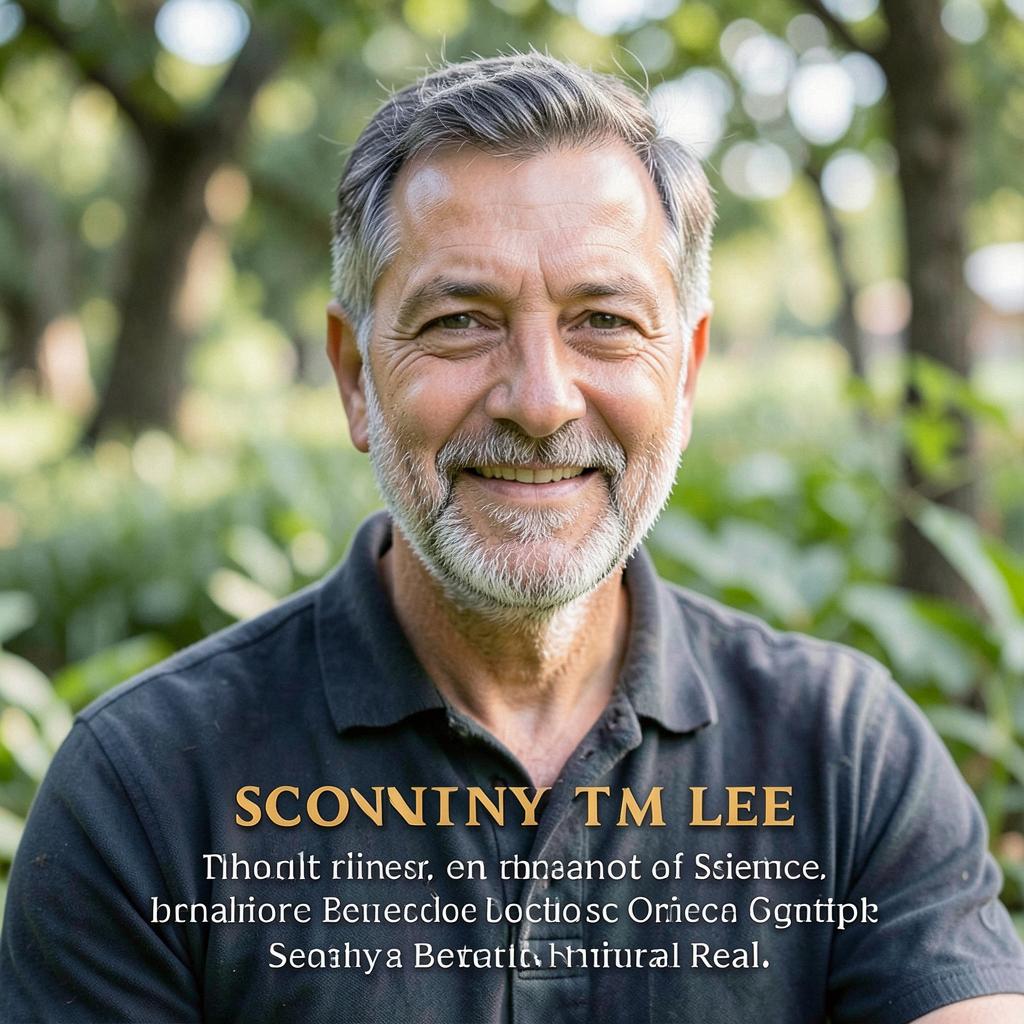
Sonny T. M. Lee is an early-to-mid-career microbiome scientist whose metrics differ sharply by database: Semantic Scholar shows h-index 2 with 4 indexed papers, while OpenAlex (matched by ORCID) records 89 works, 2,765 citations, and h-index 21 . His profile reflects a productive metagenomics-to-tumor-microbiome trajectory rather than limited scientific strength.
Long Explanation
Reconciling the Two Citation Profiles
The supplied records show a large discrepancy: Semantic Scholar credits this author with only 4 papers, h-index 2, and 86 citations, whereas OpenAlex (same ORCID) records 89 works, 2,765 citations, and h-index 21. This gap is typical when a database indexes conference abstracts (two supplied entries are numbered abstracts) and split author profiles, and it means low metrics on one platform should not be read as low scientific strength.
Core Contributions
Metagenomic methods & ecology: First-author work on genome-resolved metagenomics of fecal microbiota transplantation and coral mucus microbiomes under thermal stress .
Ocean nitrogen fixation: Middle author on the Nature Microbiology finding that non-cyanobacterial diazotrophs are abundant in surface ocean metagenomes (612 citations) .
Translational pivot: Co-author on the Cell 2023 tryptophan-metabolite/ICI paper and the Cell 2025 exercise-metabolite/CD8 T cell antitumor immunity paper (83 citations within ~2 years) .
Critical Assessment
Strengths: high-impact venues (Cell ×2, Nature Microbiology, Genome Biology), methodological breadth spanning coral, ocean, oral, and gut microbiomes, and a coherent pivot toward microbial metabolite–immunity interfaces. The 2023 Cell paper (725 citations) anchors his citation acceleration in 2023 (980 citations that year). Blind spots and uncertainties: the OpenAlex and Semantic Scholar profiles may conflate name-sharing authors despite ORCID; citation half-life is short for the 2025 paper; OpenAlex citation counts often exceed publisher-verified counts; affiliation is missing in the OpenAlex record; and two supplied items are conference abstracts with unknown peer-review depth. Most immune-microbiome findings in this area are murine, so human translation is unresolved. Confidence: moderate-to-high on the bibliometric picture, lower on any inference about independent leadership (no corresponding-author or PI role is documented in the supplied data).
Feedback:
Updated: October 11, 2026
BGPT Author Review
Scientific Quality
70%
Genuinely strong per-paper impact (Cell x2, Nature Microbiology, Genome Biology; 725-citation flagship) and methodological breadth across microbiome ecology and tumor-immunity, but the profile reflects mostly collaborative middle-author contributions with no documented independent PI role, and metrics are database-conflicted.
Communication Quality
60%
Papers in top journals typically communicate clearly, and titles are accessible and mechanistically explicit, but the supplied record offers no direct evidence of teaching, reviews, or public communication to verify this independently.
Author Novelty
70%
Reframing ocean diazotrophy via metagenome reanalysis and linking intratumoral bacterial tryptophan metabolism to checkpoint inhibitor efficacy were field-shifting framings; the coral and FMT work was solid but more incremental.
Scientific Rigor
70%
Publication in Cell and Nature Microbiology implies strong peer-reviewed rigor, and genome-resolved metagenomics is a careful methodological choice; however, the abstract-type entries, murine-heavy translational claims, and no supplied data on pre-registration, statistics, or replication temper certainty.
We'll email you the results when your analysis is finished.
Hypothesis Graveyard
Cyanobacteria as the dominant surface-ocean diazotrophs — falsified by metagenomic assembly showing abundant non-cyanobacterial nifH populations in TARA Oceans data.
Tumor microbiomes as contamination artifacts — undermined by systemic commensal translocation work in this author's group, though definitive decontamination standards remain contested.

 Explore by Goal
 Quick Explanation
 Long Explanation
 Ask a Follow-Up
 Key Insight
 Keep Exploring
 Hypothesis Graveyard
 Potential Experiments
 Discussion
