Check your hypothesis against versioned claims, exact reported results, and stated falsification criteria.Know what falsifiable science actually supports before you trust the answer.
Press Enter ↵ to search evidence
Explore by Goal
"Biology is a science of three dimensions. The first is the study of each species across all levels of biological organization, molecule to cell to organism to population to ecosystem. The second dimension is the diversity of all species in the biosphere. The third dimension is the history of each species in turn, comprising both its genetic evolution and the environmental change that drove the evolution."
- E. O. Wilson
BGPT Odds of True
25%
80% Confidence
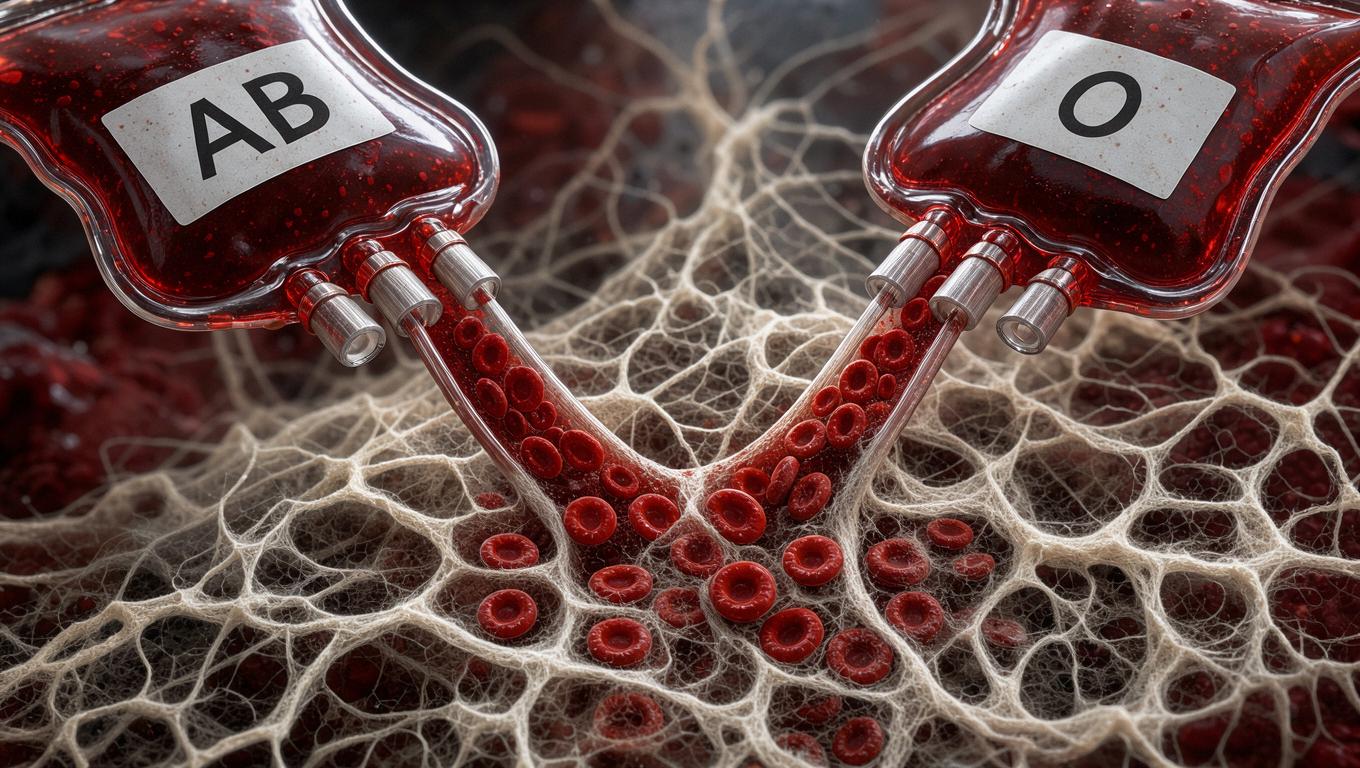
The hypothesis claims AB(IV) Rh+ whole blood provides superior hemostasis vs low-titer O whole blood in obstetric DIC. No direct comparative study exists in the supplied evidence. Indirect data suggest anti-A/B antibodies even at high titers do not consistently increase bleeding [1], and low-titer O whole blood is designed to minimize this risk. A small theoretical advantage may exist but is likely clinically negligible and outweighed by AB donor scarcity. Estimated conservatively at 25% [10–45].
Hypothesis Novelty
35%
The concept of AB plasma as universal (no anti-A/anti-B) is well-established in transfusion medicine. The specific framing of AB whole blood vs low-titer O whole blood in obstetric DIC adds a narrow, practically relevant comparison but builds on long-standing ABO compatibility principles rather than new biology.
Quick Analysis Plan
Copied
The supplied evidence does not directly test AB vs low-titer O whole blood in obstetric DIC. Indirect data suggest anti-A/B antibodies at meaningful titers do not consistently increase bleeding (postop bleeding 7.14% vs 4.37%, not significant in ABO-incompatible transplant recipients) [1], and ABO incompatibility showed little clinical impact on neonatal outcomes [2]. A hemostatic advantage for AB whole blood is theoretically plausible but unproven and constrained by AB donor scarcity (~3–4% of the population).
Long Analysis Plan
Evidence Assessment: AB vs Low-Titer O Whole Blood in Obstetric DIC
The hypothesis is biologically plausible but lacks direct clinical evidence in the supplied records. No record contains a trial or observational study comparing AB(IV) Rh+ whole blood against low-titer group O whole blood in obstetric DIC or any hemorrhage setting.
What the evidence does show about anti-A/B antibody clinical impact: In a retrospective cohort of 271 ABO-incompatible kidney transplant recipients, high-titer patients (baseline ≥1:256, n=42) had postoperative bleeding of 7.14% vs 4.37% in low-titer patients (n=229) — not statistically significant (small subgroup, single center) [1]. This suggests that even high anti-A/B titers do not reliably increase clinical bleeding, weakening the premise that low-titer O whole blood's residual anti-A/anti-B meaningfully impairs hemostasis.
ABO antibodies and neonatal outcomes: A study of 24 mother–child pairs found ABO incompatibility did not predict adverse outcomes and no hemolytic disease occurred in incompatible pairs, consistent with anti-A/B antibodies having limited clinical impact at physiological levels [2].
Mechanistic context for low-titer O: Anti-A and anti-B monoclonal antibodies individually reach titers of 1/256 and mix to produce 1/128 anti-A,B activity [3], confirming that group O plasma contains measurable anti-A/anti-B — the very reason "low titer" thresholds (typically ≤1:50 or ≤1:256) exist. The clinical question is whether sub-threshold residual titers accumulate to significance during massive transfusion of 6–10+ units, which no supplied record addresses.
Rh context: Rh(D) is carried on distinct 30–32 kDa polypeptide chains [4], and anti-D titers can reach 1:4096 causing clinically significant hemolytic disease [5]. Rh+ whole blood must never be given to Rh-negative recipients of childbearing potential — a constraint orthogonal to the ABO question but critical in obstetrics.
Critical blindspots: (1) No RCT or observational study compares AB vs low-titer O whole blood in any hemorrhage setting in the supplied records. (2) The transplant cohort involves immunosuppressed recipients receiving desensitization — not massively transfused, coagulopathic obstetric patients. (3) Obstetric DIC involves factor consumption and fibrinolysis where whole blood's advantage over components is itself debated. (4) AB donor availability (~3–4%) limits feasibility regardless of theoretical benefit. (5) The mother-child study (n=24) is too small and a different population to extrapolate.
Confidence: The conclusion that no direct evidence exists is strong; the conclusion that AB offers no advantage is moderate — absence of evidence here is not evidence of absence, and massive transfusion pharmacodynamics of residual anti-A/B remain unstudied in the supplied data.
Modeling cumulative anti-A/anti-B antibody dose accumulation during massive transfusion of low-titer O whole blood into non-O recipients, using Monte Carlo simulation across titer distributions and transfusion volumes to estimate hemolytic risk thresholds.
Get emailed when your analysis is done!
We'll email you the results when your analysis is finished.
Hypothesis Graveyard
AB plasma is universally safer for massive transfusion because it lacks anti-A/anti-B entirely: This is overstated because the transplant data show even high anti-A/B titers do not significantly increase bleeding (7.14% vs 4.37%, not significant), suggesting residual low-titer antibodies in O whole blood are clinically tolerable.
Group O whole blood can be given to any recipient without ABO consideration if titer is low: This is insufficient because titer thresholds vary by institution (1:50 vs 1:256), and no supplied record establishes a dose-response threshold below which anti-A/B is universally harmless during massive transfusion.
Science Art
Science Movie
Make a narrated HD Science movie for this answer ($64 per minute)

 Explore by Goal

 Hypothesis Novelty
 Quick Analysis Plan
 Long Analysis Plan
 Top Data Sources
 Ask a Follow-Up
 Key Insight
 Keep Exploring
 Analysis
 Hypothesis Graveyard
 Discussion
