Get reviews centered on claims, experimental methods, reported results, limitations, and reproducibility criteria.Know what the science actually supports before you trust the answer.
Press Enter ↵ to request review
Explore by Goal
"The greatest challenge to any thinker is stating the problem in a way that will allow a solution."
- Bertrand Russell
Quick Answer
Copied
Core claim (paper):
Predation on parasites—via concomitant predation, grooming, predation on free-living infective stages, and intraguild predation—can be common enough to measurably shape food-web structure and parasite transmission / disease outcomes, not merely a rare side-effect of “eating prey.”
Evidence is synthesized from empirical studies plus theoretical modeling, and the authors argue that including parasite-linked pathways can change classic network metrics (e.g., connectance, linkage density, nestedness) and epidemiological predictions.
()
Long Answer
Paper Review (Visual + Critical): “When parasites become prey: ecological and epidemiological significance of eating parasites”
Date in prompt: Feb 23, 2010 (journal publication statement in provided text).
1) What the paper is doing (and what it is not)
Type: Narrative review + synthesis of empirical examples + theoretical modeling framework(s) for how predation on parasite stages changes epidemiological parameters.
Core thesis: Predation on parasites is neither rare nor merely accidental; it can be a substantial linkage pathway that affects parasite transmission and food-web topology.
Major epistemic limitation: Because it’s a review, it cannot by itself quantify global effect sizes across parasite taxa / ecosystems; it depends on how well the cited studies measured parasite ingestion and transmission consequences.
2) “Parasites become prey”: conceptual structure
The paper organizes predation on parasites into four main forms: concomitant predation, grooming, predation on free-living infective stages, and intraguild predation.
Expected epidemiological direction (high-level, not universal)
Concomitant predation (parasites inside hosts eaten by predators): often reduces parasite fitness if digestion kills parasites; but may enable trophic transmission if parasites survive and develop in the predator.
Grooming: can directly remove attached parasites, increasing parasite mortality after attachment (i.e., reducing parasite abundance).
Data source in prompt: parasite-network metrics from .
Non-randomness of parasitism across webs (randomization test results reported)
Reported randomization test statistics from .
(Note: this is not the Johnson et al. 2010 dataset; it’s a complementary network-analysis paper that supports the broader network-structuring claim.)
4) Epidemiological logic: how predation on parasites feeds into transmission models
The paper presents a dynamical framework that explicitly includes free-living infective stages (W), definitive hosts (H), and adult parasites (P), and it argues predation can affect multiple parameters including parasite mortality and host infection terms depending on the predation mode.
Critique (skeptical, mechanistic): what must be true for the model implications to land
State-of-the-world requirement: The model’s usefulness hinges on whether predation measurably changes the effective parameters (e.g., free-living stage mortality, the fraction successfully invading hosts). The paper demonstrates this with experiments and examples, but the review cannot guarantee parameter shifts are large in all systems.
Potential generalization gap: Parasites differ strongly in life cycle timing, resilience to digestion, aggregation/transmission morphology, and host specificity; predation may therefore produce widely different outcomes. The paper acknowledges conditionality (trophic transmission vs digestion death), but the review format makes it hard to bound general effects.
5) Evolution + ecology of interaction: “selection on parasites depends on predator outcome”
The paper argues that high predation pressure imposes selection on parasites; whether this favors anti-predator manipulations or favors tolerance of digestion/transmission through predators depends on whether direct predation is fatal and whether infective stages can survive and exploit predators as hosts.
Blind spots to watch (important)
Counterfactual difficulty: Demonstrating selection causally is hard; survival through digestion and predator-mediated transmission route selection require multi-generation evidence or strong comparative inference. The review offers examples, but it does not provide a universal causal proof across taxa.
Hidden confounding (general): Predator abundance and diet choices are themselves shaped by many factors (habitat, prey community, seasonality). A mechanistic claim that predation “causes” reduced transmission requires carefully separating these drivers. The paper’s review structure means such confounding control varies study-to-study.
6) Applied framing: invasions/extirpations and biodiversity–disease (“dilution effect”) links
The paper links predator community change (invasions/extirpations) to parasite transmission through at least three pathways (direct predation on parasites/free-living stages; indirect release from predation if predators are removed; and broader biodiversity–disease logic).
Complementary evidence (later quantitative studies consistent with the direction of “ecology mediates parasite effects”)
Predation offsets parasite impacts in wild populations: In chum salmon populations, a study reports no significant correlation between sea louse infestations and chum salmon productivity, suggesting ecosystem interactions (including predation dynamics) can mitigate parasite effects at the population level.
Predation on parasite stages depends on community context: In lab experiments with marine non-host predators exposed to cercariae, relative removal rates varied by predator species, and cercarial density and alternative prey influenced consumption patterns.
Note: these later studies do not prove the full Johnson et al. thesis globally, but they illustrate the review’s mechanistic expectation that outcomes depend on which predators consume which parasite stages, and on community context.
7) What would most improve this research program (disproof-oriented)
The paper’s program would be strengthened if future work could (i) quantify effect sizes on transmission parameters, (ii) show how those changes propagate into food-web dynamics and ultimately disease outcomes, and (iii) test robustness across systems and parasite taxa. The paper itself calls for more studies integrating parasites into highly resolved food webs.
Falsification targets (hard but concrete)
Ecological null: In diverse ecosystems with resolved diets and parasite life-cycle knowledge, predator–parasite links do not change network metrics beyond measurement noise (connectance/chain length/nestedness effects ≈ 0).
Epidemiological null: Predation on parasite stages does not measurably change infective-stage survival/invasion probabilities and therefore does not affect host infection prevalence/pathology when controlling for host density and predator abundance.
Evolutionary null: Long-term selection signatures (trait shifts or life-cycle adjustments) consistent with predation on parasites are not observed despite strong predator–parasite ingestion pressure.
8) Bottom-line scientific judgment
This paper is a strong conceptual integration: it reframes “parasites as prey” as a mechanism that can affect both food-web structure and disease transmission via identifiable pathways (concomitant predation, grooming, infective-stage predation, intraguild predation) and parameter-level modeling.
Skeptical caveat: because it is a review, the quantitative magnitude of effects across taxa/ecosystems and the degree to which they generalize remain uncertain; the most important next step is to measure predator–parasite pathways in resolved networks and connect them to transmission parameters and dynamic outcomes.
Author reviews (BGPT)
Feedback:
Updated: July 09, 2026
BGPT Paper Review
Study Novelty
70%
Novelty is mainly in reframing and integrating: treating parasites as prey as a structured ecological/evolutionary/epidemiological mechanism and emphasizing its implications for food-web network structure and disease-risk modeling, rather than in introducing a brand-new empirical dataset or single new method. ()
Scientific Quality
80%
Scientific quality is high for a review: clear taxonomy of mechanisms, explicit linkage to network theory and to dynamical transmission parameter changes, and consistent emphasis on conditional outcomes (e.g., trophic transmission vs digestion death). Limits: heterogeneity of cited evidence, and as a narrative review it cannot guarantee uniform measurement/control across systems. ()
Study Generality
60%
The conceptual framework is broadly applicable (many parasite life cycles have infective stages; many predators groom/remove ectoparasites), but generality of effect magnitudes is uncertain because outcomes depend on digestion survival, predator identity, life-cycle timing, and food-web resolution. ()
Study Usefulness
80%
Useful as a framework/roadmap: it tells researchers what to measure (predator–parasite pathways, stage-specific outcomes) and provides modeling categories connecting ecological interactions to transmission parameters and biodiversity–disease reasoning. ()
Study Reproducibility
40%
As a narrative review, reproducibility depends on re-running the same selection of cited studies; the paper does not provide a dataset or code artifact for the synthesis itself. It does cite models and examples, but there is no unified, executable pipeline. ()
Explanatory Depth
70%
Mechanistic depth is good: it separates predation modes, maps them to transmission dynamics (stage and parameter effects), and discusses evolutionary selection scenarios. However, the depth is uneven across topics because it is a review and uses diverse examples rather than deeply quantified system-by-system causal pathways. ()
None (no machine-readable sequence/protein/omics data in the provided paper text).
Get emailed when your analysis is done!
We'll email you the results when your analysis is finished.
Hypothesis Graveyard
“Parasites becoming prey is usually an epidemiological dead-end.” This is too strong because the paper repeatedly highlights conditional survival and trophic transmission possibilities that can preserve or reshape transmission routes. ()
“Including parasites in food webs always increases network stability.” The paper suggests adding parasite links changes topology metrics and argues weak interactions can sometimes reinforce stability, but it does not establish a universal direction for stability effects across systems. ()

 Explore by Goal
 Quick Answer
 Long Answer
 Top Data Sources
 Ask a Follow-Up
 Key Insight
 Keep Exploring
 Analysis
  Hypothesis Graveyard
 Potential Experiments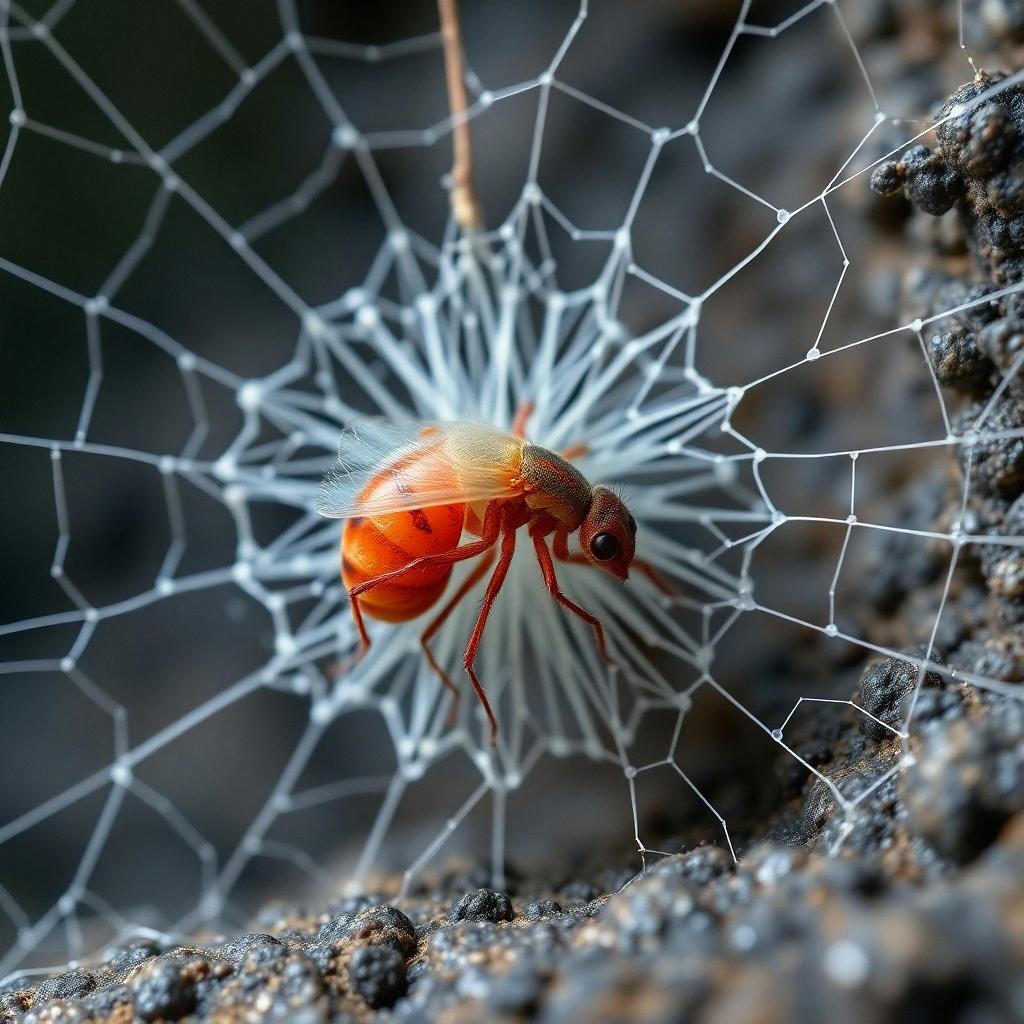
 Discussion