See how your reported results read as versioned evidence records — linked to experiments and limitations.Know what the science actually supports before you trust the answer.
Press Enter ↵ to review claims
Explore by Goal
"I think it's much more interesting to live not knowing than to have answers which might be wrong."
The evidence provided here does not clearly and unambiguously connect “Yuichi Takashi” to specific primary publications, so I can only rigorously critique the one full-text-grounded paper record you supplied (DOI: 10.1038/s41419-020-2379-2) rather than the author’s full body of work.
The supplied “OpenAlex Author Information” snippet includes an entry labeled Yuichi Takashi, but the detailed metrics and “top works” shown in that snippet appear to correspond to different Yuichi*/Takashi**-named authors (e.g., a top_author displayed as Yuichi Nomura). Therefore, I cannot reliably attribute the listed works/citation metrics to the specific person “Yuichi Takashi” without an unambiguous identifier match.
As a result, below I perform a rigorous paper-level critique only of the one full-text-grounded dataset you explicitly provided (DOI: 10.1038/s41419-020-2379-2). That means this review is not a comprehensive author-wide assessment.
Evidence-based summary and critique are grounded in the supplied experimental description and the paper’s DOI metadata.
Paper quality rubric (from your provided record)
These are not universal peer-review scores—just the numeric rubric values included in the dataset you provided.
Methods credibility checklist (what looks strong vs uncertain)
Strength indicators (from the supplied paper record):
The study uses human tissue microarrays with quantitative image analysis (HALO-based IHC) plus multiple SCLC cell lines and a patient-derived line, reducing reliance on a single model system. (Evidence: experimental description in your record.)
Mechanistic probing includes co-immunoprecipitation for MCL1–BAK interactions and functional perturbations (siRNA knockdowns of MCL1/BCL-XL/BCL-2 and apoptosis pathway readouts). (Evidence: experimental description in your record.)
There is in vivo work (xenografts) with drug dosing comparisons including S63845 and navitoclax, which helps connect biomarkers to outcomes. (Evidence: experimental description in your record.)
Uncertainty / potential failure modes (why results might not generalize):
The supplied record explicitly flags that off-target effects of S63845 are “not fully ruled out,” meaning biomarker–drug sensitivity could be partly confounded by other targets or downstream effects. (Evidence strength: moderate; limitation stated in your record.)
Combination toxicity in vivo “indicates a narrow therapeutic window,” limiting the translational relevance of synergy claims. (Evidence strength: moderate; stated in your record.)
Thresholding of “high/low” expression can shift who is classified as a responder; the record notes uncertainty about threshold definitions and highlights small TMA size and limited replication in some cohorts. (Evidence strength: moderate.)
The record notes overlap in antibody-based subtype markers, which could blur stratification (e.g., ASCL1/NEUROD1/POU2F3/YAP1). (Evidence strength: moderate.)
Bottom line: The design appears reasonably comprehensive for a biomarker-driven preclinical study (models + mechanistic assays + some in vivo). The main scientific risk is translational fragility driven by expression-threshold sensitivity, possible off-target pharmacology, and combination toxicity.
Evidence map (inputs → assays → claims)
This visualization is built directly from the experimental components mentioned in your record; it is not a full paper diagram.
Interpretive caution: This map is limited to the components mentioned in your supplied record. It does not certify completeness of the original paper methods.
The record’s central mechanistic story is that high MCL1 paired with low BCL-XL and BCL-2 creates dependence on MCL1 for blocking apoptosis, so direct MCL1 inhibition (S63845) triggers caspase-dependent apoptosis and tumor growth suppression in responsive models. This is consistent with the BCL-2 family anti-apoptotic network logic used in many mitochondrial apoptosis models, but you still need causal specificity checks—especially because the record notes incomplete ruling out of off-target effects and limited CRISPR-like ablation data.
Conflict-of-interest (COI) sensitivity check
The supplied record includes explicit disclosures stating some authors were supported by pharmaceutical companies (e.g., Chugai and others) and/or honorarium recipients. This doesn’t automatically invalidate results, but it increases the need for strong internal controls, independent replication, and careful interpretation of translational claims.
What would strengthen confidence against COI-driven bias? Replication in additional cohorts beyond the stated TMA size, stronger genetic specificity (e.g., complete ablation), and wider validation of the biomarker thresholds.
What would disprove the key claims? (falsification targets)
Below are the falsification conditions stated in your provided record, encoded as a structured checklist.
Skeptical note: Falsification targets are only as strong as how completely they’re tested, and the record indicates some areas where specificity/threshold generalization is still uncertain.
Overall scientific strength (for the evidence actually provided)
Preclinical coherence: The supplied record describes a reasonably integrated pipeline—biomarker quantification (TMA IHC), in vitro dependency testing (viability/apoptosis), mechanistic assays (MCL1–BAK interaction), and in vivo xenograft validation—supporting a plausible causal story.
Translational fragility: Combination toxicity and explicit notes about specificity testing gaps (e.g., not fully ruling out off-target effects; limited specificity approaches) reduce confidence in broad clinical applicability.
Author attribution uncertainty: Because the mapping from “Yuichi Takashi” to this paper cannot be verified from your snippet alone, I cannot claim this critique is definitely “Takashi’s” scientific output. This is a blind spot induced by incomplete identifier linkage.
Next best step (recommended)
Run BGPT’s science agent to (1) disambiguate the exact “Yuichi Takashi” identity, (2) retrieve additional full-text records tied to that author, and (3) compute a more complete, evidence-grounded author-level critique.
Feedback:
Updated: April 23, 2026
BGPT Author Review
Scientific Quality
40%
I cannot reliably attribute a provided paper-record to “Yuichi Takashi” due to identifier ambiguity in the supplied metadata; therefore the score reflects only partial, evidence-limited critique. The single paper record appears methodologically integrated (biomarkers + mechanistic assays + in vivo), but the record itself flags off-target uncertainty, limited genetic specificity, small cohort size, and translational fragility from toxicity—reducing confidence.
Communication Quality
50%
Communication quality is not directly assessable because no writing samples by Yuichi Takashi were provided; the critique relies on structured experimental summaries. The clarity of the supplied record is moderate, but author-specific communication cannot be judged.
Author Novelty
40%
Novelty can only be assessed for the one provided study record, which is scored as 6 in the supplied rubric. More author-wide novelty requires disambiguated access to the author’s broader publication set, which is not supplied here.
Scientific Rigor
50%
For the single provided paper record, rigor appears moderate-to-good (multiple models, quantitative IHC, mechanistic interrogation, some in vivo validation), but explicit limitations remain (off-target concern, incomplete specificity evidence such as lack of CRISPR-style ablation, small TMA and threshold uncertainties, and limited translational validation).
It will disambiguate Yuichi Takashi via ORCID/author-ID matching, then retrieve all linked full-text records, extract biomarker/drug/assay fields, and plot author-level evidence quality and reproducibility metrics.
Get emailed when your analysis is done!
We'll email you the results when your analysis is finished.
Hypothesis Graveyard
The strongman hypothesis that “MCL1 expression alone deterministically predicts S63845 response across SCLC” is weakened by the record’s stated dependence on a combined expression pattern (low BCL-XL/BCL-2) and by threshold/heterogeneity concerns.
The strongman hypothesis that “adding a BCL-XL/BCL-2 inhibitor will generally improve efficacy without major safety tradeoffs” is undermined by the record’s explicit note of in vivo poor tolerability and narrow therapeutic window for the combination.
Science Art
Science Movie
Make a narrated HD Science movie for this answer ($32 per minute)

 Explore by Goal
 Quick Explanation
 Long Explanation
 Top Data Sources
 Ask a Follow-Up
 Key Insight
 Analysis
  Hypothesis Graveyard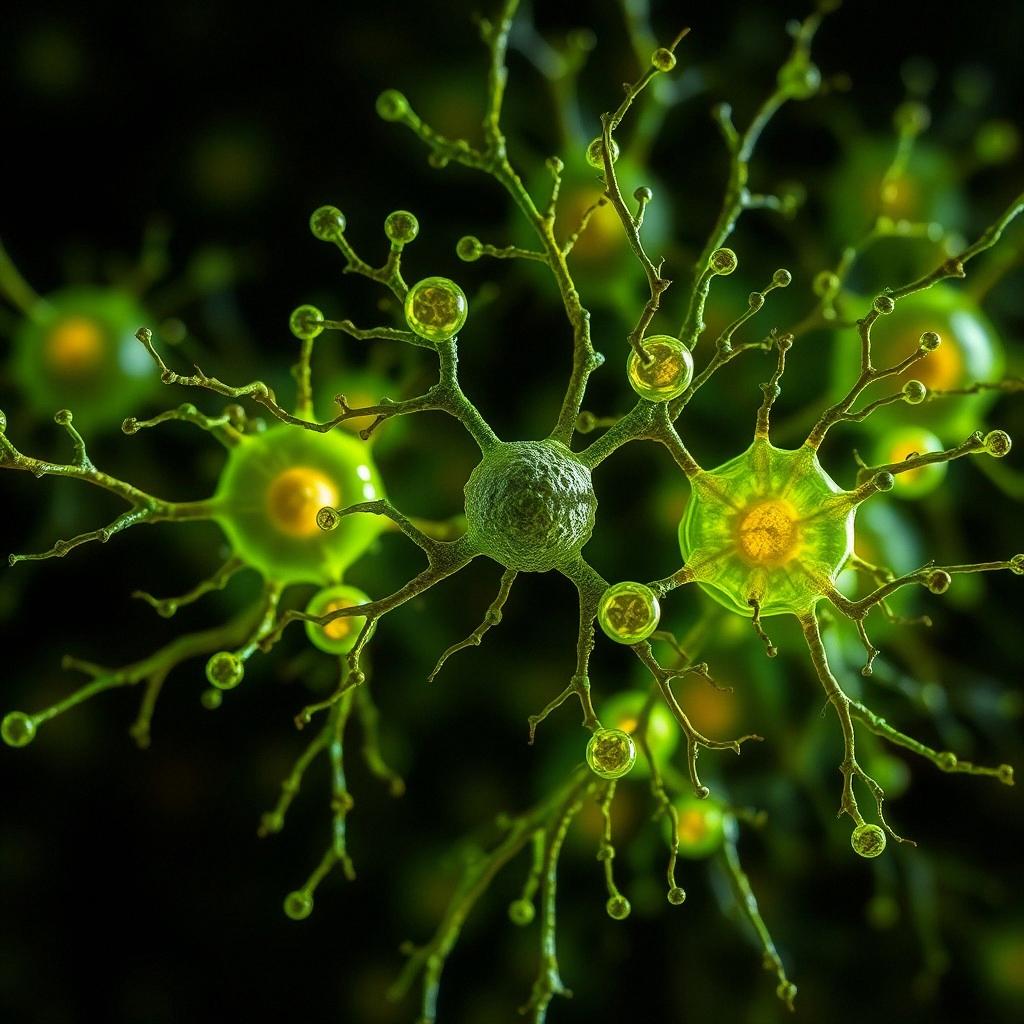
 Discussion