Analyze how experimental results and claims are presented, scoped, and limited in a paper.Know what the science actually supports before you trust the answer.
Press Enter ↵ to analyze
Explore by Goal
"The day science begins to study non-physical phenomena, it will make more progress in one decade than in all the previous centuries of its existence."
- Nikola Tesla
Quick Explanation
Copied
This industry-funded OECD-guideline rat study found no acute (LD50 > 2000 mg/kg; 1 × 10¹² CFU/kg) or sub-acute toxicity of Bacillus coagulans SNZ 1969 over 28 days (NOAEL 1000 mg/kg/day), but small sample sizes, sponsor affiliation of the authors, and lack of chronic/reproductive endpoints limit the strength of its "safe for humans" conclusion.
Long Explanation
Study Design and Reported Findings
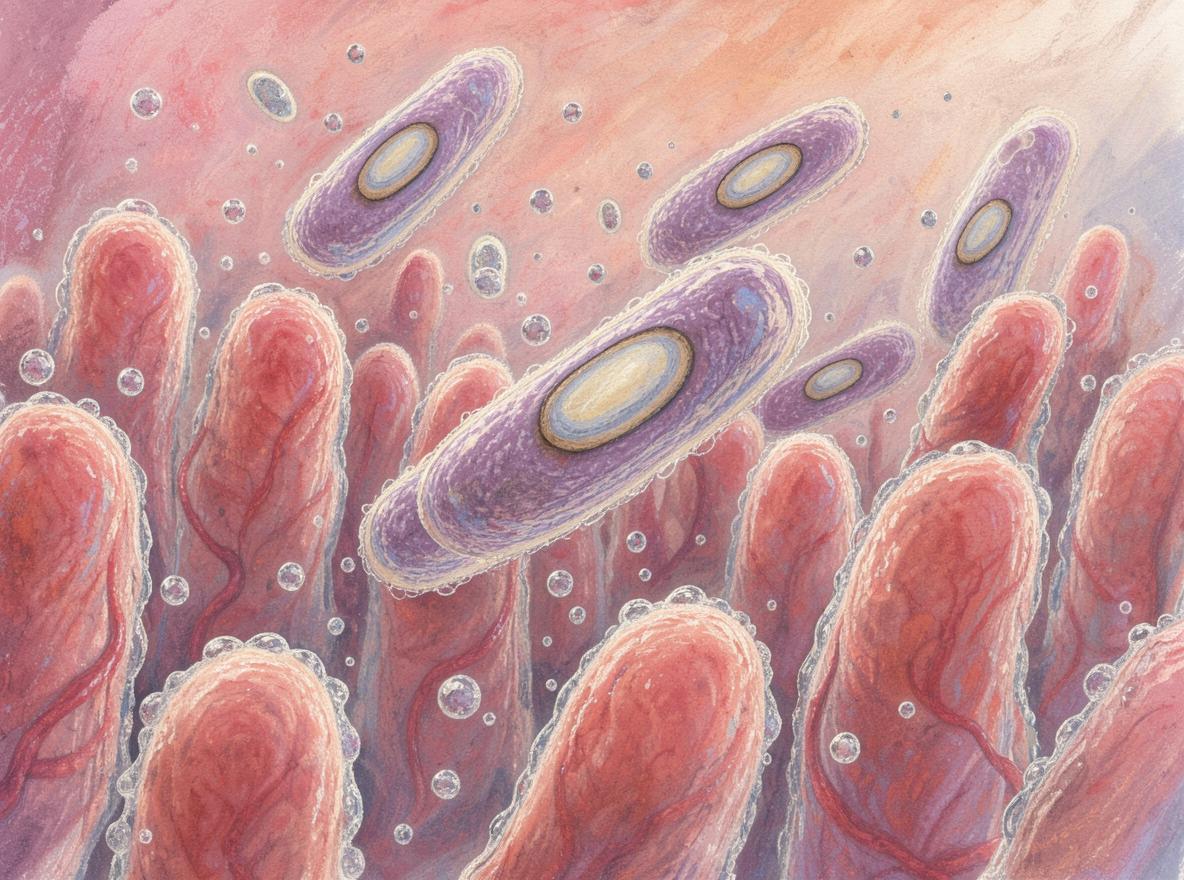
Sanzyme Bio-Analytical Laboratory authors (funded by Sanzyme Pvt. Ltd., the strain's commercial owner) tested Bacillus coagulans SNZ 1969 (5 × 10¹¹ CFU/g) in Wistar rats under OECD 401/407-style guidelines. In the acute study, 6 female rats received a single 2000 mg/kg oral dose (≈1 × 10¹² CFU/kg) with no mortality or clinical signs over 14 days; LD50 was concluded to exceed 2000 mg/kg. In the 28-day sub-acute study, 72 rats (n = 6/sex/group) received 250, 500, or 1000 mg/kg/day, plus 14-day recovery groups. No treatment-related changes were reported in clinical signs, body weight, feed intake, hematology, clinical chemistry, urinalysis, organ weights, or histopathology; NOAEL = 1000 mg/kg/day, claimed to be ~960-fold above estimated human daily intake .
Female day-28 weights (above, from Tables 1–4 of the paper) visually confirm the authors' claim of no dose-related body-weight effect; the high-dose group even trended heavier, consistent with a null result rather than suppression.
Critical Appraisal
Strengths: Guideline-compliant design (OECD 407 framework), both sexes, recovery groups, and broad endpoint coverage including histopathology of control vs. high-dose animals. Reported histological lesions (hepatic mononuclear infiltrates, peribronchiolar lymphoid hyperplasia) were acknowledged as spontaneous and present in controls — a reasonable interpretation given random distribution.
Weaknesses and blind spots: (1) Direct author–sponsor conflict: the testing laboratory belongs to the strain's manufacturer, an unavoidable source of potential bias the paper does not mitigate via independent oversight . (2) n = 6/sex/group is small, limiting power to detect subtle biochemical or histological signals. (3) Data availability statement absent; raw data and the referenced "Supplement Data" are not independently verifiable. (4) No chronic (90-day+), reproductive, immunological, or genetic-toxicity endpoints — a gap given spore-forming Bacillus species carry known concerns about opportunistic infection and toxigenicity in immunocompromised hosts . (5) Human safety inference from 28-day rat data is a leap the conclusion statement overreaches slightly in making. (6) The "9.6 × 10² times human intake" margin relies on a 1997 dairy-probiotic intake estimate, not on SNZ 1969-specific consumption data.
Independent human data for the same strain exist: a randomized placebo-controlled trial in malnourished children (n = 46 completers) reported good tolerability with one adverse event in the placebo group , though that trial was also sponsor-supported with substantial dropout.
Bottom Line
The reported null findings are internally consistent and methodologically plausible, but they represent a sponsor-conducted, modestly powered, short-duration study. Confidence in "no toxicity at tested doses in rats" is moderate; extrapolation to broad human safety claims — particularly for chronic use, infants, or immunocompromised individuals — is not warranted from this paper alone. Falsification would require demonstrating dose-dependent lesions, functional immune perturbation, or spore translocation at or below 1000 mg/kg/day in longer or independent studies.
Feedback:
Updated: October 29, 2026
BGPT Paper Review
Study Novelty
40%
Strain-specific rat toxicity data for a commercially established strain (GRAS-notified since GRN-597); follows a well-trodden probiotic safety template (cf. Endres et al. 2009 for a different B. coagulans strain) with little methodological or conceptual novelty.
Scientific Quality
60%
Guideline-based design with both sexes and recovery groups is adequate, but n=6/sex/group, sponsor-affiliated authors and laboratory, absent data availability, incomplete control-group hematology reporting (one missing SD), and no independent oversight reduce confidence. The sweeping 'safe for human consumption' conclusion overreaches the rat-only, 28-day evidence.
Study Generality
60%
Results apply specifically to strain SNZ 1969 in Wistar rats; strain-to-strain and species-to-species extrapolation is limited, though the OECD framework and endpoints are generalizable templates for probiotic safety evaluation.
Study Usefulness
70%
Provides regulatory-grade safety data (LD50, NOAEL) supporting GRAS dossiers and feeding into subsequent human trials of the same strain; practically useful for regulators and formulators despite sponsor bias.
Study Reproducibility
60%
Methods and doses are described in enough detail to replicate, but no raw data or supplement access, no named software, and strain characterization limited to 16S sequencing hinder full independent verification.
Explanatory Depth
50%
Descriptive toxicology without mechanistic investigation (e.g., spore germination, translocation, or microbiome effects); the paper reports that nothing happened rather than explaining why safety is expected biologically.
We'll email you the results when your analysis is finished.
Hypothesis Graveyard
Assumption that absence of histopathological change in high-dose vs control pairs means mid/low-dose groups were also clean — while probable, only two groups were examined microscopically, so the NOAEL technically rests on an extrapolation the paper does not flag.
Assumption that CFU-based dosing equivalence across the acute and sub-acute studies is valid — the acute dose (2000 mg/kg × 5×10¹¹ CFU/g) is stated as 1×10¹² CFU/kg, implying only 1 CFU per gram is viable, contradicting the 5×10¹¹ CFU/g label; this internal arithmetic inconsistency suggests the units in one or both statements are misreported and the true delivered dose is uncertain.

 Explore by Goal
 Quick Explanation
 Long Explanation
 Top Data Sources
 Ask a Follow-Up
 Key Insight
 Keep Exploring
 Hypothesis Graveyard
 Potential Experiments
 Discussion
