Why BGPT?
logo

Paper Review β€” Verify Claims Fast

Quickly check methods, data, and figures across full-text papers to verify conclusions.

Press Enter ↡ to review


    Explore by Goal


     Quick Explanation


    BGPT Paper Review
    In a long-term Acadian silviculture experiment in central Maine, the authors sampled 80 red maple trees across gap vs closed-canopy conditions and three bole height bands, quantifying epiphyte cover and bark-dwelling arthropod order counts.
    They report that gap harvesting reduced bryophytes and reduced Collembola, Araneae, and total bark arthropods, while patterns strongly varied by height and bark texture, and canonical correlation suggested community-linked (possibly trophic) associations.
    Source:


     Long Explanation


    Effect of gap harvesting on epiphytes & bark-dwelling arthropods (Acadian forest, central Maine)
    Date: 14 Nov 2007 (received 26 May 2006; accepted 30 Nov 2006).
    What they did (tight, audit-able)
    • Study site: Penobscot Experimental Forest, east-central Maine; sampling focused on red maple (Acer rubrum) boles.
    • Design: two long-term plots; within each plot the authors sampled five harvest gaps and four adjacent closed-canopy trees at 20–50 m from a gap edge.
    • Sampling: three south-facing bole height intervals (0–2 m, 2–4 m, 4–6 m), with bark texture scored once per tree on a 1–4 index.
    • Epiphytes: percent cover (to nearest 5%) and guilding (bryophytes, crustose, cyanolichens, small/large foliose, fruticose, Cladonia).
    • Arthropods: vacuum/leaf-blower collection from bark volume over each 2 m interval; identified primarily to order; analyzed with GLM repeated-measures (height interval repeated).
    • Community linkage: canonical correlation between epiphyte guilds and major arthropod orders, with loadings threshold (>0.3).
    Figures (from the paper’s extracted summary tables)
    Note: These graphs visualize the overall guild/order mean cover/count values explicitly provided in the supplied full text (e.g., Table 1 and Table 2). They do not encode the gap vs closed-canopy contrasts (those require the paper’s inferential outputs per factor level).
    Main results (what changed with harvest gaps)
    Epiphytes
    • Epiphyte guild composition strongly depended on bole height. Bryophytes and cyanolichens were concentrated near the base (0–2 m), while foliose and fruticose lichens were more abundant at higher intervals.
    • Gap harvesting reduced bryophyte abundance (but did not similarly reduce all other guilds).
    • Cyanolichens appeared less sensitive to gaps than bryophytes.
    Bark-dwelling arthropods
    • Total arthropod counts were higher in closed canopy and varied by height and bark texture.
    • Gap harvesting reduced multiple key orders, prominently Araneae and Collembola (plus reduced total arthropods).
    • Diptera showed a different vertical pattern (increasing with height), suggesting at least two partially distinct arthropod groupings along the bole.
    Epiphyte–arthropod linkage
    • Canonical correlation showed significant axes linking Collembola, Acari, and Araneae with cyanolicnens (on the first canonical correlation) and a second canonical correlation linking Diptera with certain foliose/fruticose lichen guilds.
    • The authors interpret a strong Collembola–Araneae correlation as consistent with a possible trophic interaction potentially affected by gap-driven declines in bryophytes/associated microhabitat.
    • However, canonical correlation is associative, not mechanistic causalityβ€”so trophic claims remain hypothesis-level unless supported by direct feeding/interaction experiments. (This limitation follows directly from the nature of canonical correlation and the paper’s observational design; the paper itself positions trophic implications as β€œsuggested” / β€œpossible.”)
    Skeptical critique (biases, blind spots, what could mislead)
    • Associations β‰  mechanisms: Canonical correlation links communities but cannot confirm direct prey–predator causality. The trophic discussion is plausible but remains inferential.
    • Spatial/experimental-unit structure: Trees are sampled within gaps and within plots; the paper attempts to reduce spatial clustering/pseudoreplication by dispersing trees across gaps, but the effective independence of samples depends on gap/plot-level randomization structure not fully testable from the excerpt alone. The authors model harvest gap via an indicator variable (n=10) and treat height interval as repeated within-tree.
    • Bark texture measured once per tree: Because bark texture tends to vary with height on a bole, a single bark texture index per tree may blur height-by-texture interactions. The authors explicitly note this limitation and discuss how measuring bark texture at each height interval might reveal additional interactions.
    • Guilding may hide species-specific responses: Epiphytes were analyzed largely as guilds to reduce multicollinearity; this can mask species-level sensitivity to gaps and microclimate. This is relevant because bryophytes are a structurally heterogeneous group, and different species can have distinct dispersal and microhabitat constraints.
    • Cyanolichen interpretation risks confounding by dispersal limitation: The paper argues cyanolichen insensitivity could reflect dispersal limitation rather than microclimate effects. That is plausible and consistent with prior work on epiphytic lichens, but it remains a falsifiable alternative that would require additional measurements (e.g., propagule arrival, colonization rates, time-since-disturbance dynamics).
    • Sampling only the south-facing bole surface: This can systematically bias microclimate exposure and thus both epiphyte cover and bark arthropod abundance. The paper constrains sampling β€œto the south side” for standardization/consistency; however, generality to other aspects is uncertain.
    • Seasonal timing and order-level identification: Sampling occurred 25 July–20 August 2004; arthropod communities can be seasonally dynamic. Additionally, analyses were primarily at order level (with some class-level identification). This can blur species interactions and differential sensitivities.
    What would most likely falsify (or revise) their conclusions?
    • If bryophyte abundance does not actually mediate the Collembola β†’ Araneae pattern (e.g., direct prey availability and predator feeding assays don’t show linkage), then the trophic explanation would weaken even if gap effects remain.
    • If repeating the study with bark texture measured per height interval (and ideally multiple aspects) eliminates or substantially attenuates the strongest gap-associated differences, then some observed effects may be partly measurement-artifact or strongly mediated by unmeasured height-specific microhabitat.
    • If new datasets show that the β€œgap vs closed canopy” contrast is explained by correlated gradients (e.g., differing residual microclimate, leaf litter accumulation on specific aspects, or varying edge exposure) rather than harvest gap structure per se, then causal attribution to β€œgap harvesting” would require revision.
    BGPT-author-review hops
    Open independent expert-style review prompts for the paper’s authors:
    This will iteratively analyze the paper content you provided (and linked references where needed) to produce additional, calculation-backed diagnostics (e.g., effect-size sketches from reported summaries where possible) and to check interpretation consistency.


    Feedback:   

    Updated: July 15, 2026

    BGPT Paper Review


    Study Novelty

    70%

    Combines a long-term Acadian gap-harvesting treatment with simultaneous epiphyte guild and bark arthropod sampling on the same tree boles, plus epiphyte–arthropod canonical correlations; still within a mature ecological framework rather than introducing a new paradigm.


    Scientific Quality

    80%

    Strong field design, explicit sampling scheme, and use of ordination + repeated-measures GLMs; however, causal mechanisms are inferential (canonical correlation) and bark texture is measured once per tree, potentially masking height interactions.


    Study Generality

    60%

    Results are specific to red maple and an Acadian forest context at Penobscot Experimental Forest; the vertical gradients and harvest-gap logic likely generalize partially, but the magnitude and identity of sensitive taxa could vary among regions/species.


    Study Usefulness

    70%

    Useful as evidence that harvesting gaps can measurably affect basal bole epiphytes (especially bryophytes) and associated arthropod orders, motivating monitoring and hypothesis generation about microhabitat-mediated trophic linkages.


    Study Reproducibility

    60%

    Sampling, instrumentation, and statistical workflow are described, enabling replication in similar settings; however, full factor-level raw data are not included in the provided text, and bark texture operationalization plus dispersion across gaps may require careful field replication.


    Explanatory Depth

    60%

    Provides good descriptive gradients and association structure; mechanistic explanation (trophic linkage) remains speculative without direct interaction measurements.


    🎁 Authors: Collect 169 Free Science Tokens (β‰ˆ $16.9 USD)

    Claim My Author Tokens

    Use for 42 days of free BGPT access (4 tokens = 1 day) or trade/sell (β‰ˆ $16.9 USD)

     Hypothesis Graveyard


    A β€œgeneral arthropod sensitivity” explanation (gaps simply reduce all arthropods uniformly) is weakened because Diptera show a different vertical pattern and canopy-condition effects differed across orders (e.g., Acari interactions differed by plot).


    A β€œcyanolicnen microclimate” hypothesis (gaps should reduce cyanolichens and thereby reduce associated arthropods) is less supported because cyanolichen abundance appeared relatively insensitive to gap harvesting in the study, while multiple arthropod taxa still changed.

     Science Art


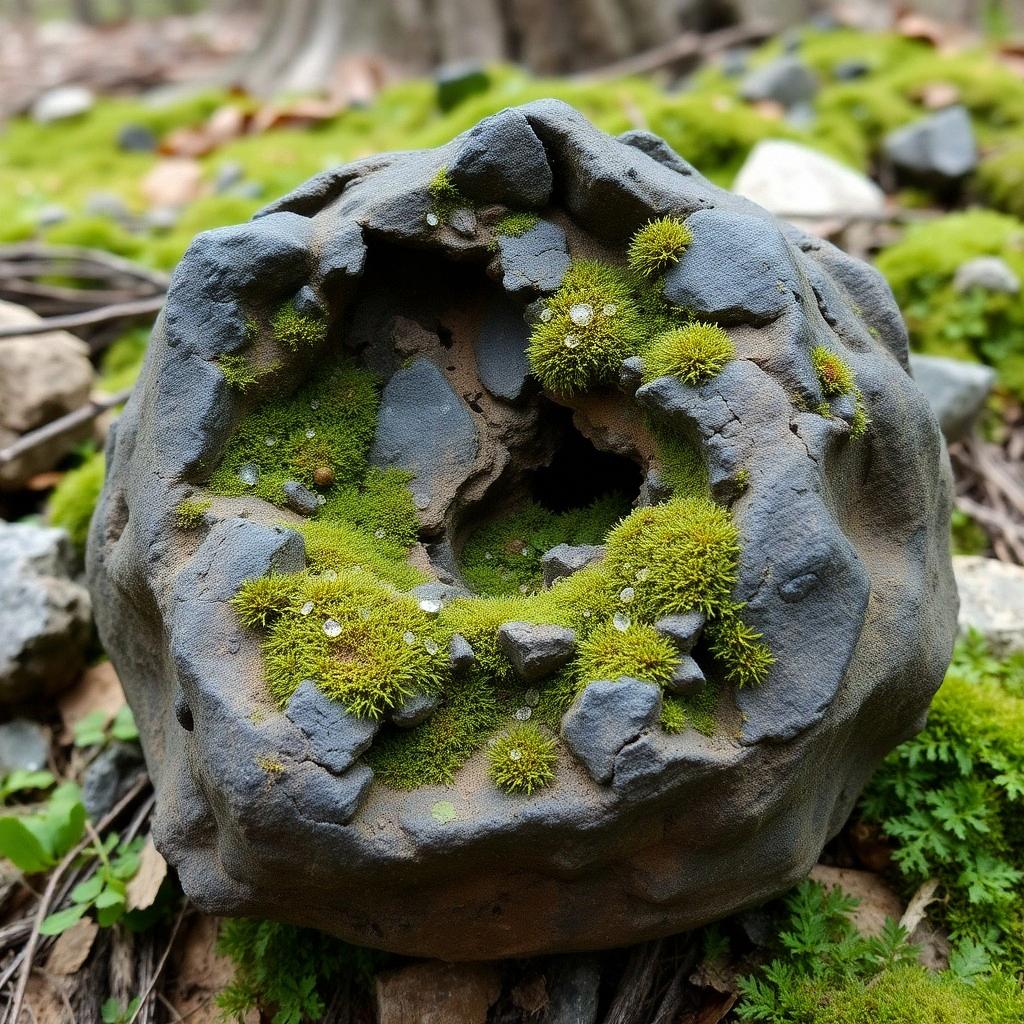
    Paper Review: Effect of gap harvesting on epiphytes and bark-dwelling arthropods in the Acadian forest of central Maine Science Art

     Science Movie


    Make a narrated HD Science movie for this answer ($32 per minute)


     Discussion


    Follow the Evidence

    New scientific claims, supporting evidence, and important limitations. Every Friday. No ads.


    My BGPT