Why BGPT?
logo

Review papers with raw data transparency

Quickly verify claims by accessing the underlying experimental data and figures.


Press Enter ↡ to solve


    Fuel Your Discoveries


     Quick Explanation


    Quick take: This is a careful, up-to-date (Oct 7, 2025) narrative review that synthesizes lung microbiome literature across sample types, taxa (bacteria, fungi, viruses), and mechanistic links to lung cancer while explicitly noting major technical and causal limitations; its recommendations for standardized multi-omic, mechanistic and longitudinal work are appropriate. Key caveats: heterogeneity of sampling (BALF/sputum/brush/tissue), low-biomass contamination risk, and over-reliance on 16S limits functional inference β€” all are acknowledged by the authors and supported in the primary literature cited below.


     Long Explanation


    Visual paper review β€” "Lung microbiome dynamics in health and lung cancer" (10.1099/mgen.0.001509)

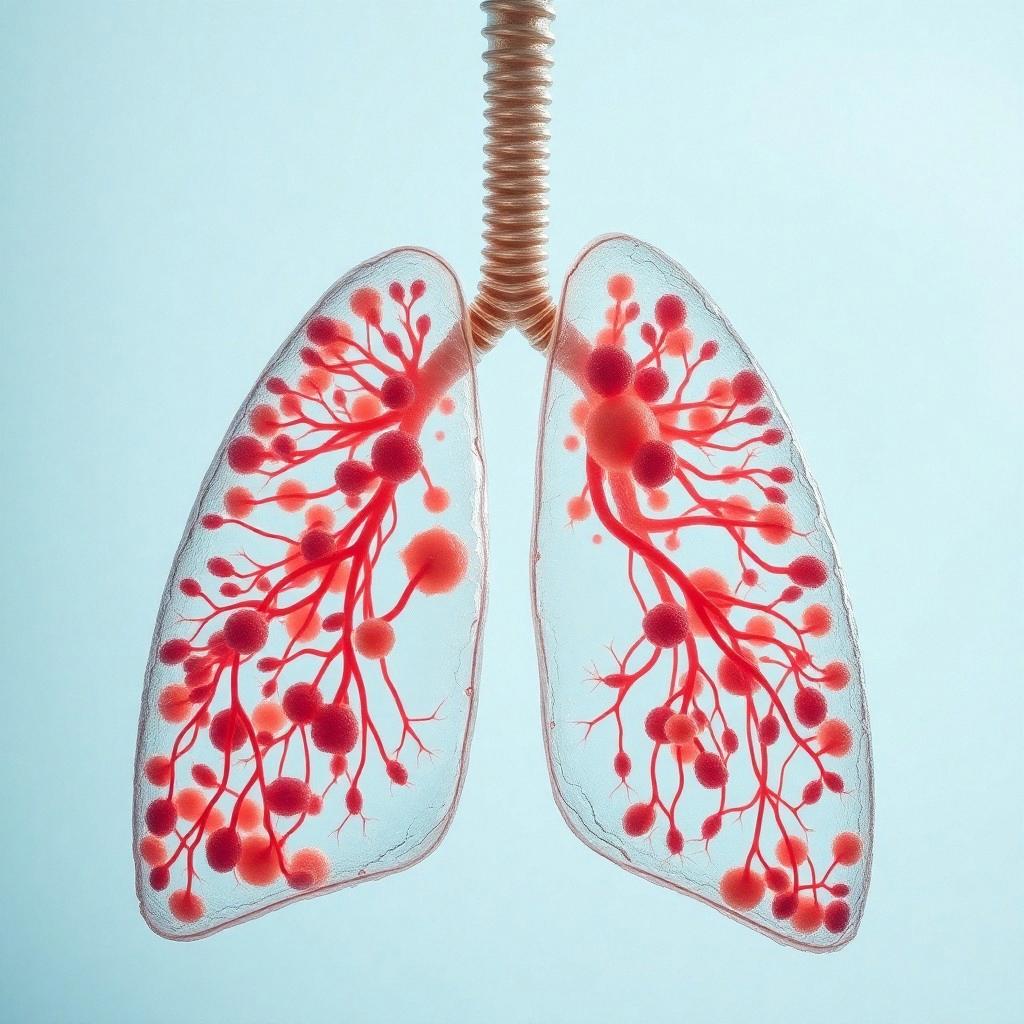
    Overview visualization

    Figure: conceptual, based on multiple studies summarized in the paper (oral taxa enrichment in lower airways; Proteobacteria signal in tissue). See text citations for evidence and limitations.

    Concise strengths (visual first)

    • Comprehensive synthesis: integrates 16S, shotgun, metatranscriptomics, culturomics and animal mechanistic studies (cites throughout)
    • Balanced skepticism: explicitly details contamination, low biomass and sampling biases β€” a valuable transparency step.
    • Actionable roadmap: calls for standardized sampling, multi-omics, and causal experiments β€” aligned with best-practice critiques in the field.

    Concise weaknesses (visual first)

    The authors note: inconsistent alpha/beta diversity results across studies, variable taxa associated with cancer depending on sample type, and limited mechanistic causality β€” all supported by the lung-microbiome literature.

    Evidence highlights with inline-source extracts

    • Healthy lungs: low-biomass, usually enriched in oral genera (Streptococcus, Veillonella, Prevotella) β€” functional role uncertain but metabolically active in integrative studies.
    • Lower-airway in lung cancer: repeated reports of enrichment of oral taxa (Streptococcus, Veillonella, Prevotella); associations with PI3K/ERK pathway activation observed in airway brushing/transcriptomics studies (Tsay et al.).
    • Tumour tissue: many tissue studies point to Proteobacteria enrichment and specific taxa (e.g., Acidovorax in LUSC with TP53 mutations), but results differ by sample type and may reflect intra-tumour niches (hypoxia, altered metabolism).
    • Fungi & virome: intratumour mycobiome increases in load and correlates with immunosuppressive phenotypes (e.g., Aspergillus sydowii driving MDSC expansion via Dectin-1/CARD9 in experimental models). Viral DNA (HPV, MCPyV, EBV, JCV) is detected in subsets, but causal links are unresolved.

    Critical appraisal: methodological and epistemic issues

    1. Low-biomass and contamination: lung samples have low bacterial biomass; DNA-based detection risks carryover/upper-airway contamination (especially sputum/BALF). The review correctly prioritizes tissue-based and surgical-lavage controls and stresses negative controls and reagent controls β€” best practices echoed widely.
    2. Heterogeneous sampling confounds interpretation: BALF/sputum/brush reflect luminal communities and oral dispersion, whereas tissue samples capture intra-tumour niches; perioperative antibiotics and bronchoscope reach limit peripheral samplingβ€”authors explain how this generates apparently discordant results across studies.
    3. Taxonomy & function limits: reliance on 16S prevents strain-level and functional inference; the review correctly prioritizes shotgun metagenomics, metatranscriptomics, metabolomics and culturomics for functional claims.
    4. Causality remains unsettled: observational associations (oral taxa enrichment ↔ cancer) could reflect aspiration, smoking, immune suppression or tumor selection; the review emphasizes need for longitudinal sampling and mechanistic animal/in vitro experiments to test directionality.
    5. Host & environmental confounders: smoking, air pollution, host genetics, treatments (antibiotics, chemo, immunotherapy) strongly alter communities; authors correctly insist on detailed metadata and stratified analyses.

    Where the review could be strengthened (concrete suggestions)

    • Include a quantitative evidence table (meta-analytic forest plots) for taxa consistently reported across sample types; this would reveal robustness despite heterogeneity.
    • Provide a recommended minimum metadata and lab-control checklist (sample volumes, negative extraction controls, reagent-control sequencing, perioperative antibiotics, smoking pack-years, prior antibiotics) as an appendix.
    • Stronger emphasis on replication across independent cohorts: highlight which taxa replicate across tissue and lavage datasets after controlling for smoking/antibiotics.
    • Explicitly recommend thresholds and best practices for differential-abundance testing in low-biomass datasets (e.g., prevalence filtering, compositional methods, use of spike-ins).

    Practical, testable follow-ups (visual first)

    1. Prospective surgical cohort: sample oral, sputum, BALF and tumour tissue pre-op and at follow-up; apply shotgun metagenomics, metatranscriptomics and metabolomics; rigorous negative controls to test whether oral-taxa enrichment precedes cancer or follows it.
    2. Paired multi-omic mapping: for tumours showing Proteobacteria enrichment, do spatial transcriptomics + microbial FISH + metagenomics to localize microbes and test host pathway activation in situ (e.g., PI3K/ERK, immune-suppressive signatures).
    3. Mechanistic models: use strain-isolated culturomic isolates (e.g., Streptococcus/Veillonella strains from patient lungs) to test epithelial signaling and tumour progression in murine orthotopic lung cancer models; test immune-cell dependency (NK, MDSC, CD8+).
    4. Genetic causal inference: replicate Mendelian randomization of oral microbiome taxa vs lung cancer in independent GWAS to triangulate causality (note the existing two-sample MR signals described in the literature).

    Paper scores (critical, evidence-weighted)

    MetricScoreRationale (short)
    paper_novelty7Synthesis integrates multi-kingdom 2020–2025 findings and mechanistic murine evidenceβ€”solid but incremental.
    paper_quality8Clear, balanced review; acknowledges key biases; no primary data so quality judged on synthesis accuracy and criticality.
    paper_generality8Broad relevance across lung disease, cancer subtypes, and immunotherapy contexts.
    paper_usefulness8Actionable recommendations for study standardization, multi-omics, and mechanistic work.
    paper_reproducibility6Review lists data availability claims, but field reproducibility limited by primary-study heterogeneity and low-biomass artifacts.
    explanatory_depth6Good conceptual mechanisms (immune modulation, metabolites) but causal depth limited by available primary evidence.

    Key insight (concise)

    Repeated oral-taxa enrichment of lower-airway samples in lung cancer suggests a common route (microaspiration/oral-lung axis) that may influence tumour biology by chronically exposing airway epithelium to microbial ligands/metabolites; the critical experimental test is whether such exposures alter epithelial oncogenic signalling or the immune microenvironment before frank cancer appears β€” not yet proven but experimentally tractable.

    What would disprove the main interpretive claims?

    • Well-controlled longitudinal cohorts showing no pre-diagnostic enrichment of oral taxa prior to tumor development (after controlling for smoking/aspiration/antibiotics) would argue against causative pre-cancer roles.
    • Mechanistic mouse models where colonization with patient strains fails to alter epithelial oncogenic signalling or tumor progression would weaken causal claims.

    Caveats, blindspots, and biases noted (explicit)

    • Publication bias toward positive microbiome-cancer associations; small cohorts inflate false discoveries.
    • Financial and translational incentives may bias framing toward interventionist narratives β€” review appropriately warns against overinterpretation.
    • Differences across populations (geography, diet, oral health) may limit generalizability β€” authors note need for diverse cohorts.

    Selected supporting citations (for claims above)

    How to improve this review (one-sentence)

    Add a reproducible, tabulated meta-analysis of taxa reported across studies with standardized effect-size metrics, and a practical lab/control checklist for low-biomass respiratory microbiome work.

    Action buttons β€” author reviews

    Run deeper β€” start an AI Scientist analysis


    Feedback:   

    Updated: March 09, 2026

    BGPT Paper Review


    Study Novelty

    70%

    The review integrates recent multi-kingdom findings (bacteria/fungi/viruses) and mechanistic animal studies up to late 2025; synthesis is timely and brings together new mycobiome and metagenomic insights, but it is incremental rather than paradigm-shifting.


    Scientific Quality

    80%

    High-quality narrative synthesis: accurate literature coverage, clear discussion of confounders, and appropriate caution about causality; no obvious methodological red flags in the review itself, but as a literature review it depends on heterogeneous primary studies and so inherits field-level limitations.


    Study Generality

    80%

    Findings and recommendations are broadly applicable across lung cancer subtypes, respiratory sampling strategies and immunotherapy contexts, increasing general scientific understanding.


    Study Usefulness

    80%

    Useful for clinicians and researchers building lung-microbiome studies β€” provides a clear roadmap (standardization, multi-omics, mechanistic validation) and synthesizes evidence relevant to biomarker and therapeutic research.


    Study Reproducibility

    60%

    The review states supporting data/protocols are provided, but reproducibility in the underlying field is limited by primary-study heterogeneity, low-biomass artifacts, variable sequencing methods, and inconsistent metadata; the review's calls for standardization improve reproducibility prospects but do not itself re-analyze raw data.


    Explanatory Depth

    60%

    Provides mechanistic hypotheses (immune modulation, metabolites, fungal Dectin-1/CARD9 pathways) and links to experimental animal work, but causal, strain-level and biochemical mechanisms remain largely unresolved in humans and require further mechanistic experiments.


    🎁 Authors: Collect 258 Free Science Tokens (β‰ˆ $25.8 USD)

    Claim My Author Tokens

    Use for 64 days of free BGPT access (4 tokens = 1 day) or trade/sell (β‰ˆ $25.8 USD)

     Top Data Sources ExportMCP


     Analysis Wizard


    Preparing reproducible meta-analysis tables by parsing reported taxa and effect directions across published lung microbiome studies (from the review) and generating forest-plot-ready CSVs to quantify cross-study consistency.


     Hypothesis Graveyard


    All lung dysbiosis is contamination β€” rejected because orthogonal methods (culturomics, tissue metagenomics, FISH) recover viable organisms localized in tumours in multiple studies.


    High alpha-diversity is always beneficial β€” refuted: diversity associations are inconsistent and diversity alone poorly indicates microbiome health; function and composition matter more.

     Science Art


    Paper Review: Lung microbiome dynamics in health and lung cancer Science Art

     Science Movie


    Make a narrated HD Science movie for this answer ($32 per minute)


     Discussion


    Get Ahead With Science Insights

    Custom summaries of the latest cutting edge Science research. Every Friday. No Ads.


    My BGPT