Why BGPT?
logo

The Evidence Layer for Scientific AI

Ask questions across claims linked to experiments, exact results, limitations, and sources.Know what falsifiable science actually supports before you trust the answer.

Press Enter ↡ to search evidence


     Quick Explanation


    This 2017 Nature News & Views by Hoshino and Lyden competently contextualizes Olmeda et al.'s finding that melanoma-secreted MIDKINE (MDK) drives distant lymphangiogenesis and pre-metastatic niche formation independently of local, VEGFC/VEGFR3-mediated lymphangiogenesis .


     Long Explanation


    What the Commentary Reports

    Hoshino and Lyden summarize Olmeda et al. (Nature 546:676–680, 2017): engineered mouse melanomas expressing Vegfr3-driven luciferase revealed that local, tumor-adjacent lymphangiogenesis occurs independently of lymphangiogenesis at distant sites, and that distant metastasis does not correlate with intra-tumoral VEGFC . The key novel mediator identified is MIDKINE (MDK): overexpression converted a non-lymphangiogenic, low-metastatic melanoma into a systemic lymphangiogenesis driver, while MDK knockdown drastically inhibited lymphangiogenesis and metastases. MDK activates mTOR in lymphatic endothelial cells and enhances tumor-cell adhesion to LECs . Clinically, high MDK in lymph nodes associated with poor prognosis even without tumor cells present β€” proposed as a metastatic-risk biomarker.

    Critical Appraisal

    • Strengths: The commentary clearly frames the paradigm challenge β€” lymph node removal trials failing to improve survival prompted re-evaluation of tumor lymphangiogenesis' role β€” and positions MDK as a VEGFC-independent route. It flags translational potential (mTOR targeting, near-infrared lymphatic imaging) without overclaiming.
    • Blind spots the authors themselves acknowledge: the MDK receptor on LECs is unknown; the circulation route (blood vs. lymph vs. exosome) is unresolved; cooperating tumor-secreted factors remain unidentified; VEGFR3's precise role is undefined.
    • Unstated limitations: findings rest on engineered mouse melanomas with reliance on overexpression/knockdown, and the human prognostic data are observational β€” causality in humans is untested. Generalization to other cancers is speculative. Being a commentary, it inherits rather than verifies the underlying study's claims.
    • Confidence note: Medium β€” the mechanistic narrative is plausible and well-cited, but key molecular links (MDK receptor, niche formation mechanism) were explicitly open questions at publication.

    What Would Change the Conclusion

    Falsification would require: MDK overexpression failing to drive metastasis across independent models, mTOR inhibition in LECs not ablating MDK-induced lymphangiogenesis, or larger human cohorts refuting the MDK–prognosis association. Later work on LEC heterogeneity and node-intrinsic immune susceptibility suggests the niche concept has since deepened, but this commentary cannot confirm post-2017 validation.


    Feedback:    

    Updated: November 17, 2026


     BGPT Paper Review


    Study Novelty

    70%

    The commentary highlights a genuinely new MDK-driven, VEGFC-independent route to distant lymphangiogenesis, though it builds on established pre-metastatic niche concepts from the same group.


    Scientific Quality

    80%

    Concise, balanced commentary in Nature by leading pre-metastatic niche experts; accurately represents the underlying study and explicitly notes open questions. Not primary research; inherits unverified claims from the letter it reviews.


    Study Generality

    70%

    Mechanistic insights apply broadly to metastasis biology, but evidence is melanoma- and mouse-specific; the commentary itself notes organ-tailored therapies may be needed.


    Study Usefulness

    80%

    Provides conceptual reorientation (distant vs. local lymphangiogenesis) plus actionable biomarker/target suggestions (MDK, mTOR, lymphatic imaging) of direct value to translational researchers.


    Study Reproducibility

    60%

    As a commentary it presents no methods; reproducibility depends on Olmeda et al.'s engineered mouse models, whose details are not provided here.


    Explanatory Depth

    80%

    Explains the MDK-mTOR-LEC mechanism and tumor-LEC adhesion coherently, while honestly flagging the unknown receptor and circulation route rather than overreaching.


    🎁 Authors: Collect 301 Free Science Tokens (β‰ˆ $30.1 USD)

    Claim My Author Tokens

    Use for 75 days of free BGPT access (4 tokens = 1 day) or trade/sell (β‰ˆ $30.1 USD)

     Top Data Sources ExportMCP


     Hypothesis Graveyard


    Tumor-associated local lymphangiogenesis is required for metastatic seeding β€” directly falsified by Olmeda et al.'s demonstration that distant metastasis occurs independently of peri-tumoral vessel formation.


    VEGFC/VEGFR3 is the universal lymphangiogenic driver of metastasis β€” the commentary reports no correlation between intra-tumoral VEGFC and distant metastases.

     Science Art


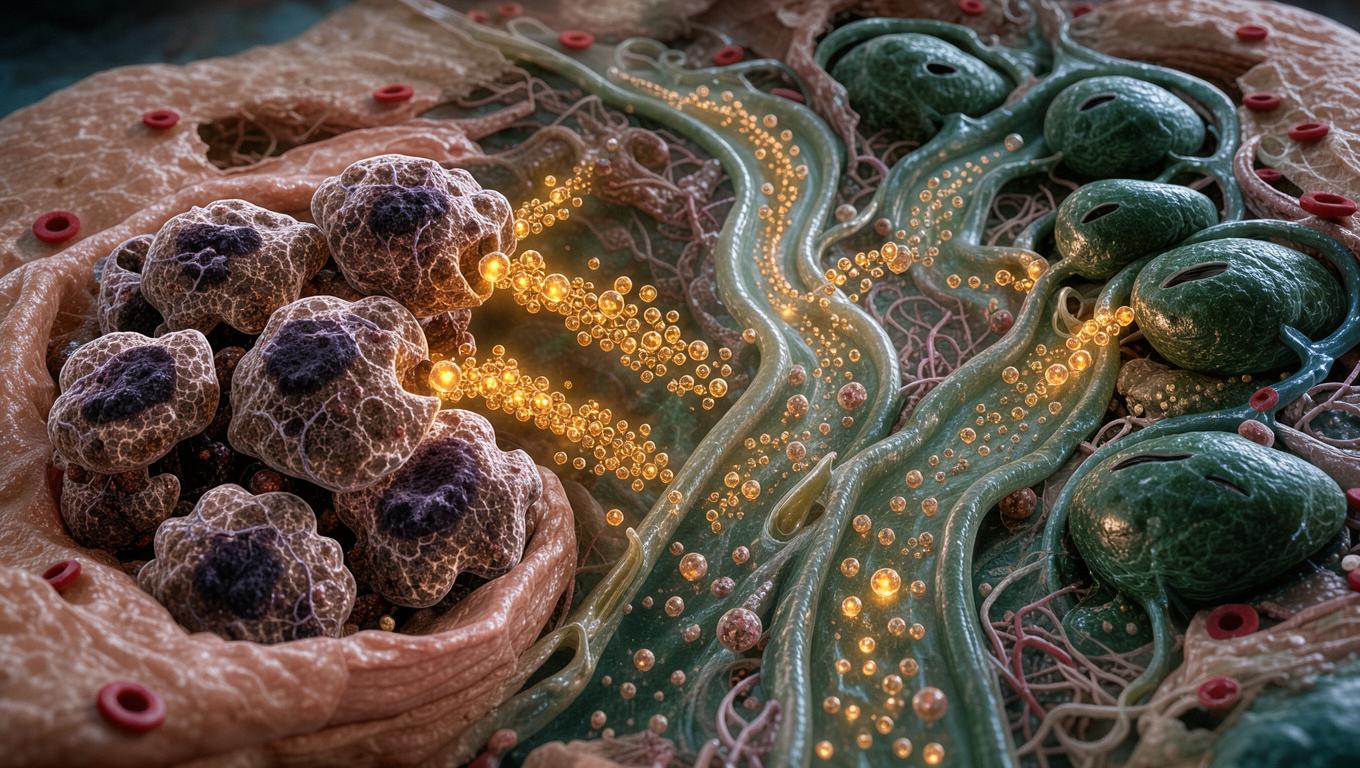
    Paper Review: Lymphatic detours for cancer Science Art

     Science Movie


    Make a narrated HD Science movie for this answer ($64 per minute)


     Discussion


    Stay current without chasing every paper.

    Know what changed, what holds up, and what remains uncertain. Every Friday. No ads.


    My BGPT