Analyze how experimental results and claims are presented, scoped, and limited in a paper.Know what the science actually supports before you trust the answer.
Press Enter ↵ to analyze
Explore by Goal
"If you thought that science was certain - well, that is just an error on your part."
- Richard Feynman
Quick Explanation
Copied
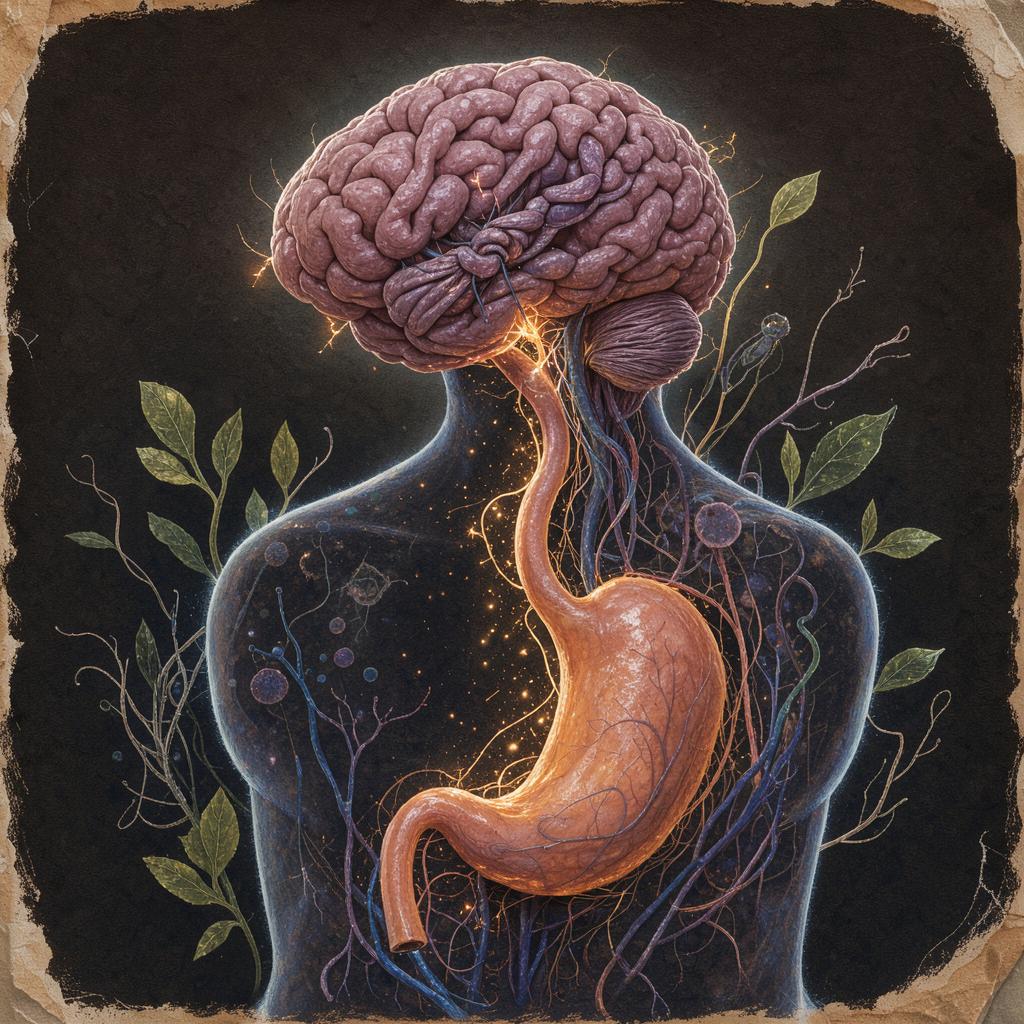
Van Oudenhove and Aziz's 2013 Nature Reviews Gastroenterology & Hepatology review synthesizes epidemiological, brain-imaging, and autonomic evidence supporting an intrinsic role for anxiety, depression, and psychosocial factors in functional dyspepsia (FD), proposing a biopsychosocial gut-brain signalling model rather than FD as merely a healthcare-seeking artifact . Key longitudinal evidence (Koloski 12-year cohort) supports psychological morbidity preceding FD, not vice versa, though most included studies remain cross-sectional, limiting causal inference . Recent cohorts (Pakistan 2024; IBS-FD overlap 2011) corroborate high anxiety/depression comorbidity but remain cross-sectional .
Long Explanation
Core Thesis and Evidence Architecture
The review argues that psychosocial factors and psychiatric comorbidity (especially anxiety and depression) are intrinsic to FD aetiopathogenesis, not merely drivers of consultation behaviour . The authors marshal three evidence tiers: (1) epidemiology — six population-based studies showed higher psychological morbidity in FD vs non-dyspeptic controls; (2) temporality — Koloski's 12-year cohort found baseline anxiety predicted later dyspepsia, while FD did not predict later anxiety; GP records showed psychological disorder preceded dyspepsia in 61% vs 34% converse cases; (3) mechanism — H215O-PET data showing failed perigenual ACC activation and impaired descending modulatory connectivity (pACC–amygdala–PAG) during gastric distension, with anxiety correlating inversely with pACC activity . Psychosocial factors explained 30% of variance in gastric discomfort threshold — a substantial, mechanistically anchored effect.
Strengths
Historical depth (Cannon 1909, Leube 1879) framing the causality debate as unresolved yet empirically tractable.
Integrates cross-disciplinary evidence — neuroimaging, barostat, EGG, autonomic, HPA-axis — into a falsifiable sensory-filtering model.
Transparent about heterogeneity: acknowledges mixed results vs organic-disease controls (5 studies positive, 3 null, 2 mixed for anxiety/depression) .
Critical Limitations
The authors explicitly acknowledge cross-sectional designs dominate, precluding causal inference, and that screening questionnaires rather than structured psychiatric interviews were used in most studies. Unaddressed blind spots: no imaging study adjusted brain activity for anxiety/depression (a confound the authors flag); HPA-axis studies did not stratify by abuse history; the peripheral-vs-central dichotomy persists despite their integrated model. Treatment evidence is weak — a 2005 Cochrane review found only four small, methodologically flawed psychotherapy trials .
Corroboration and Dissonance from Later Data
A 2024 Pakistani cross-sectional cohort (n=222 EGD patients) reports strikingly high comorbidity — anxiety 57.8%, depression 65.8% — with anxiety associated with NERD/ORDS and depression with GERD and dyspepsia subgroups — consistent with the review's thesis, but hospital-based selection inflates estimates. Conversely, an Italian IBS cohort found FD overlap amplified psychopathology (SCL-90-R GSI higher in IBS+FD, n=26, vs IBS-only, n=56) , suggesting psychiatric burden scales with symptom-network complexity — compatible with the review but hinting that somatization (not anxiety per se) may be the stronger driver, as Van Oudenhove's own symptom-severity data implied.
Verdict and Falsification
A high-quality, conceptually influential review whose central claim — FD as a disorder of brain-gut signalling with intrinsic psychosocial contribution — is moderately supported but causally underdetermined. It would be falsified by longitudinal cohorts showing FD symptoms predicting later anxiety/depression equivalently in both directions, or by imaging studies demonstrating brain-activity abnormalities persisting after anxiety/depression adjustment. Notably, the review itself flags this missing control — a mark of scientific candor.
Feedback:
Updated: November 01, 2026
BGPT Paper Review
Study Novelty
70%
Synthesizes existing literature but advances a novel integrated gut-brain sensory-filtering model with effective-connectivity imaging evidence; consolidatory rather than paradigm-breaking.
Scientific Quality
80%
Rigorous, transparent about methodological heterogeneity and its own evidence gaps (e.g., no anxiety/depression-adjusted imaging controls). Review criteria described; no conflicts declared. Weakness inherited from source studies: cross-sectional designs, questionnaire-based psychiatric assessment, small psychotherapy trials.
Study Generality
70%
The brain-gut biopsychosocial framework generalizes to IBS and other functional GI disorders, though evidence reviewed is FD-specific and heterogeneous across populations and Rome criteria eras.
Study Usefulness
70%
Directly informs clinical framing (biopsychosocial approach) and research design (adjusting imaging for psychiatric comorbidity, longitudinal cohorts); treatment guidance remains weak due to limited trial evidence.
Study Reproducibility
50%
As a narrative review, reproducibility is limited: search strategy is stated (PubMed 1946–July 2012) but no systematic screening, PRISMA flow, or quality scoring of included studies is provided.
Explanatory Depth
80%
Deep mechanistic integration spanning interoceptive neurocircuits, descending pain modulation, autonomic and HPA pathways to explain symptom generation; some mechanistic links (e.g., vagal tone mediation) rest on small, conflicting studies.
We'll email you the results when your analysis is finished.
Hypothesis Graveyard
Psychopathology merely drives healthcare-seeking in FD: falsified by population-based studies showing elevated morbidity in non-consulters and by 12-year longitudinal directionality.
FD is purely a peripheral gastric motility/sensory disorder: inconsistent with brain imaging showing anxiety-correlated pACC failure and abuse-related connectivity changes predicting perception.

 Explore by Goal
 Quick Explanation
 Long Explanation
 Top Data Sources
 Ask a Follow-Up
 Key Insight
 Keep Exploring
 Hypothesis Graveyard
 Potential Experiments
 Discussion
