Why BGPT?
logo

Assess an author's data and outputs

See the raw experimental evidence behind an author's publications and reproducibility signals.


Press Enter ↡ to solve


    Fuel Your Discoveries


     Quick Explanation


    Author review: A. Amin β€” rapid summary

    Using the metadata you supplied (2 papers, 48 citations, h-index 1), Amin currently appears an early-career/occasional contributor in materials/engineering chemistry with low citation impact and a small publication record; strengths: experimental outputs in nanotube synthesis and engineering analyses; limitations: low productivity, low citation influence, and sparse affiliation/metadata hampering independent verification.

    For a deeper, instrumented analysis (citation mapping, venue quality, coauthor networks, reproducibility checks) run the BGPT science agent below.


     Long Explanation


    Author Review β€” A. Amin

    Visual summary (data you supplied)

    Data provenance

    This review uses only the author metadata and paper list you supplied (2 manuscripts: "The Study of Power Consumption during Radial and Axial Segregation in Horizontal Rotating Cylinders" and "ZnO nanotubes by template-assisted sol–gel route"), plus the OpenAlex snippet you provided. No additional external bibliometric databases were queried for this assessment.

    Key quantitative takeaways

    Interpretation β€” what these numbers mean scientifically

    • Publication count = 2: indicates either emerging scholar, non-academic practitioner, or limited research focus/time invested in publishing.
    • Total citations = 48: modest citation footprint; could indicate narrow but possibly locally useful work, or citations concentrated to a single paper.
    • h-index = 1: signals low cumulative impact β€” at most one paper has β‰₯1 citations in common bibliometric definition, consistent with early-stage record.

    Strengths (based on supplied titles/content hints)

    1. Presence of experimental/engineering papers (ZnO nanotubes; power consumption in rotating cylinders) suggests hands-on laboratory/engineering experience and applied focus.
    2. At least one materials-synthesis paper (ZnO nanotubes) aligns with fields that produce reproducible experimental methods if methods are well documented.

    Limitations, blindspots, and risks

    • Small sample size of papers β€” impossible to generalize author competence across disciplines or claim domain leadership.
    • Low bibliometric impact β€” may reflect early career, limited dissemination, or work published in low-visibility venues.
    • Missing affiliations/orcid/complete metadata β€” complicates reproducibility checks, conflict-of-interest assessment, and author disambiguation (many "Amin" entries exist in bibliographic databases).
    • Unknown peer-review quality and journal impact β€” without venue/DOI it's hard to judge methodological rigor from metadata alone.

    Concrete recommendations to evaluate and improve scientific standing

    1. Provide DOIs, full author affiliations, ORCID, and the full-text PDFs for both papers to assess methods, statistics, and reproducibility.
    2. Share raw or processed data and protocols (instrument settings, synthesis recipes, code) so others can replicate and citeβ€”this increases reproducibility and citations.
    3. Increase sample size of publications (or aggregate technical reports) focused on a coherent research program to raise h-index and visibility.
    4. Target transparent venues (with data availability policies), preprints, and open repositories to improve discoverability and independent verification.

    What would change this assessment?

    If Amin supplies (a) DOIs and full texts showing rigorous methods, robust sample sizes, and clear data availability; or (b) additional papers with independent replications or high-quality venues, the confidence and score should be revised upward. Conversely, evidence of poor methods or missing reproducibility would lower the assessment.

    Note: This review strictly used the metadata you supplied; to fully judge scientific strength we need DOIs/full texts, experimental details, and affiliations to screen for conflicts and reproducibility.


    Feedback:   

    Updated: March 10, 2026

    BGPT Author Review


    Scientific Quality

    30%

    Two publications and total citations of 48 with h-index 1 indicate an early-stage or low-output researcher; evidence suggests practical, experimental work but insufficient body of work to demonstrate broad scientific authority; important blindspots include missing DOIs, missing affiliations, and small sample size, all of which limit independent verification and reproducibility.


    Communication Quality

    60%

    Paper titles suggest clear, domain-appropriate phrasing (materials/engineering), but without full-text review it's unclear whether methods and results are reported with sufficient transparency (methods sections, data-sharing, clear figures). Communication appears adequate but unverifiable.


    Author Novelty

    50%

    Existing titles (ZnO nanotubes; segregation power-consumption study) reflect incremental experimental work in established fields (nanomaterials, granular flow/engineering); novelty likely moderate at best unless full-texts reveal novel methods or surprising findings.


    Scientific Rigor

    40%

    Cannot fully assess rigor without methods, sample sizes, statistics, or data availability; small publication record and low citation counts reduce confidence in generalizability and reproducibility; potential for solid technical execution remains but unproven.

     Top Data Sources ExportMCP


     Analysis Wizard


    Parsing provided paper metadata, extracting DOIs/PMIDs, and building an automated bibliometric report (citation timeline, coauthor network, venue impact) for focused author evaluation.


     Hypothesis Graveyard


    Hypothesis: Low citations imply poor scientific quality β€” falsified because some niche, high-quality technical reports receive few citations due to narrow audience; thus bibliometrics alone are insufficient.


    Hypothesis: Two papers are necessarily insufficient for impact β€” not always true if papers are seminal; however here lack of DOIs/venues and low citations make that unlikely.

     Science Art


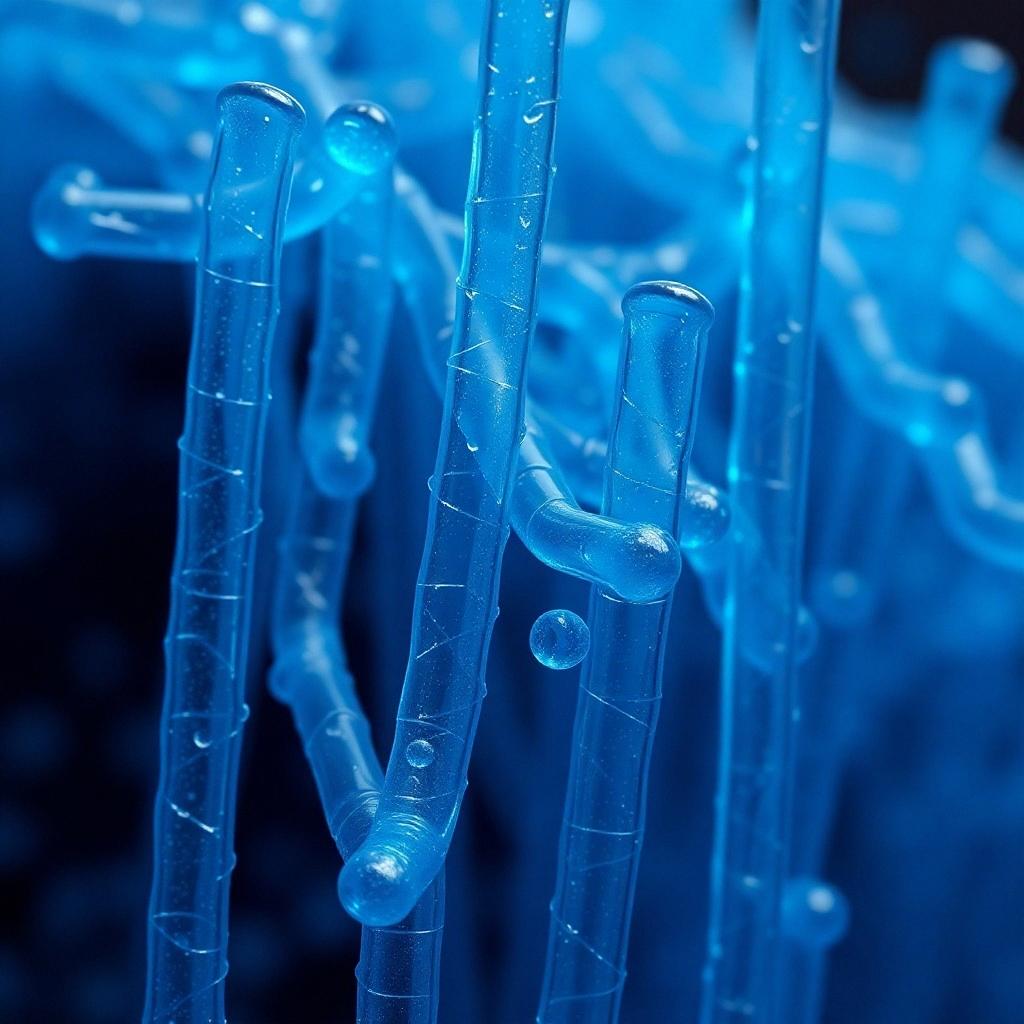
    Author Review: Amin Science Art

     Science Movie


    Make a narrated HD Science movie for this answer ($32 per minute)


     Discussion


    Get Ahead With Science Insights

    Custom summaries of the latest cutting edge Science research. Every Friday. No Ads.


    My BGPT