Why BGPT?
logo

The Evidence Layer for Scientific AI

Ask questions across claims linked to experiments, exact results, limitations, and sources.

Press Enter ↵ to search evidence



    Explore by Goal


    BGPT Odds of True


    22%

    80% Confidence


    The hypothesis requires Notch-specific co-induction of mevalonate/cholesterol with OXPHOS in the same Eaat1+ glial nuclei and beyond compositional effects. Your pasted sources support (a) hypoxia/stress-associated shifts toward OXPHOS and regional heterogeneity in glioblastoma via HIF-1α/C-MYC/NRF1-linked programs (moderate evidence) and (b) mevalonate pathway functional necessity for trained-immunity reprogramming in monocytes (moderate evidence), but they do not establish Notch→mevalonate/cholesterol→OXPHOS coupling in Eaat1+ glia or in GSE334949.


     Hypothesis Novelty


    38%

    The general idea that hypoxia/stress programs coordinate metabolic states (including OXPHOS shifts) is established, and mevalonate pathway involvement in cellular reprogramming is established. The specific Notch-mediated, within-Eaat1+ nuclei co-induction with mevalonate/cholesterol alongside OXPHOS—explicitly tested in a defined cluster set and beyond proportion changes—is novel primarily as a testable composite hypothesis rather than as wholly new biology.

     Quick Answer


    Assessment (skeptical, evidence-bounded): From the evidence you provided, I can’t directly test the GSE334949 claim (clusters 7/14/15; Eaat1+ glia; linkage between Notch + hypoxia + mevalonate/cholesterol + OXPHOS) because the dataset-specific differential expression / pathway scores you’re asking about weren’t included.
    Biologically, the general theme “hypoxia/metabolic stress can coordinate mitochondrial programs with glycolysis/OXPHOS reprogramming” is supported in glioblastoma systems, and “mevalonate pathway activity can be functionally important for cellular state changes” is supported in a separate trained-immunity context—but Notch-driven co-induction of mevalonate/cholesterol with OXPHOS in the same Eaat1+ glial nuclei remains unsubstantiated by the provided sources.
    Key evidence for metabolic coupling under stress: lactate can shift energy metabolism toward OXPHOS via HIF-1α/C-MYC/NRF1-linked programs in glioblastoma, with regional metabolic heterogeneity ().
    Key evidence for mevalonate functional relevance (not cholesterol itself): mevalonate—not cholesterol per se—was necessary for epigenetic reprogramming and “trained immunity” effects in monocytes in a small human cohort ( ).


     Long Answer


    BGPT Hypothesis Critique (science-first, skeptical, evidence-bounded)
    Novel Hypothesis: Notch activation under hypoxia co-induces mevalonate/cholesterol biosynthesis with OXPHOS within the same Eaat1+ glial nuclei (clusters 7, 14, 15) in GSE334949, beyond cell proportion changes.
    Date context: 2026-07-06 (user-provided). Data context: only the papers you pasted were available for citation-backed claims.
    What I can and cannot do with the materials provided
    • I cannot directly compute “within the same Eaat1+ glial nuclei (clusters 7/14/15) in GSE334949” because the GSE334949 expression matrix, cluster labels, hypoxia condition labels, Notch activation scores, and pathway gene sets were not included in your prompt.
    • I can critique the hypothesis mechanistically and identify exact falsification tests that would need to be run on GSE334949 (e.g., co-variation/within-cluster enrichment after controlling for proportion).
    • I can ground general biological plausibility in the provided citations about (i) stress-associated glycolysis↔OXPHOS switching and (ii) mevalonate pathway functional importance in cellular reprogramming.

    1) Hypothesis decomposition (make it falsifiable)

    1. Trigger: hypoxia condition increases Notch activation in Eaat1+ glial cells.
    2. Coupling: the same cells/nuclei show higher mevalonate/cholesterol biosynthesis pathway activity.
    3. Metabolic state: the same cells also show higher OXPHOS activity.
    4. Specificity: the effect holds beyond cell proportion changes—i.e., not explainable by more Eaat1+ nuclei, more OXPHOS-high cells, or altered cluster composition between conditions.

    2) Evidence-based plausibility (what’s supported by your pasted sources)

    2A. Stress-associated metabolic reprogramming toward OXPHOS
    The provided glioblastoma study reports that under glucose deprivation, lactic acid/lactate signaling can upregulate lactate transporters (MCT1/4) and engage a pathway involving HIF-1α, C-MYC, and NRF1, consistent with a shift from glycolysis toward mitochondrial OXPHOS and with regional metabolic heterogeneity ().
    2B. Mevalonate pathway can be functionally required for a durable cellular state
    A separate mechanistic study (trained immunity in monocytes) reports that mevalonate (not cholesterol itself) is essential for induction of trained immunity-associated epigenetic and cytokine changes, supported by small human cohorts and inhibitor-based pathway testing ().
    2C. What these supports do not establish
    • No provided source demonstrates that Notch activation under hypoxia specifically drives mevalonate/cholesterol pathway co-induction with OXPHOS in Eaat1+ glial nuclei.
    • Therefore, the hypothesis’s Notch → (mevalonate/cholesterol) + OXPHOS coupling remains an unverified mechanistic leap given the provided citations.

    3) Critical evaluation: the hardest parts to prove in scRNA-seq / nuclei-seq

    • “Within the same nucleus/cell” is often conflated with cluster-level averaging. You need to show co-variation at the single-nucleus level (e.g., Notch activation score correlates with mevalonate and OXPHOS programs in the same nuclei, within Eaat1+ clusters 7/14/15).
    • “Beyond cell proportion changes”: if hypoxia changes the fraction of OXPHOS-high or mevalonate-high subtypes inside the Eaat1+ compartment, then bulk/cluster-mean pathway enrichment can arise without true co-induction per cell. You must model proportions explicitly or use within-cell comparisons controlling for compositional structure.
    • Gene-set confounding: “mevalonate/cholesterol biosynthesis” signatures often overlap with general lipid/metabolic transcription programs and stress responses; similarly, OXPHOS gene sets can correlate with mitochondrial content/number rather than purely respiratory state.
    • Hypoxia annotation: unless hypoxia is measured (e.g., hypoxia-responsive transcription module activity) or labeled robustly, “hypoxia condition” can become a proxy for multiple stress programs.

    4) Specific falsification tests on GSE334949 (what would disprove the hypothesis)

    Test A — single-nucleus co-activation (inside Eaat1+ clusters)
    • Define Notch activation score (from Notch target genes / pathway program used in your analysis).
    • Define mevalonate/cholesterol biosynthesis score (curated mevalonate/cholesterol gene sets).
    • Define OXPHOS score (mitochondrial respiratory chain / OXPHOS gene sets).
    • For nuclei in Eaat1+ clusters 7, 14, 15, check whether hypoxia increases (i) Notch score, and (ii) the joint distribution where high Notch implies high mevalonate and high OXPHOS.
    • Disproof pattern: hypoxia increases Notch but mevalonate or OXPHOS does not track with Notch at single-nucleus level.
    Test B — proportion-controlled pathway shifts
    • Quantify whether hypoxia changes the fraction of sub-states (within Eaat1+ clusters) that are already OXPHOS-high or mevalonate-high.
    • Use models that partition composition effects vs within-cell program effects.
    • Disproof pattern: apparent co-induction is eliminated after controlling for the emergence/expansion of a pre-existing metabolic subtype.
    Test C — mediation logic
    • Assess whether mevalonate/OXPHOS changes are better predicted by hypoxia/hypoxia-stress programs or mitochondrial content proxies than by Notch scores.
    • Disproof pattern: Notch has no incremental predictive value once hypoxia module and mitochondrial content are accounted for.

    5) Counterpoints / blindspots

    • Alternative coupling routes: metabolic reprogramming toward OXPHOS can occur via hypoxia/lactate/HIF axes without Notch; the provided glioblastoma evidence supports lactate-linked OXPHOS shifts in an HIF-1α/C-MYC/NRF1 context ().
    • Mevalonate overlap with stress responses: mevalonate pathway enrichment could reflect broad lipid/stress programs rather than a Notch-specific mechanism; the mevalonate evidence you provided is context-specific (trained immunity) and doesn’t imply Notch-mediated regulation in glia ().

    6) Likelihood & novelty (conservative, given evidence limits)

    • Likelihood true (as stated, including Notch-specific co-induction in the same Eaat1+ nuclei and beyond proportion changes): 22% because the provided evidence supports (i) hypoxia/stress-linked OXPHOS reprogramming and (ii) mevalonate pathway functional relevance in another system, but not the Notch-specific co-regulation in Eaat1+ glia within GSE334949.
    • Key bottleneck: you must empirically establish single-nucleus co-activation and proportion-controlled inference in GSE334949; that evidence is currently missing from the prompt.

    7) What would most improve your original hypothesis

    • Replace “Does Notch activation…” with a more testable statement: “Notch-activation score mediates the hypoxia-induced increase in mevalonate/cholesterol and OXPHOS scores within Eaat1+ clusters, after controlling for compositional shifts.”
    • Pre-register which gene sets define “mevalonate/cholesterol biosynthesis” and “OXPHOS,” and include mitochondrial-content covariates (or alternative signatures) to reduce false attribution to respiratory state.
    Run the actual GSE334949 test (recommended)
    Because the dataset-specific evidence isn’t present here, the most scientifically direct next step is to run an analysis agent that computes Notch/mevalonate/OXPHOS scores, tests single-nucleus co-activation in clusters 7/14/15, and quantifies residual effects after proportion control.


    Feedback:   

    Updated: July 06, 2026

     Top Data Sources ExportMCP


     Analysis Wizard


    Analyzes GSE334949 to compute nucleus-level Notch, mevalonate/cholesterol, and OXPHOS program scores within Eaat1+ clusters 7/14/15, then tests hypoxia effects with proportion-controlled models.


     Hypothesis Graveyard


    The hypothesis fails if Notch activation increases under hypoxia but mevalonate/cholesterol and OXPHOS do not increase in the same nuclei (co-variation collapses).


    The hypothesis fails if the observed enrichment is entirely explained by hypoxia-driven expansion of pre-existing OXPHOS-high / mevalonate-high subtypes inside Eaat1+ clusters (proportion control removes the effect).

     Science Art


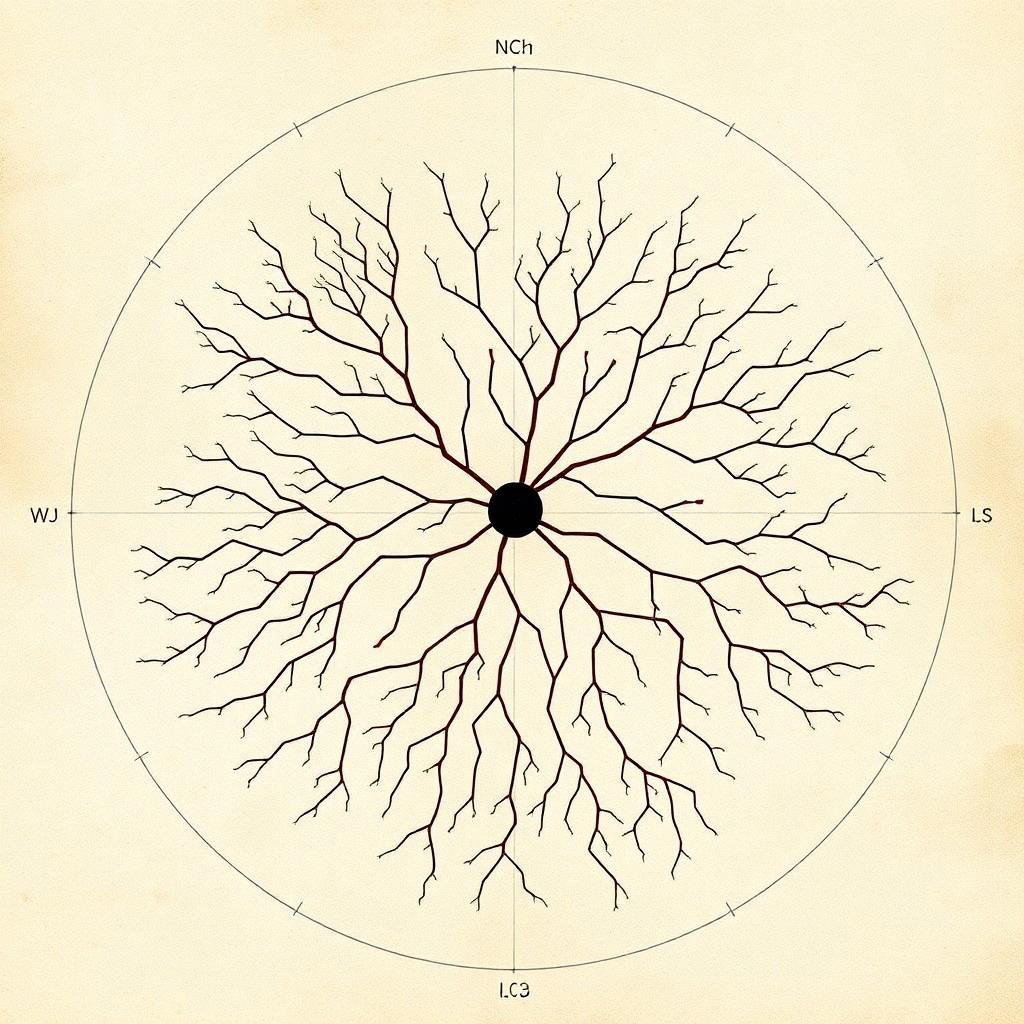
    Novel Hypothesis: Does Notch activation under hypoxia co-induce mevalonate/cholesterol biosynthesis with OXPHOS within the same Eaat1+ glial nuclei (clusters 7, 14, 15) in GSE334949, beyond cell proportion changes? Science Art

     Science Movie


    Make a narrated HD Science movie for this answer ($32 per minute)


     Discussion


    Follow the Evidence

    New scientific claims, supporting evidence, and important limitations. Every Friday. No ads.


    My BGPT