Why BGPT?
logo

Review papers with raw data transparency

Quickly verify claims by accessing the underlying experimental data and figures.


Press Enter ↡ to solve


    Fuel Your Discoveries


     Quick Explanation


    Cellular therapies in ARDS (review) β€” what looks most evidence-backed
    • Mechanistic emphasis: the review argues MSC effects are mainly paracrine (secretome/EVs) rather than durable engraftment, citing very low engraftment estimates (<1%).
    • Translational bottleneck: standardization of cell harvest/storage/reconstitution/administration is presented as a key remaining challenge.

    Primary limitation to keep in mind: this is a narrative review; it highlights safety/feasibility signals and mechanistic plausibility, but it does not provide a systematic effect-size estimate for efficacy across trials.


     Long Explanation


    Paper Review (Visual + Critical): Cellular therapies in ARDS
    DOI: 10.22514/sv.2022.059 β€’ Published: 2022-09-08
    Figure A β€” COVID-19-associated ARDS trial enrollment snapshot (from the paper’s Table 1)
    The review includes a set of MSC trials listed in its Table 1. Below, the enrolled numbers are visualized as given in that table.
    Figure B β€” Enrollment by MSC cell source (aggregated from Table 1)
    Summed across the trials listed in Table 1, grouped by MSC source label used in the table (BM-MSC, WJ-MSC, UC-MSC).
    Figure C β€” Mechanistic claims highlighted in the review (paracrine emphasis)
    The review foregrounds a multi-process mechanism model: epithelial repair, alveolar fluid clearance, immune modulation, while arguing engraftment is limited (<1%), shifting emphasis to paracrine mediators/EVs.
    1) What the review argues (and what it uses as support)
    Core therapeutic rationale: MSC paracrine signaling
    The review emphasizes MSCs as multipotent stromal cells with immunomodulatory and tissue-repair potential, while arguing the functional impact is not primarily explained by engraftment and differentiation due to very low grafting (<1%).
    Mechanistic compartments explicitly highlighted
    • Epithelial repair: claims include secretion of factors such as KGF and pathways including Ξ²-catenin activation and NF-ΞΊB inhibition.
    • Alveolar fluid clearance: claims include sodium transport restoration mechanisms linked to KGF and miRNA-34c, plus endothelial permeability stabilization via angiopoietin-1 involvement.
    • Immune modulation: the review describes MSC effects on adaptive and innate immunity, including macrophage phenotype shifts and anti-inflammatory mediator changes (e.g., IL-10, prostaglandin E2).
    EV/secretome strategy and the reproducibility problem
    The review argues that using secretome/EVs could reduce some issues of whole-cell products, but it still emphasizes batch-to-batch differences, aggregation during freeze-thaw, and the difficulty of establishing standardized potency assessments.
    2) Evidence strength grading (strictly from what the review itself reports)
    Claim type What’s claimed Confidence based on review text
    Mechanism (paracrine emphasis) Engraftment <1% β†’ paracrine mediators/EVs dominate observed effects Moderate (review-level synthesis; mechanistic plausibility is argued but efficacy causality isn’t quantified here)
    Biological targets KGF, MMP-8, Ξ²-catenin, NF-ΞΊB; sodium transport; IL-10/Prostaglandin-E2 Moderate (targets are listed as candidate mechanisms but the review text provided doesn’t include effect sizes or consistent causal chains)
    Clinical signals Safety/feasibility and some oxygenation marker changes in early trials Low-to-moderate (the paper reports selected outcomes; it doesn’t provide pooled estimates or comprehensive bias control)
    Evidence grading above is review-text-bounded: it reflects what can be supported by the provided manuscript excerpt, not by an external re-analysis of every cited study.
    3) Skeptical critique & blind spots (biological translation only)
    Mechanistic causality vs. correlation
    The review links specific pathways (e.g., Ξ²-catenin, NF-ΞΊB, KGF-related sodium handling) to therapeutic outcomes, but because the review is narrative and doesn’t supply quantitative causal testing within a single unified experimental design, the strength of β€œthis pathway explains this clinical improvement” cannot be verified from the review text alone.
    Product heterogeneity is treated as a β€œchallenge”—but it is also a confound
    The review correctly highlights standardization challenges (harvest/storage/reconstitution/admin; EV batch content; potency testing). From a skeptical experimental-design standpoint, heterogeneity makes it harder to isolate which β€œbiological construct” is working (or failing): donor tissue origin, priming state, EV cargo, viability, and route-specific biodistribution all can shift immune and epithelial responses.
    Route-of-delivery uncertainty affects lung dose and downstream biology
    The review argues intravenous delivery is feasible but makes lung retention/dose control uncertain, while intratracheal/inhaled routes may improve localization but require optimization and may worsen pathology via added fluid (for intratracheal cell suspensions). This means β€œdose received by the relevant compartment” may vary widely across trials, complicating interpretation of any efficacy signal.


    Feedback:   

    Updated: April 03, 2026

    BGPT Paper Review


    Study Novelty

    60%

    Novelty is moderate: it consolidates a then-relevant MSC/EV-paracrine framing for ARDS (including COVID-19-era clinical trial proliferation) rather than introducing a fundamentally new mechanistic framework, methods, or quantitative synthesis.


    Scientific Quality

    70%

    Scientific quality is moderate-to-good for a narrative review: it provides coherent mechanistic sections and flags key translational problems (manufacturing standardization, EV potency, delivery route uncertainty). Main quality limitation is lack of systematic methods/pooling and absence of quantitative effect-size synthesis in the provided text.


    Study Generality

    60%

    Generality is limited by focus on MSCs/EVs and ARDS (especially COVID-19-associated ARDS trial landscape) rather than a broad multi-cell-type framework across inflammatory lung injury phenotypes.


    Study Usefulness

    70%

    Practical usefulness is relatively high as a mechanistic map + translational checklist (engraftment rationale, epithelial repair/fluid clearance/immune modulation, EV challenges, and IV vs intratracheal/aerosol delivery considerations). It is less useful for definitive efficacy ranking because it is not a meta-analysis.


    Study Reproducibility

    50%

    Reproducibility is constrained because it is a narrative review: it synthesizes literature without providing an extractable, stepwise protocol for study selection, and the excerpt doesn’t provide a standardized dataset for re-calculation.


    Explanatory Depth

    70%

    The review has decent mechanistic depth by describing multiple plausible biological pathways (KGF, MMP-8, Ξ²-catenin/NF-ΞΊB, sodium transport via KGF/miRNA-34c, immune modulation including IL-10/PGE2), but it does not provide quantitative causal integration across models into a unified predictive framework.


    🎁 Authors: Collect 123 Free Science Tokens (β‰ˆ $12.3 USD)

    Claim My Author Tokens

    Use for 30 days of free BGPT access (4 tokens = 1 day) or trade/sell (β‰ˆ $12.3 USD)

     Top Data Sources ExportMCP


     Analysis Wizard


    None requestedβ€”this review already provides extracted Table-1 enrollment numbers and qualitative mechanistic claims, so no Bioinformatics pipeline is necessary for this task.


     Hypothesis Graveyard


    A graveyard hypothesis would be: β€œclinical variability is mainly due to insufficient stem-cell engraftment volume rather than variability of paracrine EV/secretome quality.” This is weakened by the review’s stated <1% engraftment estimate, which shifts explanatory weight away from engraftment as the main mechanism.


    Another graveyard hypothesis: β€œa single delivery route will be universally optimal across ARDS etiologies without affecting biological dose delivered to relevant lung compartments.” The review instead argues IV feasibility trades off against uncertain lung retention and that intratracheal/inhaled approaches require optimization and could alter pathology via added fluid or variable nebulizer performance.

     Science Art


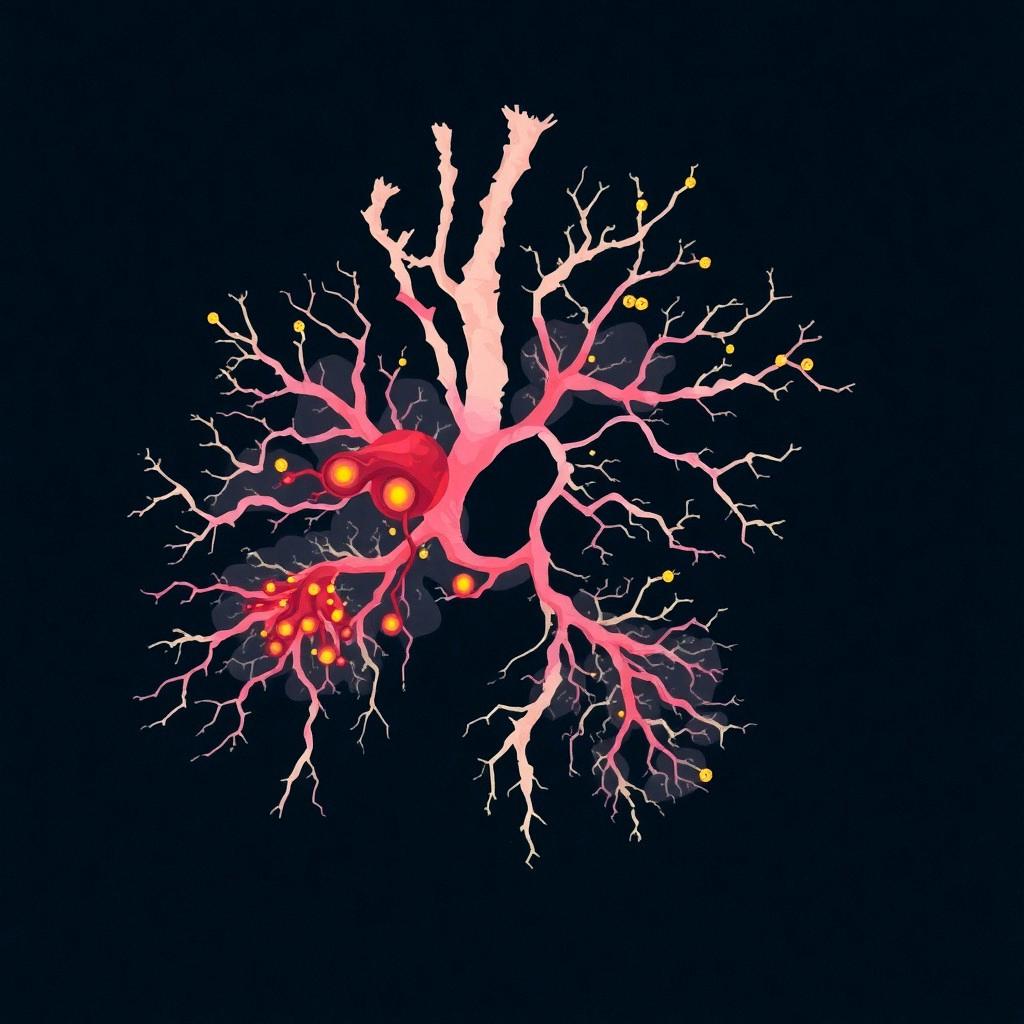
    Paper Review: Cellular therapies in ARDS Science Art

     Science Movie


    Make a narrated HD Science movie for this answer ($32 per minute)


     Discussion


    Get Ahead With Science Insights

    Custom summaries of the latest cutting edge Science research. Every Friday. No Ads.


    My BGPT