Check whether claims match experiments, exact reported results, and stated limitations.Know what the science actually supports before you trust the answer.
Press Enter ↵ to review paper
Explore by Goal
"The more we learn about the world, and the deeper our learning, the more conscious, specific, and articulate will be our knowledge of what we do not know, our knowledge of our ignorance."
- Karl Popper
Quick Explanation
Copied
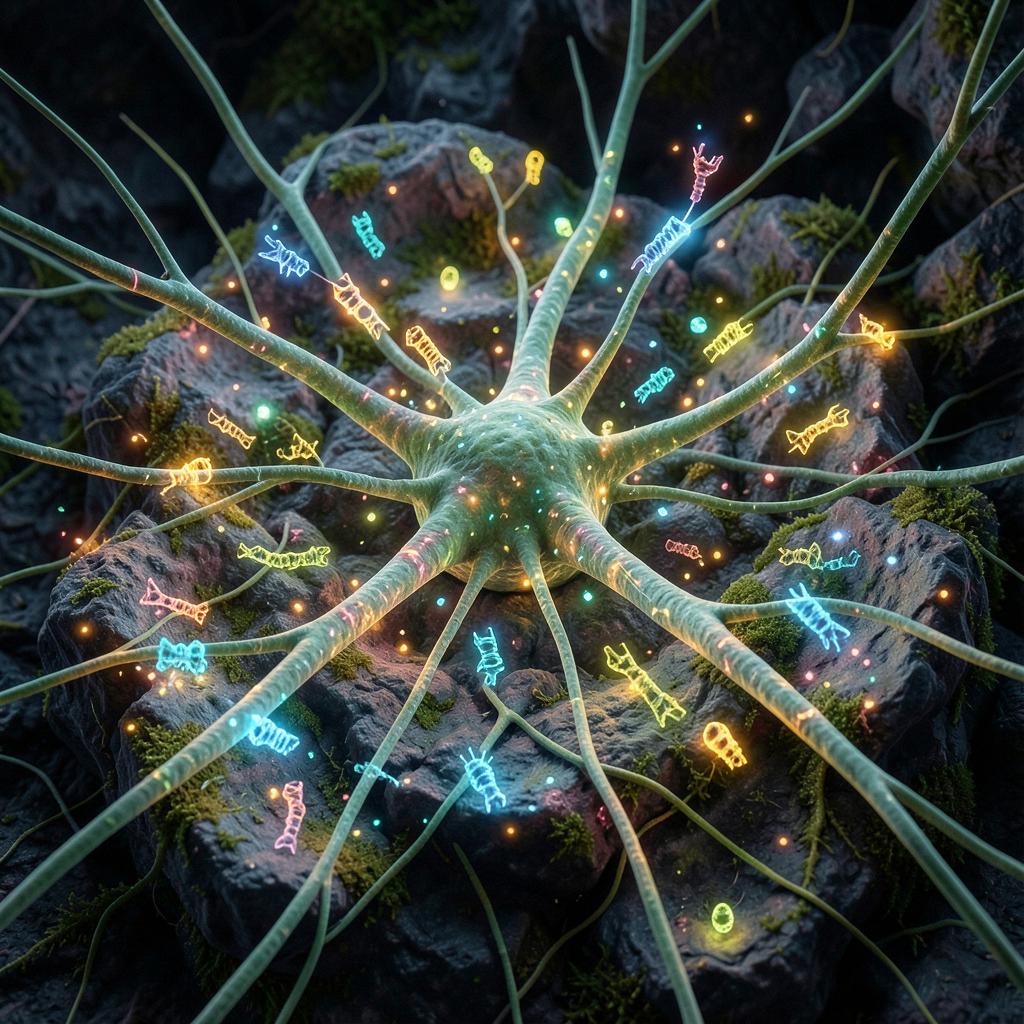
This Cell 2015 study provides strong single-cell evidence that human hippocampal neurons carry ~13.7 somatic L1 insertions each (raw mean 30.4), with insertions enriched in neurobiology genes and hippocampus-expressed loci, though WGA artifacts, variable PCR validation, and a single AGS patient temper disease-related conclusions.
Long Explanation
Core Finding and Evidence Strength
Upton et al. used single-cell RC-seq on NeuN+ hippocampal nuclei (FACS-sorted, MALBAC-amplified) from four neurologically normal controls plus one Aicardi–Goutières syndrome (AGS) patient, detecting 2,782 putative somatic L1 insertions absent from matched liver and prior hippocampal bulk samples. After PCR-validation-rate correction, the authors estimate ~13.7 insertions per neuron — roughly an order of magnitude below the uncorrected mean of 30.4 — demonstrating that the headline number depends critically on artifact-filtering assumptions.
TPRT hallmarks (target-site duplications of 5–35 nt, EN motifs, median 33-nt poly-A tails; 98.2% L1-Ta subfamily) robustly confirm genuine in vivo retrotransposition events. Insertions were enriched in introns (36.8% vs 1.2% exonic), near neuronal stem-cell enhancers (Fisher p < 1e-2), and in genes transcribed in the hippocampus, with the top GO term "regulation of synapse maturation" (p < 1.7e-60) — a striking selectivity absent from liver control insertions. An intronic sense-orientation bias (406 insertions; expected 50%, p < 0.0001) suggests selection pressure favoring insertion orientations.
Critical Weaknesses
Three caveats stand out: (1) WGA amplification bias, including telomere-proximal artifacts and 8% allelic dropout, means some "somatic" events may be artifacts despite random validation; (2) the AGS conclusion rests on a single SAMHD1-mutant patient — the surprising finding that AGS-1 hippocampus showed lower L1 copy number (qPCR p < 0.002; true-positive mean 8.0, p < 0.03 vs controls) contradicts prior SAMHD1-restriction hypotheses and needs multi-patient replication; (3) no functional assays link insertions to neuronal phenotypes — causality remains untested. What would change these conclusions: independent single-cell studies across diverse individuals failing to reproduce insertion rates above artifact background, or AGS cohorts showing consistent L1 elevation.
Feedback:
Updated: October 26, 2026
BGPT Paper Review
Study Novelty
90%
First direct single-cell quantification of somatic L1 burden in human hippocampal neurons in vivo; landmark for somatic genome mosaicism field.
Scientific Quality
90%
Rigorous validation pipeline (PCR, TPRT hallmarks, liver/negative controls, CNV bias correction); major caveats are WGA artifacts and single AGS patient.
Study Generality
80%
Establishes a brain-wide phenomenon with cell-type and disease-context comparisons, but functional generality and tissue breadth remain untested.
Study Usefulness
90%
Defines baseline somatic L1 burden per neuron, foundational for neurodevelopment, aging, and neuropsychiatric disease research.
Study Reproducibility
80%
Data deposited at ENA (PRJEB5239); methods detailed, but WGA/capture pipelines are technically demanding to reproduce exactly.
Simulated visualization with illustrative uncertainty ranges; assumptions: Poisson-like variance in insertion counts per cell and ±8% WGA allelic dropout. Values are not observed data.
Generated scientific data; not direct experimental measurements.
Get emailed when your analysis is done!
We'll email you the results when your analysis is finished.
Hypothesis Graveyard
SAMHD1 deficiency broadly suppresses L1 retrotransposition in all tissues — contradicted here by lower, not higher, L1 copy number in AGS hippocampus, indicating tissue- and disease-context specificity.

 Explore by Goal
 Quick Explanation
 Long Explanation
 Top Data Sources
 Ask a Follow-Up
 Key Insight
 Keep Exploring
 DataGen
 Hypothesis Graveyard
 Discussion
