Why BGPT?
logo

Review papers with raw data transparency

Quickly verify claims by accessing the underlying experimental data and figures.


Press Enter ↵ to solve


    Fuel Your Discoveries


     Quick Explanation


    Paper in one line
    CVB3 induces cardiomyocyte Viperin; Viperin then promotes STAT1 degradation (via UBR5) to activate SGK1→KCNQ1 signaling, driving electrical dysfunction and acute heart failure—attenuated in Viperin−/− mice and blocked in vivo by a Viperin–STAT1 interfering peptide (VS‑IP1).


     Long Explanation


    Targeting Viperin prevents coxsackievirus B3-induced acute heart failure
    DOI: 10.1038/s41421-025-00778-0 Journal: Cell Discovery Received/Accepted: 20 Aug 2024 / 21 Jan 2025
    Core claim chain (as stated): CVB3 (protease 3C) ↓UBE4A → rescues cardiomyocyte Viperin protein → Viperin binds STAT1 and promotes STAT1 ubiquitination/degradation (UBR5) → ↑SGK1 → ↑KCNQ1 at cytomembrane → electrical dysfunction → acute heart failure, with VS‑IP1 peptide interrupting Viperin–STAT1 interaction in vivo.
    Visual synthesis (mechanism + evidence types)
    Evidence summary map
    • In vivo disease modification: Viperin−/− mice show higher LVEF/LVFS, higher E/A ratio, and less BNP upregulation after CVB3 infection; cardiomyocyte Viperin overexpression mimics aspects of AHF; VS‑IP1 reduces AHF readouts.
    • Virus–host separation: Viperin deficiency is reported not to significantly change CVB3 titers at day 3 (serum) and day 7 (heart), despite protection from AHF.
    • Signaling mechanism (molecular): Viperin modulates STAT1 protein (not Stat1 mRNA), increases SGK1 and KCNQ1 membrane levels; mechanistic intermediate includes UBR5-dependent ubiquitination and CVB3 3C cleavage of UBE4A.
    • Cell-type/viral specificity touchpoints: The paper contrasts cardiomyocyte Viperin induction by CVB3 with non-CVB3 infections (VSV, influenza A, SeV, HSV) not inducing Viperin protein in cardiomyocytes.
    Proposed model (paper’s Figure 7A concept)
    CVB3 → UBE4A cleavage → Viperin → STAT1 ↓ → SGK1 ↑ → KCNQ1 membrane ↑ → AHF
    Intervention: VS‑IP1 blocks Viperin–STAT1 interaction and prevents the downstream signaling/phenotype.
    Uncertainty flag: The causal bridge from electrical dysfunction to AHF is supported indirectly by echocardiography and “HF electrical remodeling” citations, but the paper (from the provided text) does not show direct electrophysiology traces (e.g., ECG/QT/QRS, patch-clamp IKs) in the excerpt you provided.
    Quantitative readouts mentioned in the excerpt (ranges/thresholds)
    The excerpt provides numeric ranges for some echocardiography/BNP values but not full per-animal raw distributions. So the plot uses only explicitly stated ranges and is therefore conservative.
    Interpretation limits: Because the excerpt does not provide sample-by-sample numeric values (means±SEM are referenced in figures but not fully included here), this plot cannot support effect-size statistics (e.g., Cohen’s d, odds ratios).
    Mechanistic chain: what is strong vs what remains to be nailed down
    Strengths
    • Causal logic is internally layered: the paper connects Viperin to STAT1 protein decrease, then to SGK1 expression, then to KCNQ1 membrane localization and a cardiac dysfunction phenotype, with genetic and peptide-interference methods spanning these steps.
    • Host pathway positioning: the authors explicitly argue Viperin is not primarily changing CVB3 titers (infection burden) but is changing host cardiac dysfunction pathways, which is a crucial separation for interpreting antiviral ISG repurposing in disease.
    • Protease→substrate link for Viperin protein rescue: CVB3 3C is reported to cleave UBE4A at a conserved QG motif, and the UBE4A Q328A mutant loses 3C-mediated destabilization, with downstream functional consequences on Viperin/STAT1/SGK1 signaling.
    Blind spots / potential fragilities
    • Electrophysiology depth in the provided excerpt is limited: The paper emphasizes electrical dysfunction and cites SGK1’s role in adverse remodeling, but from the text provided here, it is unclear whether direct ion-channel current recordings or in vivo ECG/QTc were conducted alongside the molecular markers (KCNQ1 membrane).
    • STAT1 transcriptional vs protein-level effects: the authors report Viperin does not affect Stat1 mRNA but reduces STAT1 protein levels; this is consistent with their ubiquitination/degradation model. However, “STAT1 reduction” can also be downstream of broader stress responses; fully disentangling whether ubiquitination is the dominant causal mechanism (vs parallel effects) would benefit from more quantitative degradation kinetics and ubiquitin-site mapping.
    • Peptide specificity: VS‑IP1 blocks Viperin–STAT1 interaction. But peptides can have off-target protein interactions or alter cell permeability/uptake, which would require additional binding specificity controls (mutant peptides, scrambling controls, orthogonal binding assays).
    • Generalizability across viral strains and HF etiologies: the excerpt focuses on a specific CVB3 strain (Nancy strain) and a single “acute heart failure” endpoint pattern. Whether the Viperin–STAT1–SGK1 axis holds for other enteroviruses, different CVB3 inocula, or post-myocarditis chronic trajectories is not established in the excerpt.
    Context: where Viperin fits in innate immunity (and why this paper is interesting)
    Known baseline biology
    • Viperin (RSAD2) is an IFN-inducible antiviral protein with described roles including restricting viral replication and modulating host pathways. For example, HCMV can induce viperin redistribution from ER-associated localization to Golgi/perinuclear compartments containing viral proteins, consistent with host–virus coevolution around viperin localization and function.
    • More broadly, viperin can catalyze ddhCTP production and is linked to antiviral effects via inhibition of viral RNA synthesis (chain-terminator concept), as reviewed in experimental studies identifying viperin’s ddhCTP chemistry.
    • Therefore, the novelty here is phenotype-linked reprogramming of a classic antiviral ISG into a driver of cardiac electrical dysfunction, rather than primarily a viral replication suppressor in the heart.
    Skeptical critique: what would most disprove the model?
    1. Show no causal STAT1→SGK1→KCNQ1 link: e.g., if STAT1 modulation does not change SGK1 expression or KCNQ1 membrane localization under CVB3 conditions in cardiomyocytes, or if KCNQ1/SGK1 blockade fails to prevent electrical dysfunction and AHF even when Viperin is manipulated.
    2. Demonstrate that VS‑IP1 protects via unrelated pathways: if peptide controls (e.g., scrambled or nonbinding versions) do not reproduce the molecular and phenotypic changes, the VS‑IP1 effect may not be specific to Viperin–STAT1.
    3. Alternative explanations for cardiomyocyte dysfunction: CVB3 could alter cardiomyocyte stress, calcium handling, innate inflammation, or other signaling pathways that secondarily change STAT1/SGK1/KCNQ1. Stronger disproof would show the Viperin–STAT1 axis is not required when these alternative drivers are accounted for.
    Data availability & reproducibility signals
    • Proteomics dataset deposited: quantitative proteomics data are deposited to PRIDE with identifier PXD036898.
    • Methods detail level: the excerpt contains extensive method descriptions (AAV9-cTNTp gene expression, echocardiography system, CRISPR edits, infection conditions, proteomic workflow, statistics tests), which supports reproducibility evaluation.
    Remaining reproducibility gap from excerpt: full numerical raw phenotypes and full figure panels are not included in the text you provided, so precise reanalysis (effect sizes, variance estimates, multiple-comparison corrections) is not possible from this excerpt alone.
    Quick navigation (run deeper analyses in BGPT)
    Independent AI bioinformatics agent (iterative re-check)
    Run a full iterative analysis agent to re-extract signaling logic and check dependencies across the paper text and deposited proteomics (PXD036898) as available.


    Feedback:   

    Updated: April 17, 2026

    BGPT Paper Review


    Study Novelty

    90%

    The paper links CVB3 to a host electrical dysfunction signaling axis (Viperin→STAT1→SGK1→KCNQ1) and proposes a mechanistic CVB3 3C→UBE4A cleavage route rescuing cardiomyocyte Viperin protein, with an in vivo VS‑IP1 interference peptide preventing acute heart failure—an unusually direct host-signaling-to-electrical dysfunction framing for an ISG-centered model in CVB3 AHF.


    Scientific Quality

    80%

    Scientific quality appears strong due to multi-level perturbation (genetics + protein interaction disruption peptide) supporting a coherent causal chain, plus proteomics deposit (PXD036898). However, the excerpt suggests reliance on echocardiography/BNP and protein localization rather than explicit direct electrophysiology functional readouts, and peptide specificity controls are not fully detailed in the provided text, leaving some mechanistic vulnerability.


    Study Generality

    70%

    The mechanistic axis is specific to CVB3-induced acute heart failure in the chosen mouse model and to cardiomyocytes, so generality across other enteroviruses/viral myocarditis etiologies and across chronic remodeling trajectories is not established in the provided text. Still, the conceptual Viperin→STAT1→SGK1 signaling framework may transfer to other contexts where STAT1/SGK1/KCNQ1 remodeling occurs.


    Study Usefulness

    70%

    Practically useful as a mechanistic target hypothesis (Viperin–STAT1 axis; VS‑IP1 as proof-of-concept) and as a framework for designing peptide/protein-interaction inhibitors. Translational usefulness remains uncertain due to peptide modality, species differences, and the need for direct electrophysiology and safety/efficacy validation beyond model systems.


    Study Reproducibility

    70%

    Methods are described in considerable detail (mouse model handling, echocardiography instrument, infection dosing, AAV9 constructs, CRISPR approach, proteomics workflow), and proteomics data are deposited to PRIDE (PXD036898). Reproducibility for phenotype quantification depends on access to complete figure panels/raw numbers not contained in the excerpt you provided.


    Explanatory Depth

    80%

    The paper’s mechanism is layered and relatively deep: it connects CVB3 3C protease to UBE4A cleavage as an upstream trigger for Viperin protein rescue, then to Viperin’s physical interaction with STAT1 via SAM domain and a STAT1 704–750 region, then to UBR5-dependent ubiquitination and proteasome-sensitive STAT1 degradation, finally to SGK1 transcription/protein changes and KCNQ1 membrane localization. The main depth gap is direct demonstration that KCNQ1/SGK1 changes quantitatively explain electrophysiology leading to AHF (as opposed to correlating with echocardiography endpoints).


    🎁 Authors: Collect 395 Free Science Tokens (≈ $39.5 USD)

    Claim My Author Tokens

    Use for 98 days of free BGPT access (4 tokens = 1 day) or trade/sell (≈ $39.5 USD)

     Top Data Sources ExportMCP


     Analysis Wizard


    It will scrape key readout statements from the full-text, structure them into a tidy table (condition, genotype, timepoint, metric), then generate comparison plots for Viperin−/− vs Viperin+/+ without fabricating missing raw data.


     Hypothesis Graveyard


    If STAT1 degradation is largely secondary to global proteostasis stress rather than Viperin-specific UBR5 targeting, then UBR5 inhibition would not specifically restore STAT1 levels nor rescue SGK1/KCNQ1 and AHF readouts in a Viperin-dependent way.


    If KCNQ1 cytomembrane localization is epiphenomenal (a downstream marker) and not a driver of acute electrical remodeling, then SGK1/KCNQ1 modulation would not track with echocardiography endpoints after perturbing Viperin/STAT1.

     Science Art


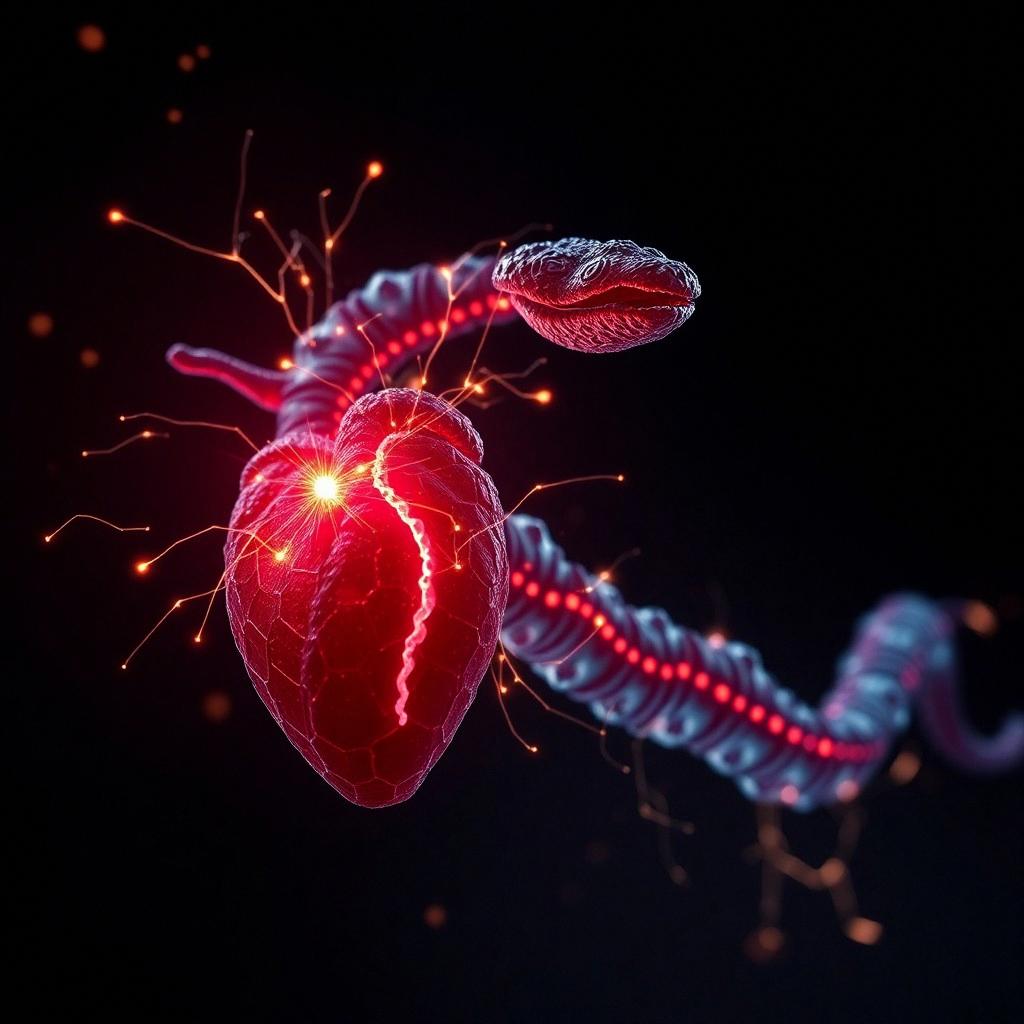
    Paper Review: Targeting Viperin prevents coxsackievirus B3-induced acute heart failure Science Art

     Science Movie


    Make a narrated HD Science movie for this answer ($32 per minute)


     Discussion


    Get Ahead With Science Insights

    Custom summaries of the latest cutting edge Science research. Every Friday. No Ads.


    My BGPT