Why BGPT?
logo

The Evidence Layer for Scientific AI

Ask questions across claims linked to experiments, exact results, limitations, and sources.

Press Enter ↵ to search evidence



    Explore by Goal


     Quick Explanation


    An RNA structural “switch” logic can couple an RNA scaffold to bacterial toxin regulation: in Type VI retrons, a conserved upstream ncRNA stem-loop (e.g., SL3) and long-range RNA pairing architecture are required for triggering defense upon RecBCD surveillance, while the toxin (SP) is constitutively produced but controlled by a toxin–antitoxin post-transcriptional regulatory mode within the retron system.


     Long Explanation


    RNA structural switch → toxin translation control (what’s evidenced?)
    Today: 2026-07-06
    Epistemic humility: Your phrase “RNA structural switch controlling bacterial toxin translation” can mean different mechanisms. In the provided research set, we have direct evidence for an RNA scaffold/structural requirements that govern Type VI retron defense activation (which includes a toxin SP under TA regulation), but the data here are not a single, universal “RNA switch controlling translation” example across all bacteria. I therefore map the evidence to the closest supported mechanism: RNA structural architecture that gates toxin regulation/defense.

    1) Mechanistic “wiring diagram” (supported logic)

    What the evidence supports:
    • RecBCD surveillance inhibition is required to activate the Retron-Sen3 defense program.
    • RNA structural elements are essential: upstream stem-loop SL3 and long-range IR1–IR2 RNA pairing embed SP within a broader RNA scaffold; deletions/mutations abolish defense.
    • TA logic: SP toxin is constitutively produced, but defense is coordinated by TA components—HTH antitoxin restrains SP; the retron system includes post-translational TA control.
    Uncertainty boundary: This is an RNA-structure-gated toxin regulatory program, but the provided materials here do not uniquely prove “translation” is directly switched at the ribosome by the RNA fold in this specific retron paper.

    2) A related “structural specificity” mechanism: toxSAS toxins recognize tRNA acceptor determinants

    In contrast to the retron ncRNA scaffold gating above, the toxSAS toxin mechanism (FaRel2) provides an RNA structural specificity story: it binds and pyrophosphorylates the 3′-CCA end of specific tRNA isoacceptors (notably Gly and Thr tRNAs) using both conserved CCA-recognition and variable acceptor-stem contacts. This changes translation output by inhibiting elongation for affected tRNAs.

    2A) tRNA enrichment in FaRel2 co-IP (example isoacceptor-specificity pattern)

    Interpretation limits: these enrichment numbers come from the provided raw extract (a condensed summary). The paper’s full experimental context (assay type, normalization, stats) is not fully specified in the dataset you provided here. So treat this plot as the documented pattern summary, not as a complete quantitative figure.

    2B) Key acceptor-stem contact determinants (as reported in extracted results)

    The extracted summary reports that mutations in these determinants (e.g., swaps affecting the acceptor-stem pairing region) decrease modification efficiency, supporting a model where variable acceptor-stem contacts tune tRNA substrate selectivity.

    3) How this connects to your “RNA switch controlling toxin translation” phrasing

    • Type VI retrons: the RNA scaffold structural requirements (SL3 + IR1–IR2 pairing) gate defense activation, in a framework where toxin SP is constitutively produced but regulated by TA components and RecBCD surveillance.
    • toxSAS toxins: tRNA recognition is based on specific RNA structural determinants (CCA end + acceptor-stem contacts), and the biochemical modification inhibits translation by blocking relevant tRNAs.
    Scientific caution: The retron paper emphasizes post-translational TA control and surveillance logic, not a single direct “ribosome translation switch” mechanism. The toxSAS paper is a clearer translation-inhibition-by-RNA-substrate-chemistry story rather than an RNA structural switch changing its own conformation.

    4) Known blind spots / what could change this picture

    • Heterologous/system dependence: FaRel2 specificity evidence includes surrogate host context and in vitro assays; natural host context and phage interactions may differ.
    • Modeling uncertainty: For toxSAS, structure/docking predictions require experimental confirmation of the specific interfaces and dynamics.
    • Retrons: indirect activation inference: The retron mechanism ties defense activation to RecBCD surveillance and scaffold requirements via genetics; the immediate biophysical trigger in all contexts is not fully resolved in the provided extract.


    Feedback:   

    Updated: July 06, 2026

     Top Data Sources ExportMCP


     Hypothesis Graveyard


    A single universal RNA fold change in the retron ncRNA always directly blocks ribosome entry on SP under all conditions; rejected because the retron study emphasizes TA control and surveillance-triggered defense rather than a direct ribosome on/off mechanism in the provided extract.


    FaRel2 translation inhibition is primarily due to nonspecific tRNA damage rather than determinant-driven substrate recognition; rejected because the extracted results emphasize determinant-specific acceptor-stem contacts and isoacceptor-dependent specificity.

     Science Art


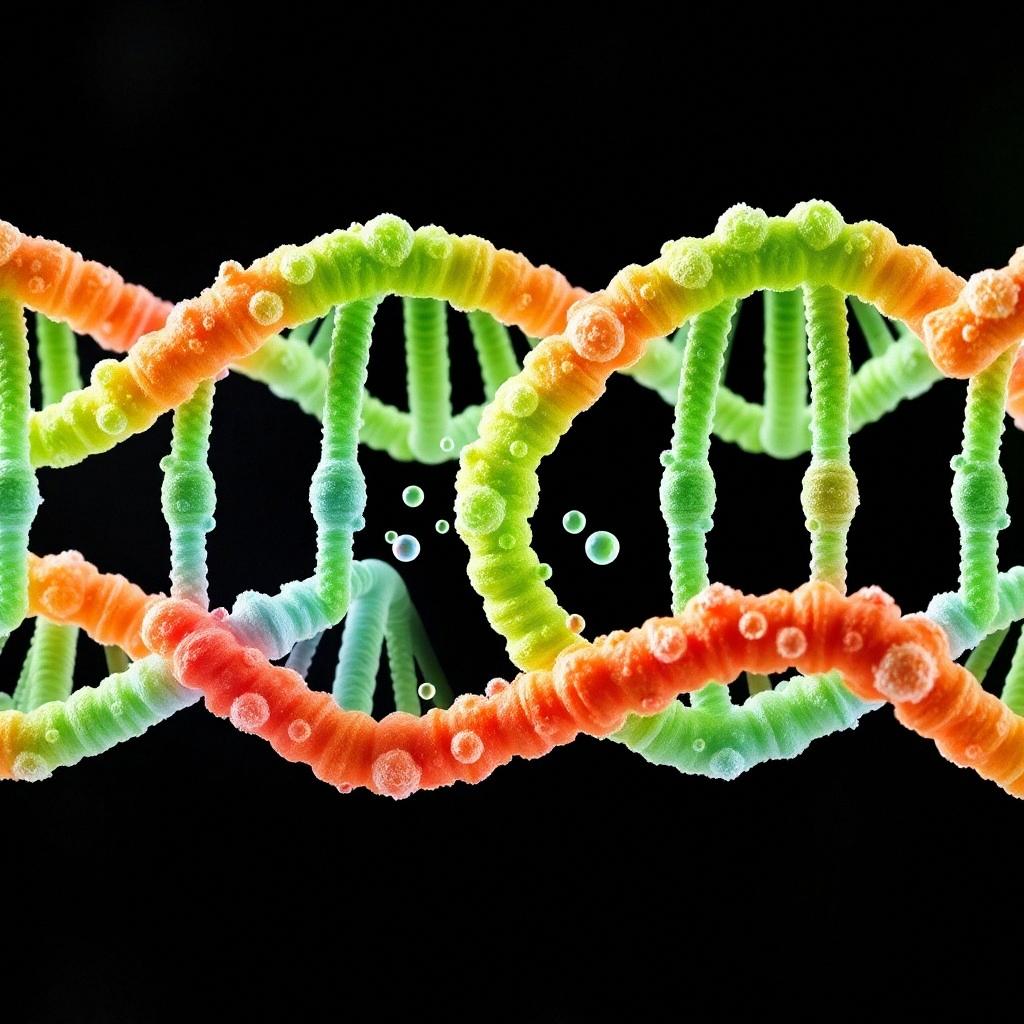
    An RNA structural switch controlling bacterial toxin translation Science Art

     Science Movie


    Make a narrated HD Science movie for this answer ($32 per minute)


     Discussion


    Follow the Evidence

    New scientific claims, supporting evidence, and important limitations. Every Friday. No ads.


    My BGPT