Check each claim against its linked experiments, results, and falsification criteria.Know what the science actually supports before you trust the answer.
Press Enter ↵ to check claims
Explore by Goal
"Biology gives you a brain. Life turns it into a mind."
- Jeffrey Eugenides
Quick Explanation
Copied
This 2008 review by Bröer synthesizes the then-new molecular identification of apical neutral amino acid transporters (SLC6 family, including B°AT1 as the Hartnup gene) with classical physiology, accurately linking transporter classes to inherited aminoacidurias such as Hartnup disorder, iminoglycinuria, cystinuria, and lysinuric protein intolerance .
Long Explanation
Core Contribution and Evidence Base
The review's central achievement is resolving the molecular identity of the classical physiological transport systems defined between 1950–1970 by competition experiments. Bröer maps the five historical apical systems onto cloned genes: system B° (broad neutral) to SLC6A19/B°AT1, discovered via a bioinformatic screen after Hartnup disorder was mapped to the tip of chromosome 5; system IMINO to XT3/SIT (SLC6A20); B°AT2 to SLC6A15; and the kidney-specific XT2 (SLC6A18) as a probable glycine transporter . A second group derives from the AAAP superfamily, including proton-dependent system A/N homologs .
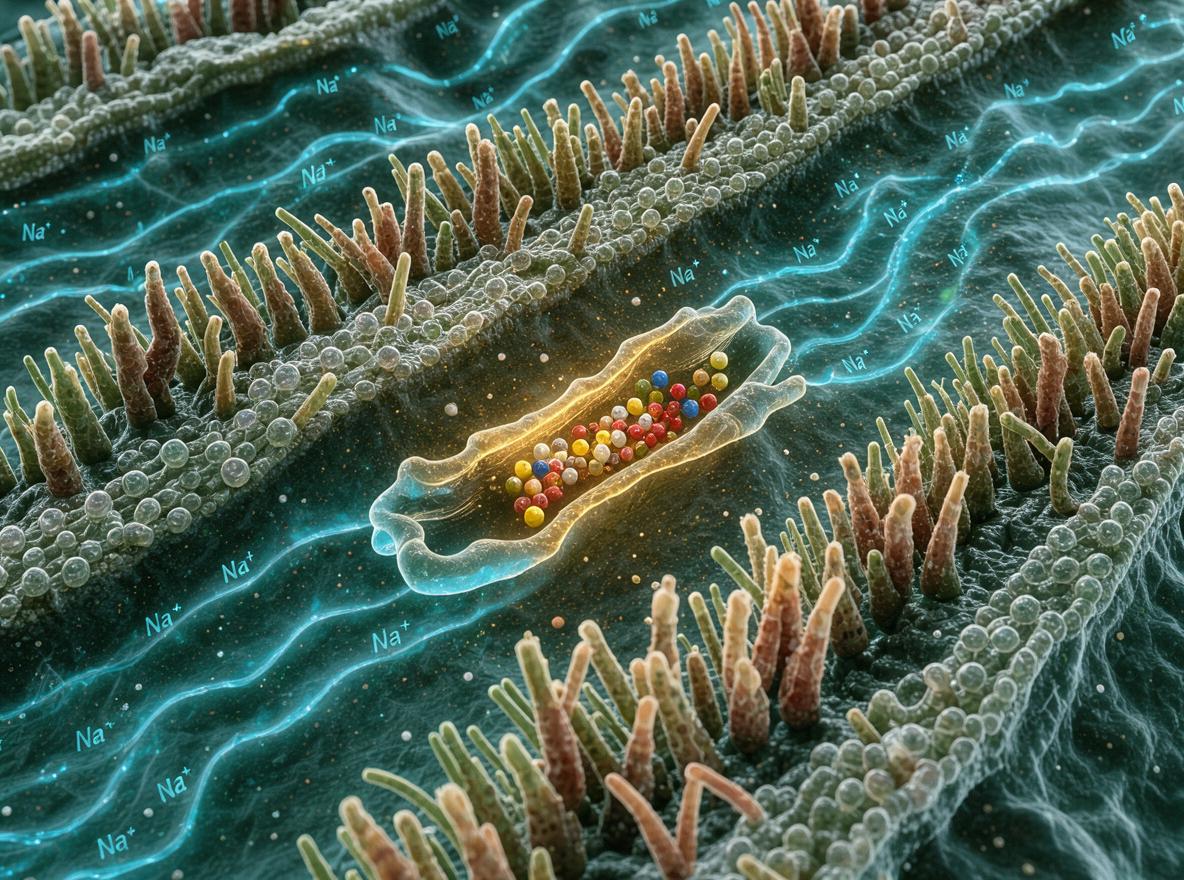
The review is strongest where it connects energetics to disease: three distinct driving forces operate at the apical membrane — the Na⁺-electrochemical gradient (B°), the proton-motive force (Imino acid carrier), and substrate gradients via antiport (b°,⁺ for cationic amino acids) . This mechanistic framework explains why the basolateral defect in lysinuric protein intolerance produces whole-organism symptoms despite intact apical uptake .
Quantitative Underpinnings from Cited Primary Data
Supporting physiological data in the review's reference base include Na⁺-dependent B°-type kinetics in bovine kidney brush-border vesicles, where alanine, glutamine, leucine, and phenylalanine showed mutually competitive transport consistent with a shared carrier system — the kind of competition evidence the review credits for defining system B°. However, the review also honestly flags species differences as a recurring pitfall: systems 3 (IMINO) and 4 (Imino acid carrier) were confused for years because rat intestine lacked system 3, a species-neglect error . This is a valuable self-critical note that aligns with the cross-species biases evident in the broader literature the review cites, including electrogenic transport data from newt proximal tubule where alanine depolarized the peritubular membrane by +21.8 ± 2.9 mV while lysine depolarized by only +8.60 ± 1.57 mV and aspartate was electrically neutral (+0.46 ± 0.66 mV) .
Single-source kinetic data (n = one membrane preparation study, bovine only); no error bars were reported in the extract, so uncertainty is not shown.
Critical Limitations and Blind Spots
Speculative assignments stated with insufficient qualification. XT2 (SLC6A18) is only "likely to be involved in glycine transport" — at review time this was inferential, not proven by knockout or mutation evidence . The same applies to NTT4 and NTT5, for which no substrates had been found.
Small-patient literature. Rare disorders (methionine malabsorption, blue diaper syndrome, benign hyperdibasic aminoaciduria) are excluded precisely because of tiny patient numbers, and Hartnup clinical descriptions (rash, ataxia, psychosis) rest on case series of uncertain genotype-phenotype rigor .
Animal and in vitro extrapolation. Much kinetic evidence derives from Xenopus oocyte expression, rodent, rabbit, and bovine vesicle preparations; the review itself concedes organ-specific isoform differences between kidney and intestine, which limits human extrapolation.
Knowledge half-life. Several predictions were later revised (e.g., XT2 was subsequently shown to transport neutral rather than strictly glycine substrates, and B°AT1 regulation via ACE2/REN, published ~2008–2012, is absent). Readers should treat transporter assignments as a 2008 snapshot.
Verdict
The review is intellectually honest, well-organized, and accurately separates what was cloned, what was inferred, and what remained orphaned. Its main weakness is dependence on the oocyte-expression and membrane-vesicle literature for its quantitative claims and its incompleteness regarding regulation (the ACE2 connection was published contemporaneously and could not be incorporated). What would change the conclusions: knockout-phenotype evidence contradicting the XT2-glycine assignment, or demonstration of additional neutral transporters with overlapping substrate ranges, which would undermine the one-gene-per-system mapping.
Feedback:
Updated: October 27, 2026
BGPT Paper Review
Study Novelty
70%
Published when B°AT1 and related orphan SLC6 transporters had just been cloned, resolving decades-old physiological systems — timely consolidation rather than groundbreaking new findings.
Scientific Quality
80%
Accurate, self-critical synthesis by the field leader; clearly flags speculative assignments and species pitfalls. Weakened by reliance on oocyte/vesicle data and absence of regulation (ACE2) discussion.
Study Generality
80%
Links molecular biology, epithelial physiology, energetics, and clinical genetics across two organs; broadly applicable to transport epithelia generally.
Study Usefulness
80%
Provides the canonical gene-system mapping still used as a framework for Hartnup/iminoglycinuria genetics and epithelial nutrient transport teaching.
Study Reproducibility
60%
As a review it has no primary methods; underlying claims trace to single-species vesicle studies and oocyte expression experiments with variable documentation.
Mining NCBI Gene and ClinVar records for SLC6A19, SLC6A18, SLC6A20, and SLC3A1/SLC7A9 variants to tabulate which Hartnup and iminoglycinuria mutations are experimentally characterized versus inferred, updating the review's 2008 gene-disease assignments.
Get emailed when your analysis is done!
We'll email you the results when your analysis is finished.
Hypothesis Graveyard
All neutral amino acid absorption is Na⁺-driven like glucose: falsified — the Imino acid carrier is proton-motive-force driven and b°,⁺ operates by exchange, proving at least three distinct energetic modes at one membrane.
Each clinical aminoaciduria maps to exactly one transporter gene: weakened — phenotype severity depends on basolateral exits and redundant apical isoforms, as lysinuric protein intolerance (basolateral) demonstrates.

 Explore by Goal
 Quick Explanation
 Long Explanation
 Top Data Sources
 Ask a Follow-Up
 Key Insight
 Keep Exploring
 Analysis
 Hypothesis Graveyard
 Potential Experiments
 Discussion
