Why BGPT?
logo

Review papers with raw data transparency

Quickly verify claims by accessing the underlying experimental data and figures.


Press Enter ↵ to solve


    Fuel Your Discoveries


     Quick Explanation


    Core finding

    Across 50 classical Drosophila visible phenotypes in 11 long-read assembled strains, the paper reports that structural variants (SVs), especially TE-related events and duplications, are enriched among deleterious visible phenotypes—observing SVs in 29/43 marker genes vs ~12 expected under a gene-length matched null (Monte Carlo), with reported p-values of 9.99×10⁻⁶ (and 7.90×10⁻⁴ in a replication using DSPR-like SV spectra).

    Key biological payoff

    It also claims multiple previously uncharacterized SV-linked causal mutations (e.g., TE insertions/duplications affecting prd-site regulation near Ablp, Plexus exon duplication plus a TE, and Strn-Mlck coding disruption by a DM412 insertion), plus new SV alleles at classic loci like white and yellow.

    Skeptical note: The enrichment conclusion depends on (i) SV calling/graph-genotyping fidelity and (ii) the gene-length matched Monte Carlo null, and the causal linkage is fully experimentally validated for only a subset of phenotype–variant links.


     Long Explanation


    Paper Review (Visual + Critical): Structural variants are enriched in deleterious visible phenotypes in Drosophila

    Manuscript type: Preprint
    DOI: 10.1101/2025.08.15.670616
    Organism/system: Drosophila melanogaster (11 strains; 50 classic visible phenotypes)
    Main claim: SVs (especially LSVs and TE-associated events) are enriched among deleterious visible phenotypes relative to a gene-length matched null; multiple SV alleles explain both previously uncharacterized and partially known phenotype mechanisms.

    Figure-first: what the paper reports

    1) Phenotype markers attributed to SV vs SSV vs small variants

    The preprint states 66% (33/50) of markers are associated with LSVs and 6% (3/50) with SSVs, with the remainder explained by SNPs/small indels.

    2) Enrichment test: observed vs expected marker genes carrying candidate SVs

    The paper reports 29/43 marker genes with candidate SVs vs an expectation of ~12 under a gene-length matched Monte Carlo null, with p = 9.99×10⁻⁶. It further reports a replication using SV spectra from additional inbred strains (DSPR-like resource), with expected ~18 and p = 7.90×10⁻⁴.

    3) Reported LSV-related substructure: TE-heavy LSVs

    The preprint reports that, in euchromatic regions of chromosome arms (2L, 2R, 3L, 3R, X), it identifies 11,587 LSVs, of which 7,156 are associated with TEs.

    Scientific interpretation (Visual → Explanation)

    A. What is “SV enrichment” actually measuring?

    • The enrichment is framed at the marker gene level: among genes implicated in 50 visible phenotypes, how many harbor candidate SVs (SV calls are defined by assembly/pangenome-based SV mapping plus read support).
    • Thus, “enrichment” depends on how systematically SVs are detected and attributed to candidate causal loci within each marker gene set. A big signal can still occur if SV detection efficiency differs by locus class (e.g., genes near repeats vs genes near unique sequence), even if true causal SV prevalence were lower.

    B. Evidence for specific molecular mechanisms (not just statistics)

    • The paper reports multiple examples where SVs—often TE insertions and partial duplications—map to candidate regulatory or coding changes at phenotype loci (e.g., Ablp-linked tarsal joint defect tied to an ~8 kb Roo insertion affecting a predicted paired TFBS region; functional testing includes CRISPR deletions producing the expected phenotype).
    • For white and yellow, it reports SV allelic heterogeneity: distinct TE insertions can generate the same classic visible pigment outcomes.

    C. Critical appraisal: what could bias or weaken the enrichment?

    • Null model assumptions: The null matches gene length but may not fully match other locus properties that affect SV detectability or attribution (repeat content, TE density, local assembly ambiguity, genomic context). The enrichment p-values can remain small even if the null misses key confounders.
    • Assembly/variant calling heterogeneity: Two strains’ X balancers produced fragmented X assemblies, forcing alternative SV discovery and could alter locus-wise sensitivity for X-linked markers.
    • Repeat-rich SV complexity: The paper relies on long-read assemblies/pangenome graphs to resolve complex SVs, but repeat-induced collapse or mis-expansion can still occur—especially for highly nested TE structures.
    • Causality coverage: The enrichment statement is statistical; not every phenotype–SV candidate is equally validated experimentally in the provided text. Where CRISPR validation exists (e.g., prdBS Δ1), that increases causal confidence, but a full multi-locus validation set would strengthen the global causal interpretation.

    Reproducibility & data transparency checklist

    • Assemblies & reads deposited: deposited to NCBI with Bioproject accession PRJNA1214913; reads deposited to NCBI SRA.
    • Code availability: analysis scripts are stated to be available at GitHub (GALORE and a related course repo).

    Actionable next checks (what would disprove/tilt the conclusion)

    • Re-run SV-calling with alternative long-read SV pipelines or alternate graph-genotyping settings, and test whether the enrichment p-values remain similar (robustness of the global statistic).
    • Perform a matched null that additionally controls for local repeat/TE density (not just gene length) to see if the enrichment shrinks substantially—this targets a plausible detection confound.
    • Expand functional validation beyond the reported CRISPR-validated regulatory case(s) to additional phenotype-linked SV candidates to confirm that candidate SVs are causal rather than passenger associations.


    Feedback:   

    Updated: March 23, 2026

    BGPT Paper Review


    Study Novelty

    90%

    Novelty is high because it uses long-read de novo assemblies plus a nucleotide-resolution pangenome graph to systematically connect SVs to an unbiased, predefined set of 50 classical visible phenotypes, then quantifies global enrichment using a gene-length matched null and provides SV-linked mechanistic candidates including CRISPR validation for at least one regulatory case.


    Scientific Quality

    80%

    Scientific quality is strong in dataset construction, SV discovery rationale (long reads + pangenome graphs), and a quantitative enrichment test; however, the global inference rests on SV-calling sensitivity and a null model primarily matched for gene length (potential residual confounding by repeat/TE context), and functional validation coverage appears partial in the excerpted material.


    Study Generality

    70%

    The conclusions are specific to Drosophila lab/inbred strains with visible markers; while the biological theme (SVs and TEs contribute disproportionately to large deleterious phenotypes) is broadly relevant, extrapolation to natural population architectures and other organisms requires careful replication.


    Study Usefulness

    90%

    High usefulness: it provides candidate SV alleles and mechanistic leads at multiple classic loci, plus a reproducible data+code framework (assemblies/reads and GitHub scripts) that others can re-analyze.


    Study Reproducibility

    80%

    Reproducibility is fairly strong because assemblies/reads and analysis scripts are deposited. Reproducibility of the exact enrichment statistic may still depend on SV-calling thresholds, graph-genotyping parameters, and how candidate SV attribution is operationalized.


    Explanatory Depth

    80%

    The paper provides mechanistic SV examples (TE insertions, partial duplications, and regulatory-site edits) and integrates them with global patterns of enrichment, but full multi-locus functional dissection is not uniform across all phenotype candidates in the excerpted text.

     Top Data Sources ExportMCP


     Analysis Wizard


    This code will tabulate reported SV/SSV attribution counts for 50 phenotypes and compute enrichment ratios (observed/expected) using the paper’s null expectations, then render Plotly summaries for rapid visual QA.


     Hypothesis Graveyard


    SV enrichment is mainly an artifact of longer-read assemblies systematically detecting SVs in larger genes: this becomes less plausible if enrichment persists after matching not just for gene length but for repeat/TE context (not shown in the excerpted null design).


    All SVs linked to phenotypes are passenger variants riding along with the true causal SNP/indel: this is weakened by reported CRISPR validation supporting a specific regulatory motif disruption adjacent to an SV-associated TE insertion.

     Science Art


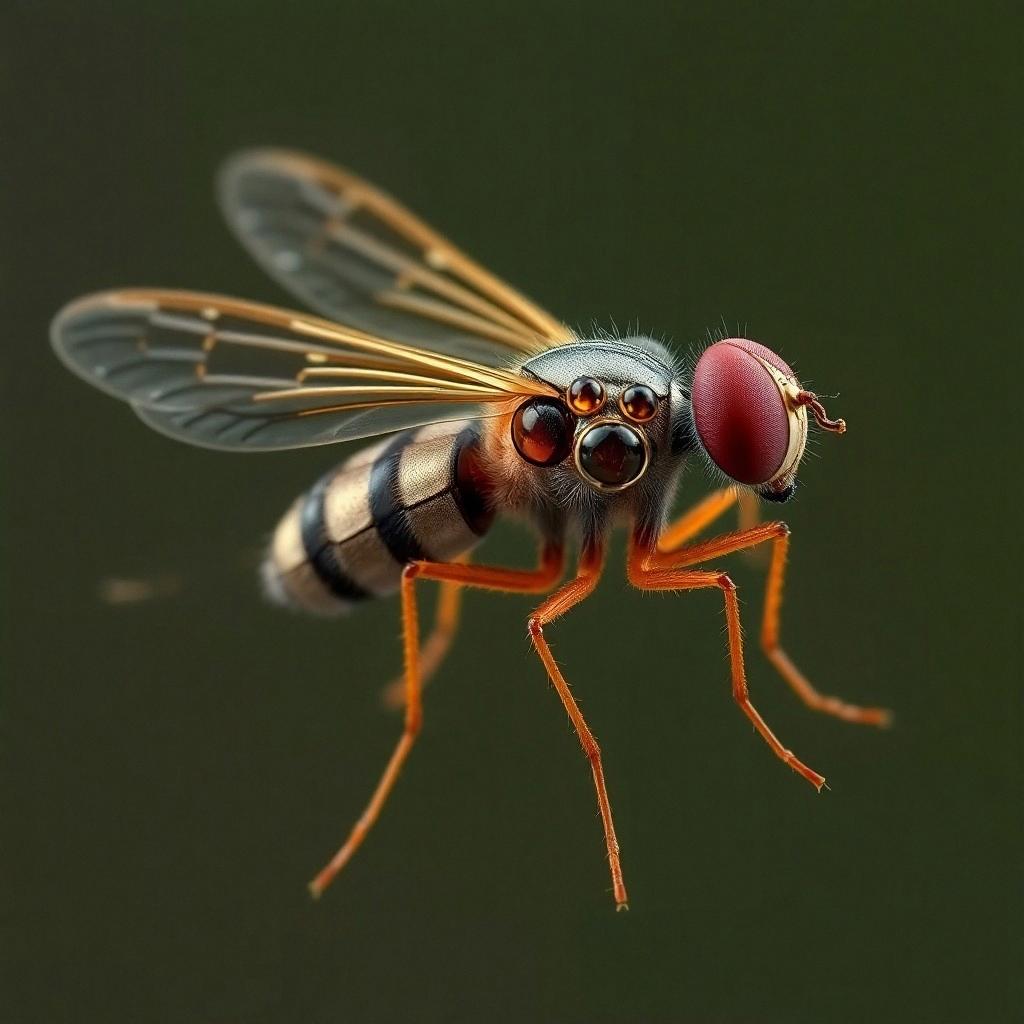
    Paper Review: Structural variants are enriched in deleterious visible phenotypes in Drosophila Science Art

     Science Movie


    Make a narrated HD Science movie for this answer ($32 per minute)


     Discussion


    Get Ahead With Science Insights

    Custom summaries of the latest cutting edge Science research. Every Friday. No Ads.


    My BGPT