Check whether claims match experiments, exact reported results, and stated limitations.Know what the science actually supports before you trust the answer.
Press Enter ↵ to review paper
Explore by Goal
"The most exciting phrase to hear in science, the one that heralds new discoveries, is not 'Eureka!' but 'That's funny...'"
- Isaac Asimov
Long Explanation
Copied
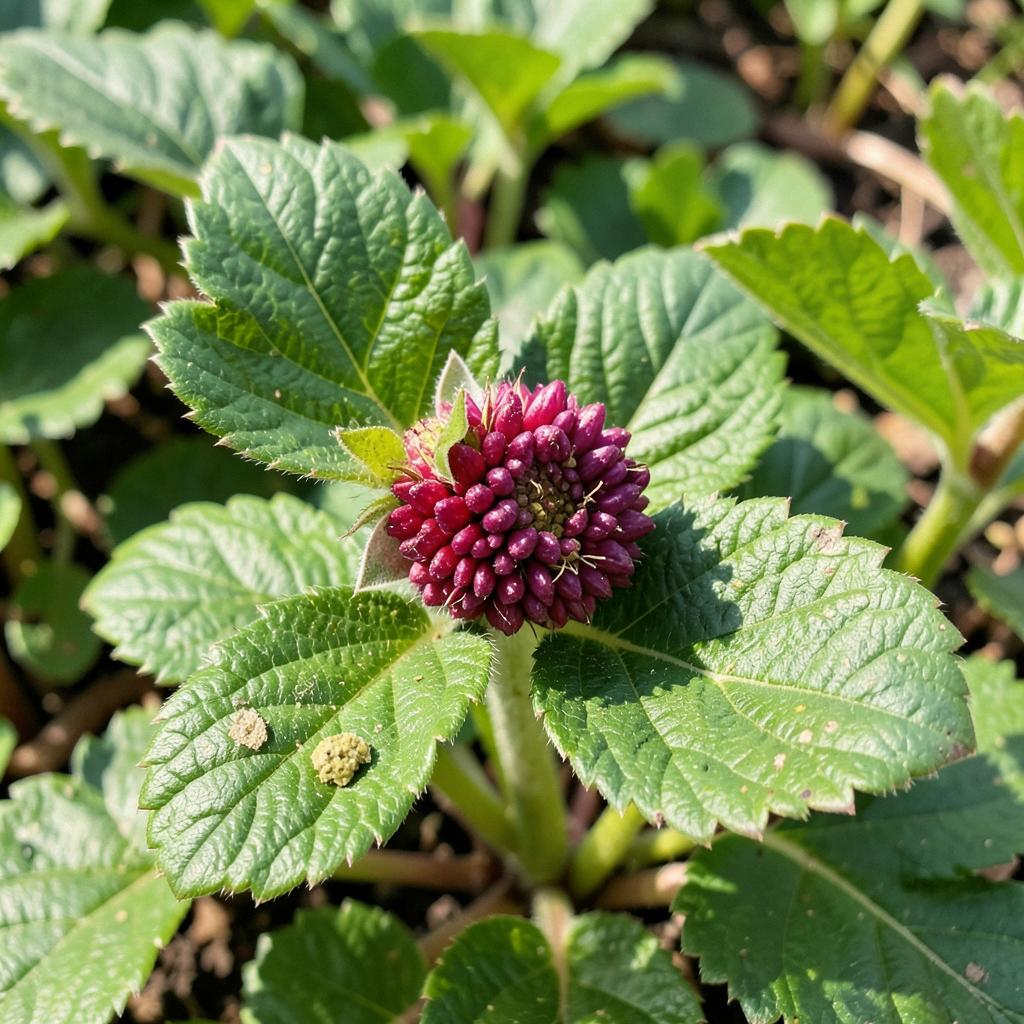
Paper Review: Polyphenols in Strawberry Leaves Induced by Plant Activators (Karlund et al., 2014)
Summary of evidence. This Journal of Agricultural and Food Chemistry study analyzed phenolics in greenhouse-grown strawberry (Fragaria × ananassa cv. Polka) leaves after spraying with the salicylic acid analogue BTH (0.5 g/L) or 10% birch wood distillate, using UPLC-DAD-MS/MS with compound-specific MRM methods and HPLC-ESI-QTOF-MS . Thirty-two phenolics were quantified; ellagitannins (21 compounds) dominated, with agrimoniin (E9b) most abundant. BTH increased total ellagitannins over 7 days, whereas birch wood distillate preferentially raised chlorogenic acid, implying that synthetic and plant-derived activators redirect different phenylpropanoid branches.
Critical appraisal. Design strengths include rigorous quantitative chemistry: purified standards, compound-specific MRM calibration curves, and PCA (two axes explaining 77% of variance) with Tukey-corrected ANOVA . However, key limitations temper causal and generalizable claims: only 4 pooled replicates per treatment/date (N=16 total for 33 variables), a single cultivar (Polka) in a greenhouse, only two sampling timepoints, and isomeric pairs quantified on shared calibration curves. The authors themselves note genotype-dependent phenolic responses, contrasting their cv. Polka results with earlier cv. 'Jonsok' work where BTH-induced accumulation did not persist to day 7 . The birch wood distillate mechanism remains unexplored—its complex mixture (acetic acid, furfural, PAHs) makes the active elicitor unknown, and mechanistic links (e.g., oxidative burst, WRKY1 signaling) are invoked from external literature rather than tested here . No direct disease-resistance assay accompanies the chemical data in this paper (powdery mildew resistance was shown in the prior study they cite). Health-benefit claims for ellagitannins remain inferential, as bioavailability and downstream biology were not assessed.
Confidence and falsifiability. Confidence is moderate: the analytical chemistry is strong, but conclusions rest on a small, single-cultivar, single-season dataset. Independent replication across cultivars, field conditions, dose-response, and direct pathogen-challenge assays would be needed to refute or confirm the central claim that activators selectively redirect phenylpropanoid branches.
Author reviews:
Feedback:
Updated: October 26, 2026
BGPT Paper Review
Study Novelty
60%
First comprehensive MRM-based quantification of 32 phenolics including 21 ellagitannins in strawberry leaves with dual-activator comparison; builds incrementally on the authors' own 2007 BTH work.
Scientific Quality
70%
Rigorous compound-specific MRM quantification and honest statistical framing (PCA chosen due to P>N), but N=16 with 33 variables, 4 pooled replicates, shared calibration curves for isomers, and no direct defense assay in this paper.
Study Generality
50%
Findings are cultivar- and greenhouse-specific; the branch-redirecting principle is generalizable in concept but not demonstrated beyond cv. Polka.
Study Usefulness
70%
Practically useful for bioproduction of ellagitannin-rich leaf biomass and for selecting elicitors to target specific phenolic branches; indirect value for plant protection.
Study Reproducibility
70%
Detailed methods (columns, gradients, MRM transitions, cone voltages, collision energies) are fully reported; Supporting Information referenced but public data deposition absent.
Explanatory Depth
60%
Correlation-based flux reasoning via shikimate pathway sharing is plausible but not experimentally verified; mechanisms (oxidative burst, WRKY1) are cited rather than tested.

 Explore by Goal
 Long Explanation

 Top Data Sources
 Ask a Follow-Up
 Key Insight
 Keep Exploring
 Hypothesis Graveyard
 Potential Experiments
 Discussion
