Ask questions across claims linked to experiments, exact results, limitations, and sources.Know what the science actually supports before you trust the answer.
Press Enter ↵ to search evidence
Explore by Goal
"Study hard what interests you the most in the most undisciplined, irreverent and original manner possible."
- Richard Feynman
Quick Explanation
Copied
Kağıthane is an Istanbul district best documented scientifically here through the 1993 Kağıthane workers' resistance: the dismissal of 340 municipality workers in January 1993 triggered a year-long campaign—committees, petitions, a 450-km march, and a hunger strike—that met Tilly's social-movement criteria but failed to secure reinstatement, and the dismissing mayor's party won the 1994 district election with 35.46% of votes .
Long Explanation
Kağıthane: What the Evidence Covers
Based on the supplied research, "Kağıthane" refers to a district of Istanbul whose most rigorously documented episode in this source is the 1993 Kağıthane workers' resistance. In January 1993, the newly elected Refah Partisi (RP) mayor Arif Calban non-renewed the contracts of 340 Kağıthane Municipality workers, allowing only 55 to continue working; the dismissed workers argued the decision had no legal basis and was political .
Organisation and Escalation
Workers formed 4 committees coordinated by a 9-member upper Resistance Committee, conducted door-to-door outreach, district-wide signature campaigns, and poster distribution across Istanbul . A police intervention on 29 January 1993 injured 30 people and led to 25 detentions, which the study reports publicised the resistance nationwide . Escalation followed: a 120-person march completed 450 km from Istanbul to Ankara in 23 days (from 13 April 1993), and 8 workers began an indefinite hunger strike on 3 May 1993 . Solidarity extended beyond the workplace: the 52 dismissed women formed a Women's Commission organising bazaars, and Sivas/Divriği-based groups delivered 94 million TL (≈ $7,659 at the time) in donations .
Author's interpretation (not independently verified): the campaign satisfied Charles Tilly's three social-movement criteria—sustained campaign, recognised repertoire, and public displays of WUNC (worthiness, unity, numbers, commitment) .
Outcome and Limitations
The resistance failed its core demand: workers were not reinstated, and in the 27 March 1994 local election Calban's RP won Kağıthane with 52,842 votes (35.46%), ahead of ANAP (21.14%) and SHP (17.24%) .
Known unknowns: The study rests mainly on one oral-history interview and participant-authored accounts plus newspapers; the municipality's own internal rationale for the dismissals is not examined with independent documents, and long-term post-1994 outcomes for the workers are only briefly projected. The electoral result is a district aggregate and cannot isolate any causal effect of the resistance on voting. Beyond this episode, the supplied research contains no other quantitative data on Kağıthane (e.g., demographics or ecology), so no further scientific claims about the district are made here.
We'll email you the results when your analysis is finished.
Hypothesis Graveyard
'Social movements succeed when they mobilise large numbers'—falsified here: 340 dismissals, mass marches, and nationwide solidarity still produced no reinstatement and an incumbent re-election.
'Electoral accountability punished the mayor for repression'—contradicted: RP increased legitimacy with a 35.46% win one year after the police intervention.

 Explore by Goal
 Quick Explanation
 Long Explanation
 Top Data Sources
 Ask a Follow-Up
 Key Insight
 Keep Exploring
 Hypothesis Graveyard
 Potential Experiments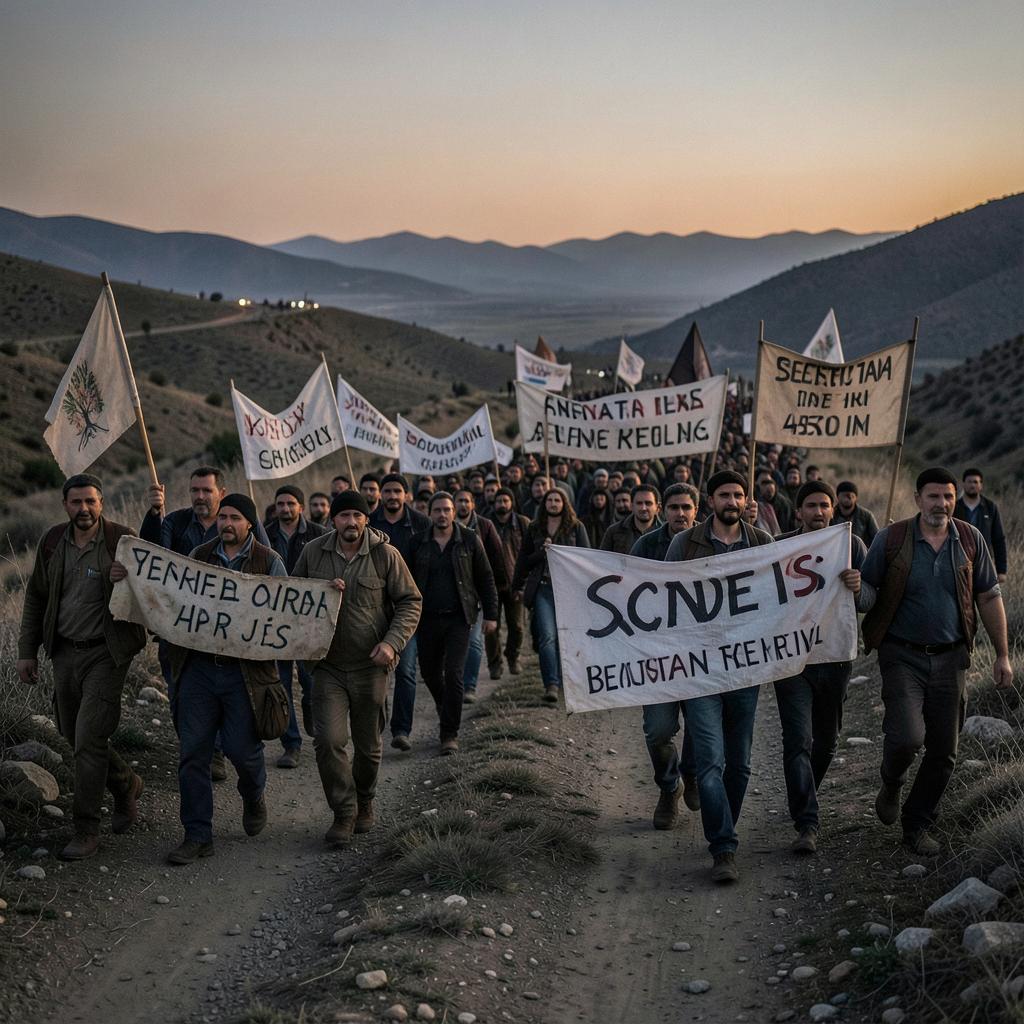
 Discussion