Analyze how experimental results and claims are presented, scoped, and limited in a paper.Know what the science actually supports before you trust the answer.
Press Enter ↵ to analyze
Explore by Goal
"The important thing in science is not so much to obtain new facts as to discover new ways of thinking about them."
- William Lawrence Bragg
Quick Explanation
Copied
This 1989 Animal Feed Science and Technology review by Theander, Westerlund, and Graham is a well-cited methodological synthesis connecting plant cell wall chemistry to monogastric nutrition, notable for GLC-based dietary fiber methods, resistant starch/processing artifacts, and enzyme-supplementation trials in pigs and poultry.
Long Explanation
Scope and Core Contributions
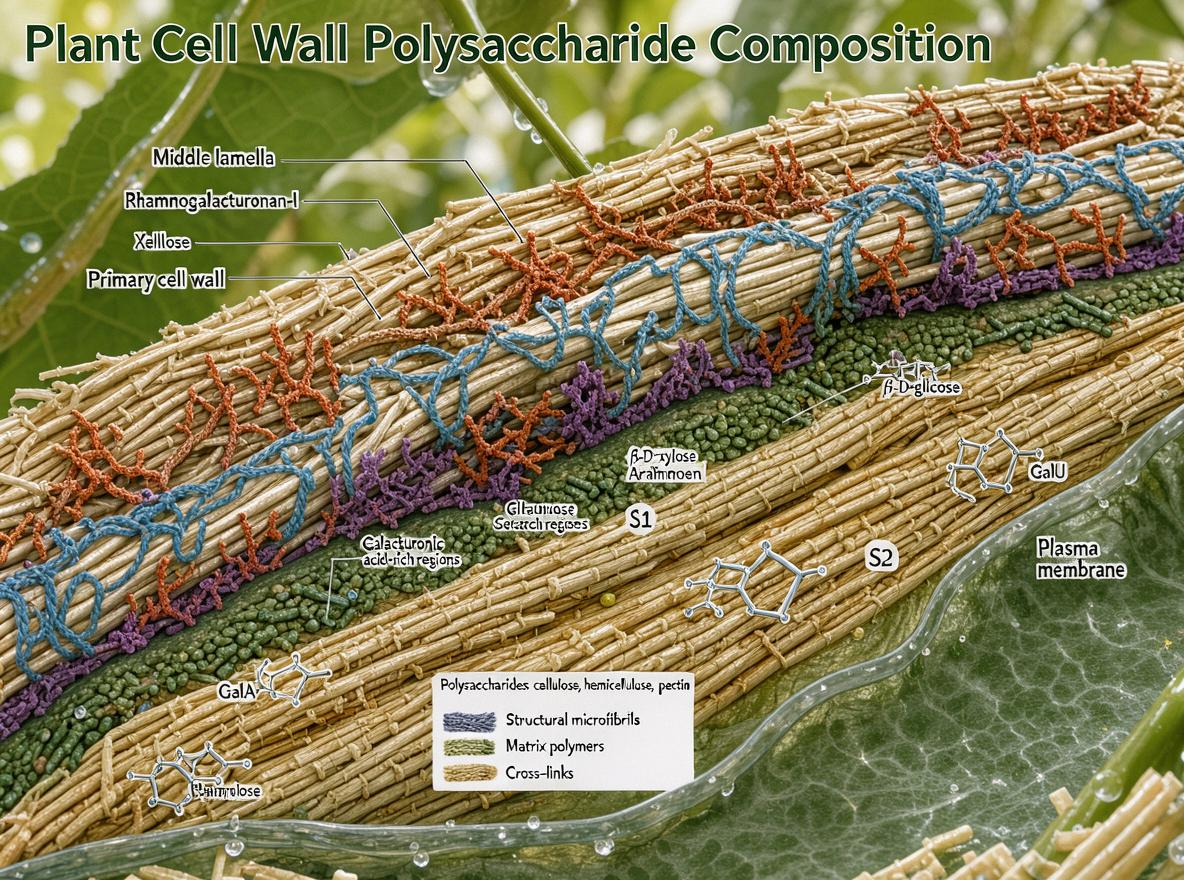
Theander, Westerlund, and Graham synthesize analytical chemistry and monogastric nutrition research from the Swedish University of Agricultural Sciences. The paper covers three pillars: (1) plant cell wall polysaccharide chemistry (cellulose, hemicelluloses, pectins, mixed-linkage β-glucans, lignin), (2) dietary fiber (DF) analytical methods using GLC of alditol acetates combined with uronic acid and Klason lignin determination, and (3) nutritional studies in hamsters, pigs, and poultry demonstrating functional consequences of fiber composition. The GLC approach distinguishes soluble from insoluble DF and quantifies individual neutral polysaccharide constituents, offering more chemical specificity than gravimetric methods
Key Quantitative Findings
The paper reports total DF of ~30% for oats, ~19% for barley, and ~11% for wheat (dry matter), with β-glucans present in appreciable amounts only in barley (mean 3.4%, range 2.4-4.2%) and oats (mean 3.2%, range 2.7-3.6%). Coefficient of variation was highest for oat arabinoxylan (37%), reflecting substantial environmental/cultivar variation. Heat processing (baking, extrusion) increased measured DF via resistant starch formation, chemically modified starch with 1,6-anhydroglucosides (maltosan), and Maillard products inflating Klason lignin values
Nutritional results were consequential: beet pulp increased ileal water flow and decreased ileal digestibility of ash, protein, and fat in pigs; β-glucanase supplementation improved broiler performance on barley diets by degrading endosperm cell walls; pentosanase (not β-glucanase) benefited wheat/rye/triticale diets, with gains proportional to arabinoxylan content. Brewers' spent grain (rich in Klason lignin) prevented gallstone formation and reduced serum cholesterol in hamsters
Legacy and Modern Context
The methodological framework here (sequential extraction, GC-based monosaccharide analysis, linkage determination) remains foundational; modern protocol refinements using GC-MS of monosaccharides and methylation linkage analysis build directly on this tradition
Critical Assessment
Strengths: Integrates analytical chemistry with whole-animal nutrition; anticipates the resistant starch and Maillard artifact problem now central to fiber nutrition; enzyme-supplementation findings directly led to commercial feed enzyme industry development.
Limitations: Klason lignin conflates native lignin with tannins, Maillard products, and cutin (acknowledged by authors); hamster gallstone findings (single model, pre-publication data); pig cannula studies had small animal numbers typical of the era; generalizability of swine to human digestive physiology assumed but not formally validated here. Modern reviews emphasize polyphenol-polysaccharide noncovalent interactions and microbiome mediation of fiber effects, dimensions absent from 1989 frameworks
Confidence: high for reported quantitative values (author-reported means/ranges from peer-reviewed Swedish studies); moderate for mechanistic interpretations of enzyme effects (era-appropriate in vivo trials without modern replication standards).
Feedback:
Updated: November 01, 2026
BGPT Paper Review
Study Novelty
70%
For 1989, the integration of detailed GLC fiber characterization with monogastric digestion physiology, and early recognition of resistant starch/processing artifacts, was forward-looking; the underlying chemistry was partially established.
Scientific Quality
80%
Comprehensive, methodologically rigorous review by leading authorities; limitations include small animal trials typical of the era, conflated Klason lignin, and pre-publication hamster data.
Study Generality
80%
Principles of cell wall chemistry, fiber analysis, and enzyme supplementation generalize across monogastric species, food processing, and human nutrition.
Study Usefulness
80%
Directly informed feed enzyme industry development (β-glucanase/pentosanase), fiber analytical standards, and selection breeding for β-glucan content.
Study Reproducibility
70%
Methods A-C are described in sufficient procedural detail (temperatures, enzyme steps, hydrolysis conditions) to reproduce; animal trials lack full detail in this review format.
Explanatory Depth
70%
Provides mechanistic links between wall polysaccharide structure and digestibility/viscosity effects, though microbiome and immune mediation were not yet accessible.
We'll email you the results when your analysis is finished.
Hypothesis Graveyard
Gravimetric fiber methods (crude fiber, detergent fiber) as adequate fiber measures: falsified by the GLC data showing large species-dependent composition differences (e.g., beet pulp uronic acids 31-37% vs wheat bran 2-5%) that gravimetric totals obscure.

 Explore by Goal
 Quick Explanation
 Long Explanation
 Top Data Sources
 Ask a Follow-Up
 Key Insight
 Keep Exploring
 Hypothesis Graveyard
 Potential Experiments
 Discussion
